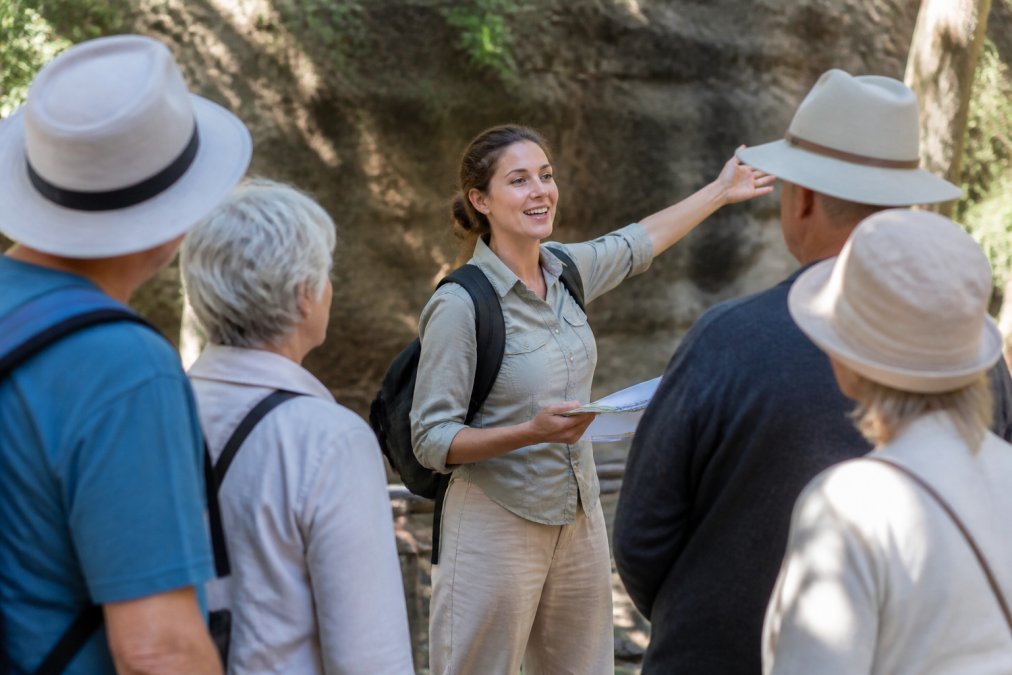
 ultimate-guide
What Makes a Tour Guide Qualified: A 2026 Guide
Table of Contents
- Formal vs. Informal: How a Tour Guide Becomes Qualified
- Certificate III in Tourism: The Industry Baseline
- Tour Guide Soft Skills That Separate Good from Great
- First Aid Certification for Tour Guides and Post-COVID Safety Standards
- Subject Matter Expertise, Local Knowledge and Cultural Awareness
- Tour Guide Salary Expectations and Career Pathways
- What a Qualified Tour Guide Means for You as a Traveller
- Conclusion
Last Updated: August 11, 2026
Formal vs. Informal: How a Tour Guide Becomes Qualified
Most people assume that knowing a place well is enough to guide others through it. That assumption separates a mediocre tour from a genuinely memorable one.
A tour guide is qualified when they combine formal industry credentials, legal compliance, and experiential knowledge that no classroom can fully teach. Formal qualifications are delivered through the vocational education and training system via registered training organisations offering nationally recognised credentials. But informal expertise, years of field experience, deep local knowledge, and the ability to read a group's energy, elevates a guide from competent to exceptional.
The pathway is accessible. You don't need a university degree, only a clear understanding of what the industry requires and the commitment to meet those standards honestly.
Licensing and Legal Requirements
There is no single national licence covering all tour guiding across Australia. Requirements vary by state or territory, tour type, and whether the guide operates as an employee or sole trader. Some jurisdictions require a specific tour operator licence or registration with a state tourism body. Guides operating in national parks or on country may need additional permits from land management authorities, such as the Parks Australia permit framework for commercial tourism operators.
Public liability insurance is a non-negotiable professional standard. Most tour operators require guides to hold their own cover or provide it under company policy. Without it, a guide faces serious financial risk and will struggle to find reputable employment.
Workplace health and safety obligations also apply. Guides must conduct risk assessments before activities, communicate hazards clearly to participants, and follow emergency response protocols. These are legal duties under the Work Health and Safety Act 2011 as adopted by each state and territory.
National Police Checks and Background Screening
Any guide working with vulnerable groups, older travellers, children, or people with disabilities, must hold a current national police check. This is a standard entry-level requirement and a genuine mark of professional accountability.
Background screening is processed through the Australian Criminal Intelligence Commission's national police checking service. Results are typically available within a few business days. Some states also require a Working with Vulnerable People card, which involves more thorough screening and periodic renewal.
For travellers choosing a guide, especially for remote or extended tours, knowing that proper screening has occurred is a meaningful safety assurance.
Certificate III in Tourism: The Industry Baseline
The Certificate III in Tourism is the recognised entry-level qualification for professional tour guides in Australia. Delivered by registered training organisations, it covers itinerary management, visitor experience delivery, guiding skills, and customer service standards. According to the Australian Skills Quality Authority's course database, the qualification is nationally accredited and carries consistent weight regardless of completion location.
The certificate typically takes six to twelve months to complete, depending on full-time, part-time, or traineeship study. Practical placement hours are usually required, so graduates enter the workforce with real guiding experience.
For those already working in tourism, a Recognition of Prior Learning pathway allows existing skills and experience to count toward the qualification. Beyond the Certificate III, a Certificate IV in Tourism or Diploma of Travel and Tourism opens doors to senior guiding roles, tour management, and business ownership.
International Portability of Australian Qualifications
Australian VET qualifications are well-regarded across the Pacific region, particularly in Fiji, Papua New Guinea, and island nations where Australian tour operators are active. Many regional tourism bodies recognise Australian credentials as a mark of professional training.
For guides looking to work in Europe or North America, the qualification itself may not be directly recognised, but the competency framework, including risk assessment, group facilitation, and interpretive guiding, aligns closely with international professional standards. Supplementing an Australian certificate with destination-specific licensing or language proficiency typically resolves portability gaps.
An Australian Certificate III is a strong foundation for Pacific-region guiding and a credible starting point for international careers, provided guides complete any additional local requirements.
Tour Guide Soft Skills That Separate Good from Great
Hard skills get you hired. Soft skills determine whether guests come back.
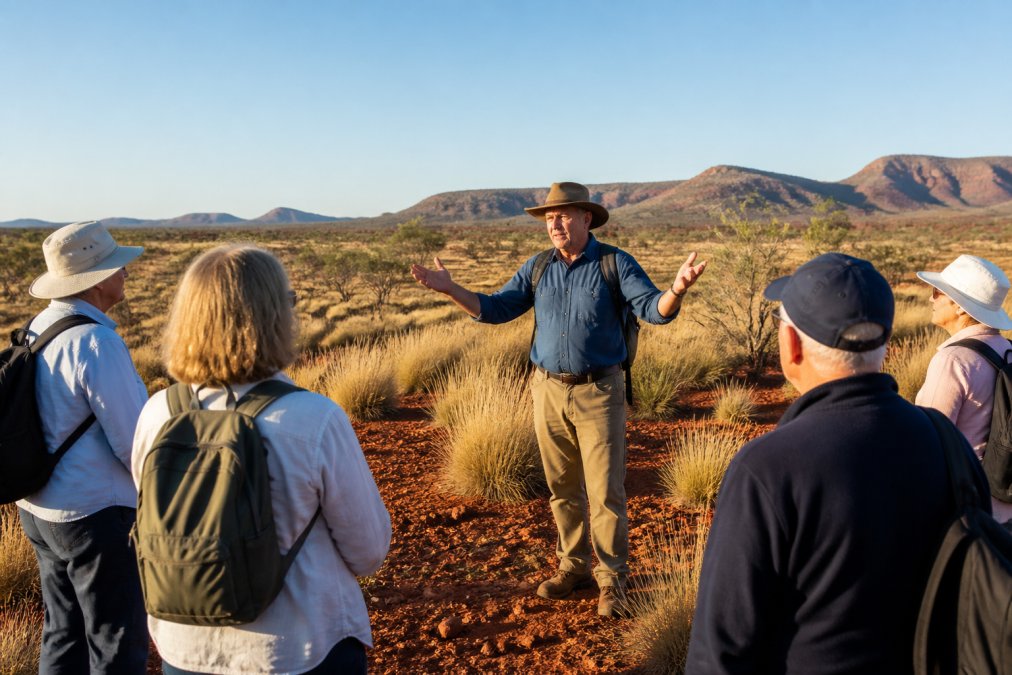
Storytelling is the most underestimated skill. A guide who weaves local history, ecological detail, and personal anecdote into a cohesive narrative transforms a sightseeing trip into something guests remember for years. This is interpretive guiding at its best: building meaning rather than reciting facts.
Communication proficiency includes reading non-verbal cues, adjusting vocabulary for different audiences, managing group dynamics, and knowing when silence is more powerful than explanation. Guides working with mature travellers need to pace delivery carefully and create genuine space for questions.
Cultural and social awareness is non-negotiable for guides operating in or near First Nations country. This means understanding protocols around sacred sites, knowing which stories are appropriate to share, and approaching cultural exchange with genuine humility rather than theatrical performance.
Hard Skills vs. Soft Skills: What Each One Does for You
| Skill Type | Examples | What It Delivers |
|---|---|---|
| Hard Skills | Certificate III, first aid, police check, WHS knowledge | Legal compliance, insurance eligibility, employer trust |
| Hard Skills | Navigation, vehicle operation, risk assessment | Physical safety, itinerary reliability |
| Soft Skills | Storytelling, group facilitation, cultural awareness | Guest satisfaction, repeat bookings, word-of-mouth |
| Soft Skills | Communication, empathy, adaptability | Conflict resolution, inclusive experiences |
| Soft Skills | Local knowledge, destination expertise | Authentic experiences, credibility with guests |
Guides who build long careers treat both columns as equally important. Hard skills open the door. Soft skills keep guests talking about the experience long after they've gone home.
First Aid Certification for Tour Guides and Post-COVID Safety Standards
Remote and adventure tourism carries real physical risk, and a guide's first aid capability is a concrete marker of professional readiness.
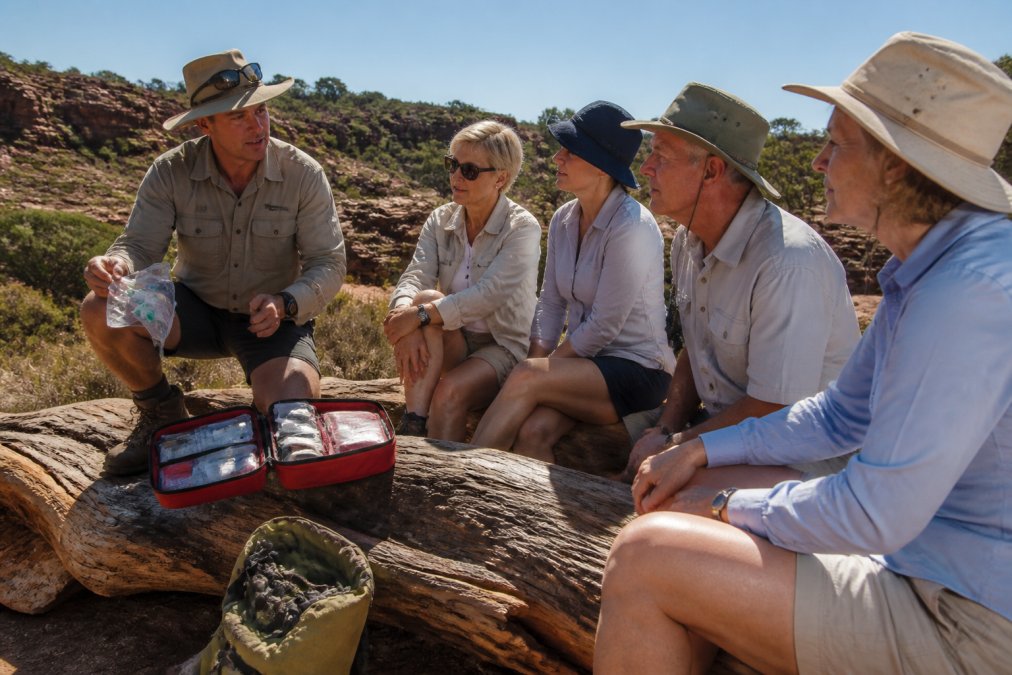
The minimum standard is a current Senior First Aid certificate, also known as Provide First Aid, covering CPR, wound management, and emergency response. Guides operating more than one hour from professional medical assistance should hold Remote Area First Aid certification, a more comprehensive qualification including extended patient care and evacuation planning.
First aid certificates must be renewed regularly. CPR components require annual renewal; the broader qualification is typically renewed every three years.
Post-COVID, health and safety expectations for tour guides have expanded. Guides are now expected to understand infection control principles, manage capacity in enclosed spaces, and communicate clearly about health protocols. Many operators have formalised these expectations through internal training aligned with Safe Work Australia's COVID-19 information for workplaces.
Asking to see a guide's current first aid certification before a remote tour is entirely reasonable. Any reputable operator will provide this information without hesitation.
Subject Matter Expertise, Local Knowledge and Cultural Awareness
What separates a tourist guide from a truly qualified expert is the depth of knowledge they bring to a destination: its ecology, history, community, and living culture.
Subject matter expertise is built over years of deliberate learning. A guide leading outback tours should understand the geological forces that shaped the landscape, ecological relationships between species, historical events that left their mark, and cultural significance of sites to Traditional Owners. This is the product of genuine curiosity sustained over time.
Local knowledge is the practical expression of that expertise: knowing which track becomes impassable after rain, which lookout catches the best light at dusk, which community elder is open to sharing their story with respectful visitors. This accumulates through presence, relationship, and time.
Cultural awareness, particularly around First Nations communities and Pacific Island cultures, requires active commitment to ongoing learning. Guides should understand the difference between sharing culture and commodifying it.
Tour Guide Salary Expectations and Career Pathways
Tour guide salary expectations in Australia vary considerably based on experience, specialisation, and operator type. Entry-level guides working casual or seasonal roles with day-tour operators typically earn at the lower end of the hospitality award scale. Experienced guides leading multi-day remote or adventure tours, particularly those with specialist skills in 4WD operation, remote first aid, or cultural interpretation, command meaningfully higher rates.
Many experienced guides transition into sole trading or business ownership, building their own tour products and client base. Career pathways extend beyond guiding itself to tour management, product development, destination marketing, and tourism education. For those considering guiding as a second career, the vocational education and training pathway is genuinely accessible, particularly for those from teaching, nursing, trades, or military backgrounds.
What a Qualified Tour Guide Means for You as a Traveller
Understanding what makes a tour guide qualified is the difference between a safe, enriching experience and one that falls short or puts you at risk.
A qualified guide holds current industry credentials, has passed background screening, carries appropriate first aid certification, and operates under a legitimate tour operator with public liability insurance. These are the structural conditions that allow you to trust the experience and focus on the places and stories unfolding around you.
Soft skills matter equally. A guide who listens well, adapts pace to the group, and brings genuine passion to their subject creates experiences guests describe as highlights of their travelling life.
At Curious Compass Collective, every guide is selected for both formal qualifications and ability to connect authentically with mature travellers. The Frontier Tour to Cape York and the Nulla Nulla Safari have earned their reputations because guides treat every guest's experience as a personal responsibility. Guests consistently describe these tours as bucket list experiences, which doesn't happen without genuinely qualified, deeply committed guides.
Before booking any guided tour, particularly one involving remote terrain or extended travel, ask your operator directly: What qualifications do your guides hold? Are their first aid certificates current? Are they insured? A reputable operator answers without hesitation. If they can't or won't, that's your answer.
Choosing a guided tour is an act of trust. You're handing over your time, safety, and experience to someone else's expertise. The qualifications framework in this guide exists to make that trust well-placed. Curious Compass Collective builds every itinerary around guides who meet these standards, with small group sizes allowing genuine personal attention, purpose-designed vehicles for the terrain, and a pace that lets the destination breathe. If you're ready to experience what a truly qualified guide can deliver, view our tours and find the adventure that fits your curiosity.
Frequently Asked Questions
Do you need a formal qualification to be a tour guide in Australia?
There is no single national law that requires every tour guide to hold a formal qualification, but professional standards and employer expectations have raised the bar considerably. Most reputable tour operators expect guides to hold at least a Certificate III in Tourism from a registered training organisation, along with a current first aid certificate and a national police check. Some states and territories also impose specific licensing requirements, particularly for guides operating in national parks or conducting specialised activities.
What are the essential soft skills for a professional tour guide?
Beyond certifications, the soft skills that define a tour guide qualified to lead memorable experiences include confident public speaking, active listening, storytelling, adaptability, and genuine cultural awareness. A guide who can read a group's energy, adjust the pace of an itinerary, and translate complex history into engaging narrative will consistently deliver a better visitor experience than one who simply recites facts. Empathy and patience are especially important when guiding mature travellers or mixed-ability groups across remote or unfamiliar terrain.
What is the average salary for tour guides in Australia?
Tour guide salary expectations vary considerably depending on experience, specialisation, and the type of operator. Entry-level guides working casually for day-tour operators typically earn near the award wage set under the Tourism Industry Award. Experienced guides leading multi-day remote or specialised tours can earn significantly more, particularly when guiding is combined with a logistics or coordination role. Guides who build a strong reputation, hold advanced certifications, and develop deep destination knowledge tend to command the best rates and the most consistent bookings.
How does industry accreditation impact a tour guide's career?
Industry accreditation through bodies such as Tourism Australia's quality frameworks, or state-level accreditation programmes, signals to operators and travellers alike that a guide meets recognised professional standards. Accredited guides are more likely to be hired by reputable tour operators, included on preferred-supplier lists, and trusted with higher-value or more complex itineraries. Accreditation also supports ongoing professional development, which matters in a sector where destination knowledge, workplace health and safety requirements, and traveller expectations continue to evolve.
This article was written using GrandRanker
Frequently Asked Questions
Do you need a formal qualification to be a tour guide in Australia?
There is no single national law that requires every tour guide to hold a formal qualification, but professional standards and employer expectations have raised the bar considerably. Most reputable tour operators expect guides to hold at least a Certificate III in Tourism from a registered training organisation, along with a current first aid certificate and a national police check. Some states and territories also impose specific licensing requirements, particularly for guides operating in national parks or conducting specialised activities.
What are the essential soft skills for a professional tour guide?
Beyond certifications, the soft skills that define a tour guide qualified to lead memorable experiences include confident public speaking, active listening, storytelling, adaptability, and genuine cultural awareness. A guide who can read a group's energy, adjust the pace of an itinerary, and translate complex history into engaging narrative will consistently deliver a better visitor experience than one who simply recites facts. Empathy and patience are especially important when guiding mature travellers or mixed-ability groups across remote or unfamiliar terrain.
What is the average salary for tour guides in Australia?
Tour guide salary expectations vary considerably depending on experience, specialisation, and the type of operator. Entry-level guides working casually for day-tour operators typically earn near the award wage set under the Tourism Industry Award. Experienced guides leading multi-day remote or specialised tours can earn significantly more, particularly when guiding is combined with a logistics or coordination role. Guides who build a strong reputation, hold advanced certifications, and develop deep destination knowledge tend to command the best rates and the most consistent bookings.
How does industry accreditation impact a tour guide's career?
Industry accreditation through bodies such as Tourism Australia's quality frameworks, or state-level accreditation programmes, signals to operators and travellers alike that a guide meets recognised professional standards. Accredited guides are more likely to be hired by reputable tour operators, included on preferred-supplier lists, and trusted with higher-value or more complex itineraries. Accreditation also supports ongoing professional development, which matters in a sector where destination knowledge, workplace health and safety requirements, and traveller expectations continue to evolve.