 ultimate-guide
Stress-Free Travel for Retirees: A 2026 Guide
Table of Contents
- Why Stress-Free Travel for Retirees Matters
- Planning Ahead vs. Remaining Flexible
- Managing Health Conditions While Travelling
- Travel Insurance for Seniors Australia
- Choosing Guided Tours: Taylor Made Tours Alternatives
- Pacing Your Itinerary and Avoiding Over-Scheduling
- Digital Tools and Apps for Senior Travellers
- Conclusion
- Frequently Asked Questions
Last Updated: September 3, 2026
Why Stress-Free Travel for Retirees Matters
Travel in retirement should feel like freedom, not logistics. Yet many retirees approach their bucket list adventures with anxiety about itineraries, health complications, budget overruns, and pace.
Stress-free travel for retirees isn't about avoiding challenges, it's about designing experiences so challenges don't derail the joy. At Curious Compass Collective, we've worked with mature travellers who've discovered that the difference between a memorable adventure and an exhausting ordeal comes down to thoughtful planning, realistic pacing, and having someone else handle the logistics.
This guide covers everything you need to know about planning stress-free travel for retirees, from managing health needs to choosing the right tour operator.
Planning Ahead vs. Remaining Flexible
The best itineraries balance preparation with adaptability. Planning ahead removes uncertainty: booking accommodation, transport, and activities in advance means you know costs upfront and can secure the best options. For retirees on fixed budgets, this predictability is essential.
But rigid planning creates stress. When your itinerary is locked in stone and your body needs an extra rest day, you're stuck choosing between discomfort or wasted money.
The practical solution is structured flexibility: plan major components (flights, accommodation, guided experiences) well ahead, build in buffer days with no scheduled activities, and leave room for daily spontaneity or rest. Curious Compass Collective's itineraries work this way, you know where you're sleeping and what major experiences are included, but the daily rhythm adapts to how you're actually feeling.
Managing Health Conditions While Travelling
Travel stress for retirees often centres on health management. Medications, mobility, existing conditions, these realities don't disappear when you board a plane.
Treat health management as part of your itinerary, not an afterthought. Start by listing any conditions, medications, or mobility considerations that affect travel. Someone managing arthritis needs different accommodation and activity pacing than someone recovering from recent surgery. Both can travel; they just need different support.
Pack medications in original containers with labels intact. Carry a written list of every medication, dosage, and frequency. For longer trips, research pharmacies at your destination, many countries require local prescriptions even for medications you've used for years (the WHO). If crossing time zones, adjust your medication schedule before you leave.
Mobility considerations shape everything. Can you walk for extended periods? Do you need accessible accommodation? Will you be comfortable in a 4WD vehicle on rough terrain? There's no shame in any answer; the point is knowing it before you book. Curious Compass Collective's 4WD vehicles offer comfort features specifically for mature travellers.
Medical facilities matter more in retirement. Before choosing a destination, know where the nearest hospital is and whether your travel insurance covers treatment there. For remote destinations like The Kimberley or Cape York, understand evacuation procedures and whether your health condition makes remote travel risky.
Travel Insurance for Seniors Australia
Travel insurance for seniors Australia is non-negotiable. The cost of medical treatment overseas or emergency evacuation can wipe out savings.
Standard travel insurance often excludes or heavily restricts cover for people over 65 (asic.gov.au). You need senior-specific insurance that acknowledges your age without penalising you for it. The best policies cover pre-existing medical conditions (with full disclosure), medical emergencies, evacuation, and trip cancellation.
When comparing policies, look for:
- Medical cover limit (aim for at least AUD$500,000 for overseas travel)
- Evacuation cover (essential for remote destinations)
- Pre-existing condition cover (confirm what's included)
- Trip cancellation and delay cover
- Baggage and personal effects cover
- Age limit (confirm the policy covers your age without exclusions)
These aren't negotiable expenses; they're essential protection.
One mistake retirees make is buying the cheapest option without reading exclusions. A policy that won't cover your arthritis medication or excludes activities you're planning isn't a bargain. Read the product disclosure statement carefully, or ask the insurer directly: "Will this policy cover me if I need treatment for [your condition] while I'm away?" Get the answer in writing.
Australian Consumers Association guidance on travel insurance provides independent advice on comparing policies. Check whether your superannuation fund or professional association offers group travel insurance, these often provide better value than retail policies.
Choosing Guided Tours: Taylor Made Tours Alternatives
Guided tours remove the stress of logistics, navigation, and planning. Someone else handles the itinerary, books accommodation, arranges transport, and knows the best spots. For stress-free travel for retirees, this is genuinely valuable.
The question isn't whether to choose a guided tour, it's which operator to choose. Large tours prioritise efficiency and move groups quickly, but create the rushed, impersonal experience many retirees want to avoid. Small-group tours prioritise experience and allow genuine connection with other travellers and your guide.
Curious Compass Collective operates groups of 8-12 people, allowing slower pacing and real engagement. A large tour might stop at a viewpoint for 15 minutes; a small-group tour might spend an hour, with your guide sharing stories and history. A large tour follows a fixed itinerary regardless of weather or group needs; a small-group tour adapts.
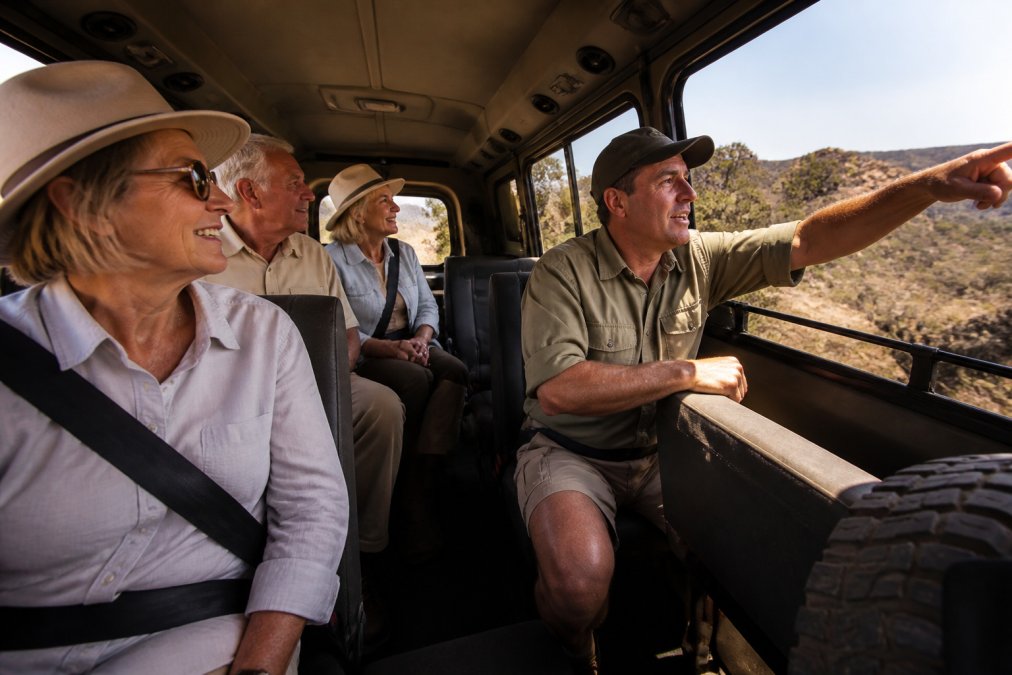
Small-group tours typically cost more because there are fewer people sharing fixed costs. But you're paying for thoughtful pacing, expert guides who act as storytellers, and attention that makes a trip memorable rather than exhausting.
When evaluating any tour operator, ask:
- What's the maximum group size? (Smaller is better for connection and flexibility)
- How many hours per day are scheduled activities? (Confirm it matches your fitness level)
- What's included in the price?
- How much free time is built in? (Essential for retirees who need rest)
- Are guides trained in first aid and remote area safety?
- What's the cancellation policy?
Curious Compass Collective's approach centres on storytelling and authentic experience. Guides are educators who share local knowledge and history. Tours to The Kimberley, Cape York, and Fiji are designed so you're absorbing, not rushing. The Pajinka Tour (Cairns to Cape York) and the Nulla Nulla Safari (The Kimberley) are specifically built for mature travellers who want adventure without exhaustion.
Pacing Your Itinerary and Avoiding Over-Scheduling
Over-scheduling is the silent killer of stress-free travel. The temptation is to fit everything in, but retirees often need more rest than younger travellers. This isn't weakness; it's physiology.
An over-scheduled itinerary creates problems: you're constantly moving, too tired to engage with experiences, and have no flexibility if health issues arise.
A sustainable itinerary for retirees typically includes:
- No more than 3-4 destinations in a two-week trip
- 2-3 nights minimum at each location
- One completely free day per week with no scheduled activities
- Scheduled rest time during each day
- Buffer days at the end before flying home
When planning activities, apply the 60% rule: schedule activities for about 60% of available time, leaving 40% unscheduled. This gives you flexibility if you're tired or if weather changes.
Digital Tools and Apps for Senior Travellers
Technology makes stress-free travel for retirees genuinely easier. You don't need to be tech-savvy; most apps are designed for simplicity.
Medication reminders like Medisafe or Pill Reminder send notifications when it's time to take medication and track doses. Navigation apps like Google Maps work offline, download maps before you leave. Travel document storage apps like Google Drive or Dropbox let you store digital copies of passports and insurance documents. Communication apps like WhatsApp let you stay in touch without expensive international calling. Weather and safety apps like BOM (Bureau of Meteorology) provide accurate local forecasts.
The key is choosing 2-3 tools that genuinely help YOUR situation, not downloading everything. A retiree managing multiple medications benefits from a medication app. A solo traveller benefits from a safety app. Someone anxious about navigation benefits from offline maps.
Conclusion
Stress-free travel for retirees isn't about avoiding challenges, it's about designing experiences so challenges don't derail the joy. Planning ahead removes uncertainty. Choosing the right pace prevents exhaustion. Managing health proactively eliminates surprises. Having someone else handle logistics frees you to enjoy the adventure.
The difference between a stressful trip and a memorable one often comes down to who's managing the details. Curious Compass Collective handles the logistics, transport, accommodation, guided experiences, and itinerary design, so you can focus on connection, discovery, and rest. Our small-group tours to The Kimberley, Cape York, Fiji, and beyond are built specifically for mature travellers who want authentic adventure without exhaustion. VIEW TOURS to explore options designed for stress-free travel.
Frequently Asked Questions
Q: What makes stress-free travel for retirees different from standard group tours?
A: Stress-free travel for retirees prioritises thoughtfully paced itineraries, smaller group sizes, and expert guides who understand the needs of mature travellers. Unlike crowded commercial tours that rush between destinations, these experiences build in rest periods, allow flexibility to skip activities, and focus on comfort over ticking off sights. The emphasis is on quality experiences and personal attention rather than maximising the number of places visited.
Q: How do I manage medication and health needs while travelling as a retiree?
A: Create a detailed health summary including all medications, dosages, and any medical conditions. Store this digitally and in print. Pack medications in original labelled containers in carry-on luggage, plus a week's extra supply. Research medical facilities at your destination and keep contact numbers for your doctor. Inform your tour operator of any health requirements in advance, reputable guides can adjust activities and ensure you have rest time. Consider a medical alert bracelet and keep travel insurance documentation easily accessible.
Q: What should I look for in travel insurance for seniors Australia?
A: Travel insurance for seniors Australia should cover pre-existing medical conditions (check the policy wording carefully), emergency medical evacuation, and repatriation. Look for coverage that includes trip cancellation, baggage loss, and travel delay. Many standard policies exclude older travellers or charge significantly higher premiums. Specialist senior travel insurance policies often provide better value. Always declare all health conditions and read exclusions thoroughly before purchasing. Compare multiple providers and ask whether the policy covers activities planned on your itinerary.
Q: How do I know if I should choose a guided tour or travel independently?
A: Choose a guided tour if you value safety, convenience, and personalised attention, especially for remote or unfamiliar destinations. Tours handle logistics, provide expert knowledge, and offer companionship. Travel independently if you prefer flexibility, want to set your own pace completely, and feel confident managing health needs and navigation alone. Many retirees find small-group guided tours offer the best balance: structure and support without the rush of large commercial groups. Consider a trial short tour to test whether guided travel suits you.
Q: What are the most common mistakes seniors make when planning travel?
A: Common mistakes include over-scheduling activities, underestimating travel fatigue, packing too much, not arranging travel insurance early, and failing to inform tour operators of health needs. Many retirees also neglect to check visa requirements, assume they can manage without guides in unfamiliar terrain, and don't build in adequate rest days. Another frequent error is booking too many activities per day without considering mobility limitations. Planning with realistic expectations about energy levels and building flexibility into your itinerary prevents most of these issues.
Q: How can I find alternatives to mainstream tour operators?
A: Look for small-group tour operators that specialise in mature travellers and emphasise thoughtfully paced itineraries. Check reviews specifically mentioning comfort, pacing, and guide expertise. Seek operators who customise itineraries for groups or individuals, offer flexible activity options, and provide transparent information about physical demands. Ask potential operators about their guide qualifications, safety protocols, and how they handle medical emergencies. Request references from previous travellers and compare what different operators include in their packages, not all charge the same for similar experiences.
Q: What should I pack for a stress-free retirement trip?
A: Pack comfortable, versatile clothing in neutral colours that mix and match easily. Bring supportive walking shoes already broken in, plus slip-on shoes for rest days. Include all medications in original containers, a basic first-aid kit, compression socks if you have circulation concerns, and any mobility aids needed. Don't forget travel insurance documents, copies of important IDs, and a portable phone charger. Keep luggage light, aim for carry-on only if possible to avoid baggage delays. Pack items you actually use; most destinations have shops if you forget something non-essential.
Q: How do I recover after returning from a retirement travel adventure?
A: Post-travel recovery matters as much as the trip itself. Allow at least one full rest day before resuming normal activities. Stay hydrated, maintain regular sleep patterns, and ease back into exercise gradually. If you crossed time zones, give your body 3-5 days to adjust. Review any health changes with your doctor if you experienced symptoms during travel. Reflect on what worked well and what was challenging, this information improves planning for your next adventure. Many retirees find light stretching, walking, and social connection help readjust smoothly.
This article was written using GrandRanker
Frequently Asked Questions
Q: What makes stress-free travel for retirees different from standard group tours?
A: Stress-free travel for retirees prioritises thoughtfully paced itineraries, smaller group sizes, and expert guides who understand the needs of mature travellers. Unlike crowded commercial tours that rush between destinations, these experiences build in rest periods, allow flexibility to skip activities, and focus on comfort over ticking off sights. The emphasis is on quality experiences and personal attention rather than maximising the number of places visited.
Q: How do I manage medication and health needs while travelling as a retiree?
A: Create a detailed health summary including all medications, dosages, and any medical conditions. Store this digitally and in print. Pack medications in original labelled containers in carry-on luggage, plus a week's extra supply. Research medical facilities at your destination and keep contact numbers for your doctor. Inform your tour operator of any health requirements in advance—reputable guides can adjust activities and ensure you have rest time. Consider a medical alert bracelet and keep travel insurance documentation easily accessible.
Q: What should I look for in travel insurance for seniors Australia?
A: Travel insurance for seniors Australia should cover pre-existing medical conditions (check the policy wording carefully), emergency medical evacuation, and repatriation. Look for coverage that includes trip cancellation, baggage loss, and travel delay. Many standard policies exclude older travellers or charge significantly higher premiums. Specialist senior travel insurance policies often provide better value. Always declare all health conditions and read exclusions thoroughly before purchasing. Compare multiple providers and ask whether the policy covers activities planned on your itinerary.
Q: How do I know if I should choose a guided tour or travel independently?
A: Choose a guided tour if you value safety, convenience, and personalised attention—especially for remote or unfamiliar destinations. Tours handle logistics, provide expert knowledge, and offer companionship. Travel independently if you prefer flexibility, want to set your own pace completely, and feel confident managing health needs and navigation alone. Many retirees find small-group guided tours offer the best balance: structure and support without the rush of large commercial groups. Consider a trial short tour to test whether guided travel suits you.
Q: What are the most common mistakes seniors make when planning travel?
A: Common mistakes include over-scheduling activities, underestimating travel fatigue, packing too much, not arranging travel insurance early, and failing to inform tour operators of health needs. Many retirees also neglect to check visa requirements, assume they can manage without guides in unfamiliar terrain, and don't build in adequate rest days. Another frequent error is booking too many activities per day without considering mobility limitations. Planning with realistic expectations about energy levels and building flexibility into your itinerary prevents most of these issues.
Q: How can I find alternatives to mainstream tour operators?
A: Look for small-group tour operators that specialise in mature travellers and emphasise thoughtfully paced itineraries. Check reviews specifically mentioning comfort, pacing, and guide expertise. Seek operators who customise itineraries for groups or individuals, offer flexible activity options, and provide transparent information about physical demands. Ask potential operators about their guide qualifications, safety protocols, and how they handle medical emergencies. Request references from previous travellers and compare what different operators include in their packages—not all charge the same for similar experiences.
Q: What should I pack for a stress-free retirement trip?
A: Pack comfortable, versatile clothing in neutral colours that mix and match easily. Bring supportive walking shoes already broken in, plus slip-on shoes for rest days. Include all medications in original containers, a basic first-aid kit, compression socks if you have circulation concerns, and any mobility aids needed. Don't forget travel insurance documents, copies of important IDs, and a portable phone charger. Keep luggage light—aim for carry-on only if possible to avoid baggage delays. Pack items you actually use; most destinations have shops if you forget something non-essential.
Q: How do I recover after returning from a retirement travel adventure?
A: Post-travel recovery matters as much as the trip itself. Allow at least one full rest day before resuming normal activities. Stay hydrated, maintain regular sleep patterns, and ease back into exercise gradually. If you crossed time zones, give your body 3-5 days to adjust. Review any health changes with your doctor if you experienced symptoms during travel. Reflect on what worked well and what was challenging—this information improves planning for your next adventure. Many retirees find light stretching, walking, and social connection help readjust smoothly.