 ultimate-guide
Small Group 4WD Tours for Seniors: A Complete Guide
Table of Contents
- Why Small Group 4WD Tours Suit Mature Travellers
- What to Expect: Comfort and Pacing on a 4WD Adventure
- 4WD Tour Safety Standards in Australia
- Multi-Day 4WD Expedition Packing List for Seniors
- Best 4WD Tour Operators for Seniors: What Sets Them Apart
- Medical Preparedness and Health Support for Remote Travel
- Solo Travellers and Social Dynamics on Small Group Tours
- Choosing Your First 4WD Adventure
Last Updated: August 22, 2026
Why Small Group 4WD Tours Suit Mature Travellers
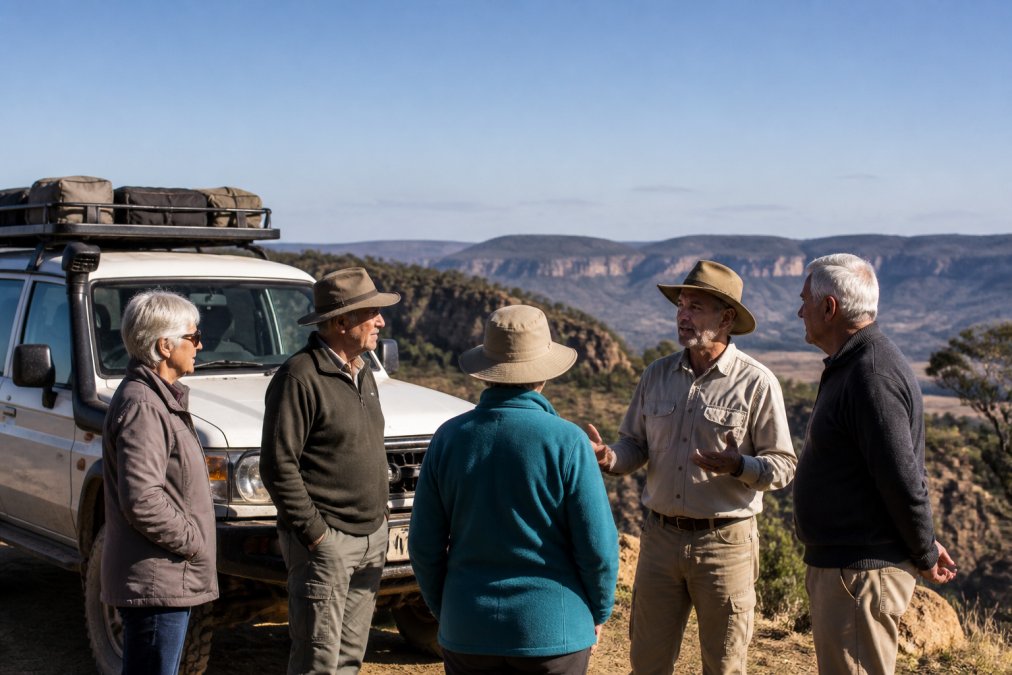
Small group 4WD tours for seniors keep groups deliberately small, typically 6 to 12 participants, which fundamentally changes the experience. At Curious Compass Collective, we've designed our small group 4WD tours for seniors around what mature travellers actually want: authentic discovery without physical punishment or social overwhelm.
In a small group, your guide knows your name by day two and can pivot the itinerary to match your interests. They notice when someone's knees are struggling and adjust walking distances accordingly. A guide leading 50 people manages logistics; a small group guide facilitates experience. This format prioritises what matters most to mature travellers: genuine connection, manageable pacing, and the space to absorb what you're seeing rather than rushing to the next photo stop.
Small groups also create natural social dynamics. You're part of a curated group of like-minded travellers seeking something deeper than the typical tourist conveyor belt. That sense of belonging transforms the entire journey from ticking boxes to building memories.
What to Expect: Comfort and Pacing on a 4WD Adventure
Vehicle comfort and accessibility features
A purpose-designed 4WD vehicle is your travelling companion for days at a time, and comfort matters significantly. These vehicles are specifically configured to handle remote terrain whilst keeping passengers comfortable during long driving days.
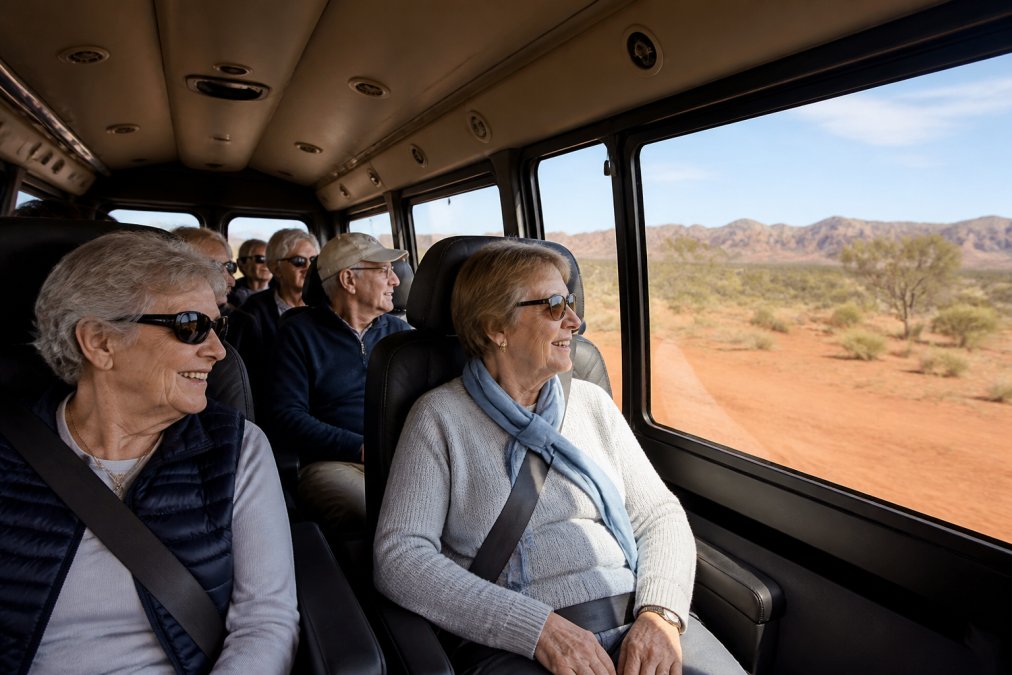
Look for reclining seats with lumbar support, essential when spending 6-8 hours daily in a vehicle (the CDC). Air conditioning is non-negotiable in remote areas where temperatures swing dramatically. Large windows positioned for viewing mean you experience the landscape rather than staring at metal frames. Suspension systems designed for rough terrain absorb impacts that would otherwise affect your lower back. Storage compartments prevent belongings from shifting during corrugations.
Modern 4WD tour vehicles carry satellite communication equipment for remote areas without mobile coverage and are serviced to standards exceeding standard vehicle maintenance. Drivers know their vehicles intimately: where they can safely navigate, how to handle different terrain types, and how to recover if something goes wrong. That knowledge directly translates to your safety.
Thoughtfully paced itineraries and walking distances
"Thoughtfully paced" means the itinerary isn't designed to cram maximum activities into minimum time. Instead, it's structured around sustainable daily rhythms: reasonable driving distances, manageable walks, time to absorb locations, and evening downtime.
Quality small group 4WD tours for seniors build flexibility around walking distances. A 10-kilometre day typically means 2-3 separate walks of 2-3 kilometres each, with vehicle transport between them and rest periods. This structure prevents exhaustion and allows you to gain energy as the tour progresses.
The best operators provide clear information upfront about what "manageable walking" actually means: terrain type, distance, elevation gain, and rest stops. That transparency lets you decide whether a particular tour suits your fitness level. The itinerary adapts to the group's capabilities rather than forcing the group to adapt to a predetermined schedule.
4WD Tour Safety Standards in Australia
Safety in remote 4WD travel requires comprehensive protocols covering vehicle maintenance, guide qualifications, emergency communication, and group management. These standards should be verifiable and transparent.
Vehicle safety checks should happen daily, including tyre condition, fluid levels, brake function, and emergency equipment. Guides should hold current first aid certification and specific training in remote area response (acsm.org). Communication equipment should include satellite phones or emergency beacons for areas without mobile coverage. Insurance should cover both vehicle operations and passenger medical evacuation if needed.
The best operators can point to specific safety certifications or industry memberships validating their practices. They maintain incident logs and explain exactly what happens if someone becomes unwell in a remote location, how they'd manage a vehicle breakdown, and what their communication protocols are.
Multi-Day 4WD Expedition Packing List for Seniors
Packing for a multi-day 4WD adventure differs significantly from standard tourism. The environment is harsher, conditions more variable, and your belongings need to work harder for you.
Clothing and footwear for variable terrain
Layering is non-negotiable. Remote areas experience dramatic temperature swings, hot sun during the day, cold nights, sudden weather changes. Start with moisture-wicking base layers (merino wool or synthetic, not cotton) (peer-reviewed research). Add a lightweight fleece or merino mid-layer and a waterproof outer layer even if rain isn't forecast.
Footwear must handle multiple terrain types. Bring sturdy walking boots with good ankle support, not trail runners or casual trainers. Rocky ground, loose gravel, and uneven surfaces require ankle support to prevent injury. Include comfortable camp shoes or sandals for downtime. Merino wool socks regulate temperature and reduce blister risk better than cotton, bring at least four pairs.
Sun protection clothing is essential: long-sleeved shirts, long trousers, wide-brimmed hat, and UV400-rated sunglasses. Lightweight gloves protect sensitive skin from intense sun exposure in remote areas.
Health and comfort essentials
Pack blister treatment supplies, pain relief medication in doses you typically use, and any prescription medications in original containers with documentation. Include electrolyte replacement powders or tablets for hot days, insect repellent appropriate to the region, antihistamine for unexpected reactions, and antacids if your stomach is sensitive to dietary changes.
A personal first aid kit beyond what the tour operator provides is sensible: adhesive bandages, antibiotic ointment, pain relief, and any specific medications you rely on. Bring sunscreen in higher SPF than you'd use at home and moisturiser for dry air and wind exposure.
Carry more water capacity than expected, a 1-litre water bottle plus a collapsible backup. Dehydration sneaks up in remote areas. Include snacks you know your body tolerates well: nuts, dried fruit, protein bars. The tour typically provides meals, but familiar snacks prevent low-energy crashes between meals.
Best 4WD Tour Operators for Seniors: What Sets Them Apart
Small group size vs. large coach tours
Coach tours prioritise efficiency: move maximum people through maximum locations in minimum time. Small group 4WD tours prioritise experience: move a curated group through meaningful locations at a pace allowing genuine engagement.
In a coach tour with 40-50 people, the guide speaks through a microphone. Bathroom stops are regimented. Meals are at fixed times. Viewpoint stops are timed. You see many places but experience very little. The social dynamic is transactional.
Small group 4WD tours operate differently. Eight to twelve people fit in one vehicle. The guide speaks naturally without amplification. Stops happen when the group is ready. If someone wants extra time photographing something, the group waits. If the group wants to deviate slightly from the planned itinerary, that's possible. The social dynamic is relational, you know other travellers by the end of the first day.
The physical experience differs too. Coach tours involve constant boarding and disembarking, navigating crowded facilities, competing for bathroom access. 4WD tours mean you stay with the same small group in the same vehicle, moving at your own pace.
Expert guides and personalised attention
Expert guides on small group 4WD tours for seniors aren't just drivers, they're storytellers, safety professionals, and cultural interpreters. They know the landscape deeply: not just where to go but why places matter, what stories they hold, what details most visitors miss.
Personalised attention means guides notice individual interests and adjust accordingly. Someone interested in geology gets explanations of rock formations. Someone interested in Indigenous history gets deeper cultural context. Someone with mobility concerns gets route adjustments. That customisation only becomes possible in small groups.
The best guides hold multiple certifications: first aid, remote area response, vehicle recovery. They've spent years in the regions they guide, not weeks. They maintain relationships with local communities and facilitate genuine cultural exchange rather than staged experiences.
Medical Preparedness and Health Support for Remote Travel
Remote 4WD travel means medical support isn't immediately available. Before booking any small group 4WD tour for seniors, understand both what support exists and what gaps you need to manage personally.
Operators should provide pre-tour health questionnaires asking about medications, allergies, mobility limitations, and medical history. Guides should carry comprehensive first aid kits and know how to use them. For truly remote areas, operators should have satellite communication capability to arrange evacuation if needed.
Personally, prepare a detailed medication list with generic names, dosages, and purpose. Carry copies of recent prescriptions and know your blood type. Discuss the specific itinerary with your doctor beforehand. Bring copies of relevant medical records or summaries. Consider travel insurance covering remote area medical evacuation.
Stay hydrated from day one and monitor yourself for signs of heat stress: excessive fatigue, dizziness, nausea. Report any concerns to your guide immediately rather than trying to push through.
Solo Travellers and Social Dynamics on Small Group Tours
Travelling solo on a small group 4WD tour for seniors raises questions about social dynamics and belonging. Small groups actually favour solo travellers. With 8-12 people rather than 40-50, social pressure to "fit in" decreases. Most small group tour operators actively welcome solo travellers and often don't charge supplement fees for single accommodation.
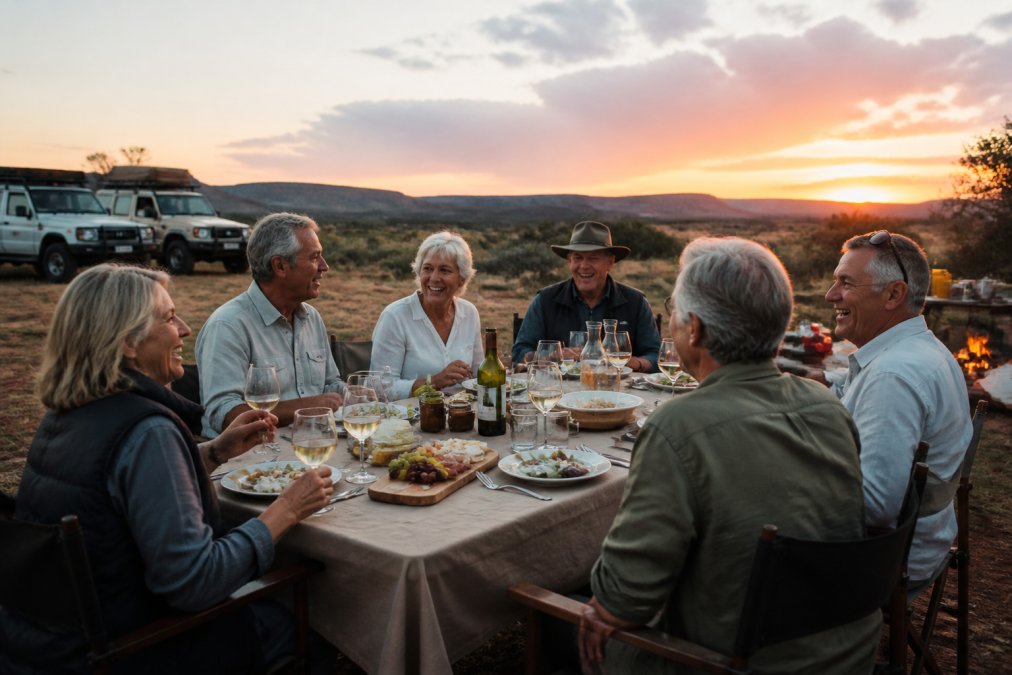
Shared meals, shared vehicle time, and shared experiences create organic friendships. Some travellers become close friends; others remain friendly acquaintances. Both outcomes are fine. Genuine connection becomes possible because the group is small enough for real interaction.
Many solo travellers report that group tours expanded their travel confidence. You're not navigating logistics alone, the operator handles that. You're not making all decisions alone, the group shares that responsibility. Yet you maintain autonomy: you can join group activities or take solo time as you prefer.
Choosing Your First 4WD Adventure
Start by being honest about what you want from the experience. Are you seeking physical challenge? Cultural immersion? Relaxation? Time with like-minded people? Different tours emphasise different elements.
Research operators thoroughly. Look for verifiable safety standards, not just reassuring language. Read reviews specifically from mature travellers. Ask operators direct questions: What's the actual daily driving time? What does "manageable walking" mean specifically? How flexible is the itinerary? What happens if someone becomes unwell?
Start with a shorter tour, 3-4 days rather than 10-14 days. That lets you experience the format and decide whether you want longer expeditions. Consider the season and region carefully. Your first tour should match conditions you're confident handling.
Connect with the operator before committing. A good operator wants to ensure you're a good fit for their tour. They'll ask questions, answer yours thoroughly, and help you make a genuinely informed decision.
Choosing the right small group 4WD tour for seniors transforms how you experience remote travel. Rather than being rushed through landscapes or confined to coach windows, you're genuinely exploring with people who share your pace and values. Curious Compass Collective specialises in exactly this, small group 4WD adventures designed around thoughtfully paced itineraries, expert guides who prioritise storytelling, and vehicles configured for both comfort and capability. The Frontier tour guests keep calling the bucket list trip of a lifetime to 'The Tip', and the Nulla Nulla Safari trip is becoming a guest favourite for genuine discovery, authentic connection, and the space to actually enjoy the journey. VIEW TOURS
Frequently Asked Questions
Q: Are small group 4WD tours suitable for seniors with limited mobility?
A: Yes, when chosen carefully. Look for operators who offer purpose-designed 4WD vehicles with reclining seats, air conditioning, and easy entry/exit. Confirm walking distances are manageable, most reputable operators specify daily walking times and terrain difficulty. Ask about accessibility features before booking, and discuss any mobility concerns directly with the operator. They can often adjust activities or provide alternatives without affecting your experience.
Q: What safety standards should I look for in a 4WD tour operator?
A: Check that the operator holds current insurance, employs guides trained in remote area first aid and emergency response, and maintains vehicles to safety standards. Ask about their protocols for medical emergencies, communication systems in remote areas, and passenger briefings. Reputable operators will provide transparent information about their safety practices. In Australia, legitimate operators follow industry best practices and can demonstrate compliance with relevant tourism safety guidelines.
Q: How do small group 4WD tours differ from large coach tours for older travellers?
A: Small group tours typically carry 6-12 passengers, allowing personalised attention, flexible pacing, and genuine connection with guides and fellow travellers. Coach tours often have 30+ passengers, creating a rushed atmosphere and limiting access to remote locations. Small group 4WD tours can navigate off-road terrain, visit hidden gems, and adjust itineraries based on group interests. You'll spend less time waiting and more time experiencing authentic destinations without the conveyor-belt feeling.
Q: What should I pack for a multi-day 4WD adventure in remote areas?
A: Pack layers (temperatures fluctuate in remote areas), sturdy walking shoes broken in beforehand, a wide-brimmed hat, and high-SPF sunscreen. Include prescribed medications in original containers, any medical devices, and a basic first-aid kit. Bring a reusable water bottle, comfortable casual clothes for evenings, and a light jumper. Avoid heavy luggage, most 4WD vehicles have limited storage. Check with your operator for specific packing advice based on the destination and season, as remote travel differs significantly from typical coach tours.
This article was written using GrandRanker
Frequently Asked Questions
Q: Are small group 4WD tours suitable for seniors with limited mobility?
A: Yes, when chosen carefully. Look for operators who offer purpose-designed 4WD vehicles with reclining seats, air conditioning, and easy entry/exit. Confirm walking distances are manageable—most reputable operators specify daily walking times and terrain difficulty. Ask about accessibility features before booking, and discuss any mobility concerns directly with the operator. They can often adjust activities or provide alternatives without affecting your experience.
Q: What safety standards should I look for in a 4WD tour operator?
A: Check that the operator holds current insurance, employs guides trained in remote area first aid and emergency response, and maintains vehicles to safety standards. Ask about their protocols for medical emergencies, communication systems in remote areas, and passenger briefings. Reputable operators will provide transparent information about their safety practices. In Australia, legitimate operators follow industry best practices and can demonstrate compliance with relevant tourism safety guidelines.
Q: How do small group 4WD tours differ from large coach tours for older travellers?
A: Small group tours typically carry 6-12 passengers, allowing personalised attention, flexible pacing, and genuine connection with guides and fellow travellers. Coach tours often have 30+ passengers, creating a rushed atmosphere and limiting access to remote locations. Small group 4WD tours can navigate off-road terrain, visit hidden gems, and adjust itineraries based on group interests. You'll spend less time waiting and more time experiencing authentic destinations without the conveyor-belt feeling.
Q: What should I pack for a multi-day 4WD adventure in remote areas?
A: Pack layers (temperatures fluctuate in remote areas), sturdy walking shoes broken in beforehand, a wide-brimmed hat, and high-SPF sunscreen. Include prescribed medications in original containers, any medical devices, and a basic first-aid kit. Bring a reusable water bottle, comfortable casual clothes for evenings, and a light jumper. Avoid heavy luggage—most 4WD vehicles have limited storage. Check with your operator for specific packing advice based on the destination and season, as remote travel differs significantly from typical coach tours.