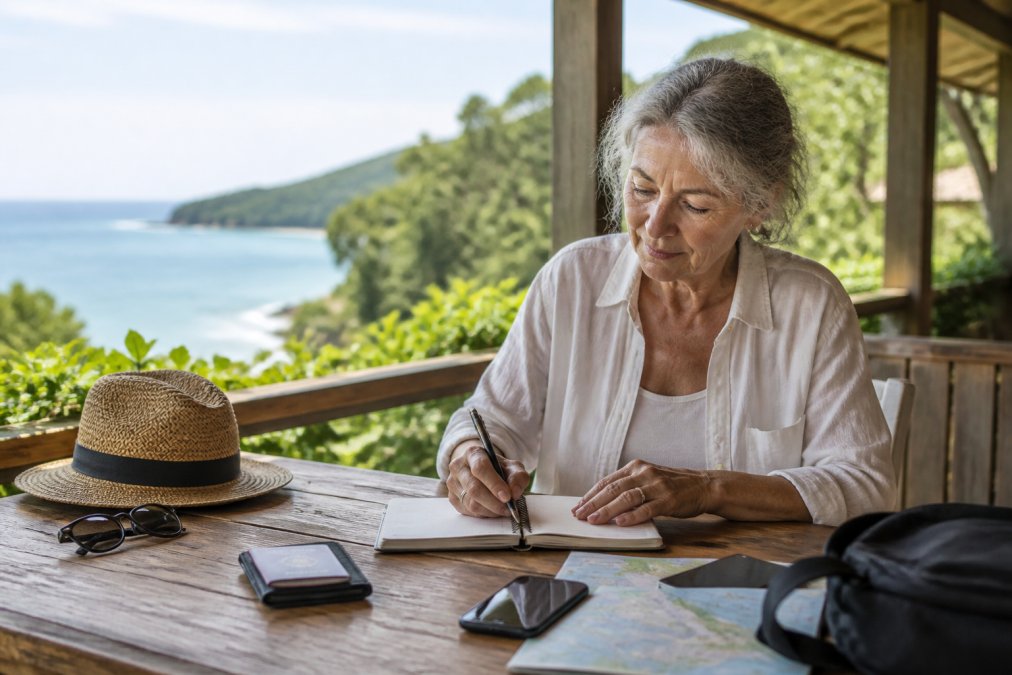
 ultimate-guide
Safe Remote Travel for Retirees: A Practical Guide
Table of Contents
- Why Safe Remote Travel Matters for Retirees
- Essential Health and Medical Preparation
- Outback Travel Safety Tips for Seniors
- Small Group Guided Tours for Mature Travellers
- Satellite Communication Devices for Remote Travel
- Managing Chronic Conditions in Remote Areas
- Travel Insurance and Emergency Repatriation
- Creating Your Safe Remote Travel Itinerary
Last Updated: August 26, 2026
Why Safe Remote Travel Matters for Retirees
Safe remote travel for retirees has become increasingly important as mature travellers seek authentic adventures beyond crowded destinations. Remote areas offer genuine connection to landscapes and communities, but reaching them requires careful planning around terrain, distance, and isolation.
This isn't about deterring travel. It's about recognising that safe remote travel for retirees demands a different approach than standard tourism. Your knees might not tolerate eight-hour walking tours. Your medications need consistent storage. Your phone won't work in the outback. These aren't reasons to stay home; they're variables to plan around.
At Curious Compass Collective, we've designed small-group guided tours specifically for mature travellers who want authentic experiences without physical strain or safety compromises. Remote travel as a retiree is entirely achievable. It simply requires honesty about what you need, clarity about your capabilities, and willingness to prioritise quality of experience over quantity of destinations.
Essential Health and Medical Preparation
Before booking any remote travel, your health needs genuine assessment. Remote areas mean limited access to medical facilities, pharmacies, and specialists.
Get written medical clearance from your doctor, specifically mentioning remote destinations and activities you're planning. Bring copies with you. Carry all necessary medications in original, clearly labelled containers with at least 50% extra to account for travel delays (the WHO). Keep medications in cool, dry places; extreme outback heat can degrade some medications.
Vaccinations deserve serious attention. Depending on your destination within Australia or the Pacific, you may need protection against typhoid, hepatitis A, Japanese encephalitis, or other region-specific illnesses (the CDC). Schedule vaccinations at least four to six weeks before departure; some require multiple doses spaced weeks apart.
Consider pre-travel health insurance assessment. Some standard policies exclude pre-existing conditions or high-risk activities. Does your policy cover medical evacuation from remote areas? Does it cover activities like 4WD travel or hiking at altitude?
Outback Travel Safety Tips for Seniors
Outback travel safety for seniors begins with accepting that the landscape is unforgiving and your safety depends entirely on preparation, realistic self-assessment, and expert guidance.
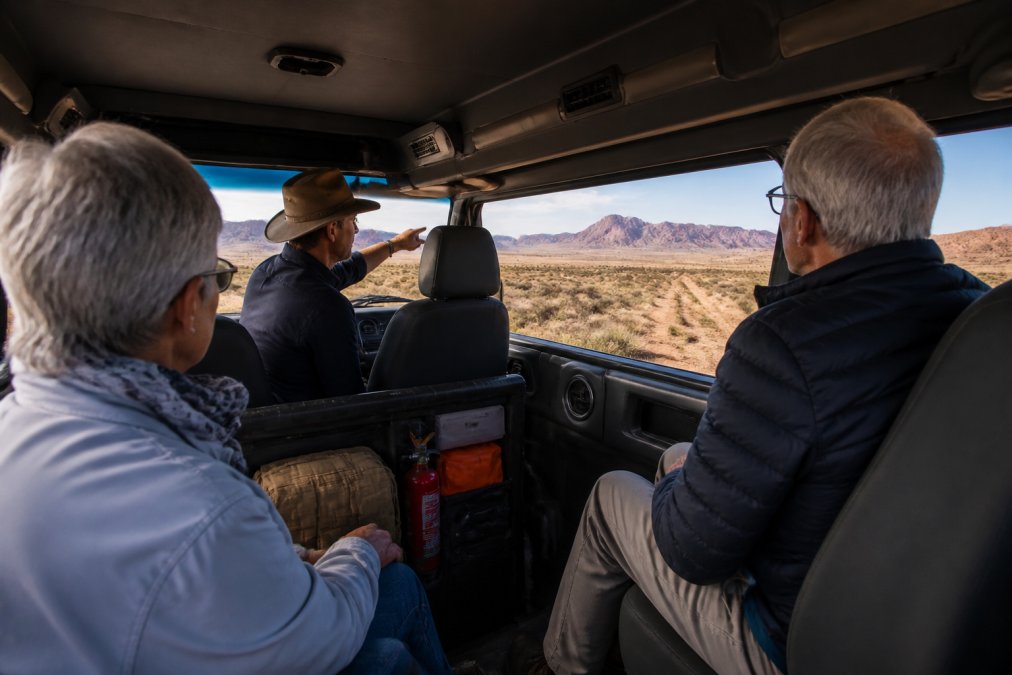
Vehicle choice matters profoundly. Standard cars fail on outback roads; purpose-designed 4WD vehicles are essential, equipped with high-clearance suspension to handle corrugated tracks and reinforced undercarriage protection.
Communication is your lifeline. Outback travel means no mobile phone coverage for extended periods. A satellite communication device, either a satellite phone or personal locator beacon, transforms your risk profile by allowing you to call for help or send check-in messages from anywhere on Earth.
Navigation requires more than GPS. Paper maps, compass skills, and knowledge of water sources matter. Professional guides carry all three and know terrain intimately.
Physical demands vary dramatically by destination. Be brutally honest about what your body can sustain. A guide can adjust pace; they cannot carry you out if you injure yourself kilometres into a walk.
Weather in remote areas changes rapidly. Dust storms reduce visibility to metres. Flash flooding transforms dry creek beds into torrents within minutes. Guides monitor weather patterns and adjust itineraries accordingly.
Small Group Guided Tours for Mature Travellers
Small group guided tours for mature travellers work because they align with how retirees actually travel and what they value.
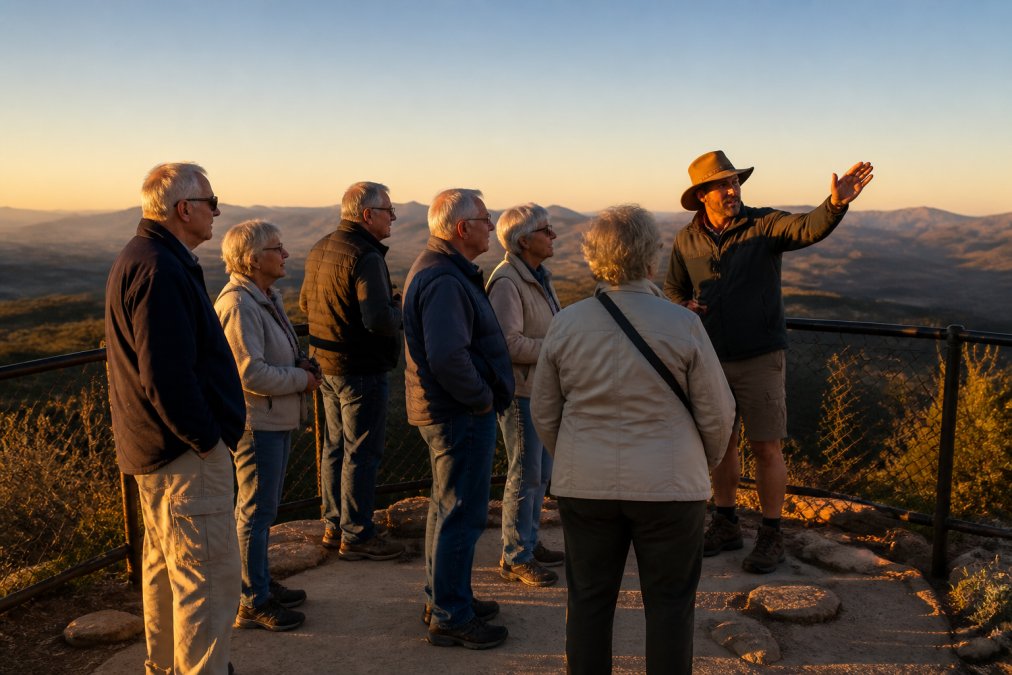
Group size shapes the entire experience. Tours with 4-8 participants allow genuine conversation, flexible scheduling, and personalised attention. Your guide learns your interests and physical limitations and can adjust activities accordingly.
Pacing determines whether a trip energises or exhausts you. Thoughtfully paced tours build rest days into the schedule. You might spend two nights in one location, allowing a full day to explore at your own speed without pressure to pack and move accommodation.
Expert guides bring layered value beyond navigation. They're storytellers who contextualise what you're seeing and facilitate genuine connections with communities. They manage logistics, vehicle maintenance, and camp setup so you focus on experiencing the journey.
Small group tours also address practical concerns. Travelling with a group provides built-in companionship and security. If something goes wrong, vehicle breakdown, medical issue, unexpected weather, you're not alone managing it.
Satellite Communication Devices for Remote Travel
Satellite communication devices for remote travel aren't luxury items; they're your primary safety infrastructure. When you're hours from mobile coverage, a satellite device is the difference between a manageable situation and a genuine emergency.
Two primary options exist: satellite phones and personal locator beacons (PLBs). Satellite phones allow two-way communication with call costs typically ranging from several dollars to over ten dollars per minute (fcc.gov). Personal locator beacons transmit your GPS location to rescue authorities and can send preset messages to designated contacts. Satellite messaging devices like Garmin inReach allow two-way text messaging via satellite with lower per-message costs.
Choose based on your specific travel profile. A week-long guided tour? A rental satellite phone or borrowed PLB from your tour operator likely suffices. Months of independent travel? Investing in a personal messaging device makes sense.
Managing Chronic Conditions in Remote Areas
Managing chronic conditions in remote areas requires advance planning that honestly assesses how your condition responds to travel stress, environmental changes, and limited medical access.
Diabetes management becomes complex in remote travel. Time zone changes affect insulin timing. Temperature fluctuations affect insulin stability. Physical activity levels change unpredictably. Bring a detailed management plan from your endocrinologist and carry backup insulin, testing supplies, and glucagon emergency kits.
Arthritis and joint conditions require realistic assessment of physical demands. Be specific with your guide about what you can sustain. They can design activities within your capabilities: scenic drives with short walks, seated cultural experiences, or activities focused on observation rather than physical participation.
Cardiovascular conditions demand careful monitoring. Altitude affects oxygen availability; even modest elevations can stress hearts adapted to sea level. Discuss altitude and climate with your cardiologist before booking.
Respiratory conditions like asthma or COPD can worsen in remote areas with poor air quality or dust storms. Bring rescue inhalers and preventive medications in quantities exceeding your typical needs.
The core principle: advance planning and honest communication with both your healthcare provider and your guide.
Travel Insurance and Emergency Repatriation
Travel insurance for remote travel is fundamentally different from standard holiday insurance. Standard policies often exclude remote areas, high-risk activities, and pre-existing medical conditions.
Read policy documents exhaustively. Does your policy cover medical evacuation from remote areas? Evacuation by helicopter can cost tens of thousands of dollars. Does your policy cover pre-existing conditions? Does it cover activities you're planning: 4WD travel, hiking, water-based activities?
Emergency repatriation is the scenario that keeps retirees awake. A serious medical event in a remote area requiring airlifting to a major hospital and then repatriation to your home country can cost $100,000 to $500,000. Without repatriation insurance, you're personally liable.
Reputable tour operators carry comprehensive insurance that covers their clients. Confirm specifics before booking.
Purchase travel insurance before booking your trip, not after. Pre-existing condition exclusions often apply only if you purchase insurance after diagnosis or after booking travel.
Creating Your Safe Remote Travel Itinerary
Creating a safe remote travel itinerary for retirees means balancing aspiration with realism, building flexibility into rigid plans, and ensuring every day energises rather than depletes you.
Start with honest self-assessment. What's your actual fitness level? Can you walk 5 kilometres on uneven terrain? Can you sit comfortably in a vehicle for 8 hours? Write this assessment down and share it with your guide or tour operator.
Build your itinerary around genuine interests rather than tourist checklist items. If you're fascinated by geology, spend time with rock formations. If you're interested in Indigenous history, prioritise time in communities.
Structure rest days into your itinerary. A week-long trip should include at least two full rest days where you're not travelling or doing planned activities. These allow your body to recover and provide flexibility if weather or unexpected circumstances require adjustments.
Plan for communication touchpoints. Identify locations where you'll have phone or internet access and schedule regular check-ins with family or friends.
Consider travel pace carefully. A realistic pace is 3-4 hours of driving per day with one major activity or location per day and flexibility for weather.
The best remote travel itineraries feel like stories rather than checklists. They have rhythm: intense experience balanced with quiet reflection, physical activity balanced with rest, novelty balanced with familiar comforts.
Safe remote travel for retirees is achievable, meaningful, and entirely compatible with managing the realities of aging bodies and changing health needs. The difference between a trip that depletes you and one that energises you often comes down to intentional planning, honest communication about your needs, and guides who understand that authentic adventure doesn't require physical exhaustion.
Curious Compass Collective specialises in exactly this: small-group tours designed for mature travellers who want genuine experiences without rushed itineraries or physical demands exceeding your capabilities. Their guides combine storytelling expertise with deep knowledge of remote terrain, their vehicles are purpose-built for comfort on rough ground, and their itineraries prioritise meaningful engagement over destination accumulation. If you're considering remote travel but uncertain whether you're capable of it, that uncertainty is worth exploring with operators who've designed their entire model around making remote travel accessible and genuinely enjoyable for retirees.
| Planning Element | What to Include | Why It Matters |
|---|---|---|
| Medical clearance | Written approval from GP for specific destinations | Confirms fitness and provides documentation |
| Medication plan | 50%+ extra supply in original containers | Prevents shortages and ensures proper storage |
| Communication device | Satellite phone or personal locator beacon | Enables emergency contact from remote areas |
| Insurance confirmation | Verified coverage for evacuation and pre-existing conditions | Protects against catastrophic medical costs |
| Itinerary flexibility | Built-in rest days and alternative activities | Allows adjustment for weather or health needs |
| Emergency contacts | Detailed information for guide and family | Ensures rapid response if something goes wrong |
Frequently Asked Questions
Q: What makes safe remote travel different for retirees compared to younger travellers?
A: Retirees often face unique considerations: chronic health conditions, mobility changes, medication management, and the need for reliable medical access. Safe remote travel for retirees prioritises accessible accommodation, shorter daily travel distances, experienced guides trained in senior safety, and clear emergency protocols. Small-group tours designed for mature travellers typically include medical support, flexible pacing, and vehicles equipped for comfort on rough terrain, removing the physical strain of self-guided adventure travel.
Q: How do satellite communication devices help with safety in remote areas?
A: Satellite communication devices for remote travel provide connectivity where mobile networks don't exist, essential for emergency contact, medical advice consultation, and regular check-ins with family. Devices like satellite messengers allow two-way communication and SOS activation in true outback conditions. They're particularly valuable for retirees managing chronic conditions, as they enable quick access to telehealth services or emergency coordination if issues arise far from towns or hospitals.
Q: What should I do if I have a chronic health condition and want to travel remotely?
A: Start with medical clearance from your GP, including a letter detailing your condition, medications, and any restrictions. Research healthcare facilities along your route and arrange travel insurance that covers pre-existing conditions and evacuation. Carry copies of prescriptions, blood test results, and a medical summary card. Consider guided tours where staff are trained in health management and vehicle design accommodates mobility needs. Inform your guide about your condition; experienced operators adjust itineraries without fuss to keep you safe and comfortable.
Q: Why are small-group guided tours safer than self-guided travel for retirees?
A: Small group guided tours for mature travellers combine expert local knowledge, professional safety training, and immediate assistance if issues arise. Guides know emergency protocols, can adjust pace based on group fitness, manage vehicle maintenance, handle navigation, and provide medical first aid. The small-group model means personalised attention, your needs are noticed and addressed quickly. Tours are planned around senior comfort: fewer hours driving daily, accessible facilities, and time for rest and cultural immersion rather than rushing through sights.
This article was written using GrandRanker
Frequently Asked Questions
Q: What makes safe remote travel different for retirees compared to younger travellers?
A: Retirees often face unique considerations: chronic health conditions, mobility changes, medication management, and the need for reliable medical access. Safe remote travel for retirees prioritises accessible accommodation, shorter daily travel distances, experienced guides trained in senior safety, and clear emergency protocols. Small-group tours designed for mature travellers typically include medical support, flexible pacing, and vehicles equipped for comfort on rough terrain, removing the physical strain of self-guided adventure travel.
Q: How do satellite communication devices help with safety in remote areas?
A: Satellite communication devices for remote travel provide connectivity where mobile networks don't exist—essential for emergency contact, medical advice consultation, and regular check-ins with family. Devices like satellite messengers allow two-way communication and SOS activation in true outback conditions. They're particularly valuable for retirees managing chronic conditions, as they enable quick access to telehealth services or emergency coordination if issues arise far from towns or hospitals.
Q: What should I do if I have a chronic health condition and want to travel remotely?
A: Start with medical clearance from your GP, including a letter detailing your condition, medications, and any restrictions. Research healthcare facilities along your route and arrange travel insurance that covers pre-existing conditions and evacuation. Carry copies of prescriptions, blood test results, and a medical summary card. Consider guided tours where staff are trained in health management and vehicle design accommodates mobility needs. Inform your guide about your condition; experienced operators adjust itineraries without fuss to keep you safe and comfortable.
Q: Why are small-group guided tours safer than self-guided travel for retirees?
A: Small group guided tours for mature travellers combine expert local knowledge, professional safety training, and immediate assistance if issues arise. Guides know emergency protocols, can adjust pace based on group fitness, manage vehicle maintenance, handle navigation, and provide medical first aid. The small-group model means personalised attention—your needs are noticed and addressed quickly. Tours are planned around senior comfort: fewer hours driving daily, accessible facilities, and time for rest and cultural immersion rather than rushing through sights.