 how-to
Respectful Cultural Tourism in Australia: A 2026 Guide
Table of Contents
- Why Respectful Cultural Tourism Matters in Australia
- First Nations Cultural Protocols: Your Starting Point
- Engaging with Sacred Sites and Ceremonial Events
- Supporting Indigenous-Owned Businesses on Your Travels
- The Dos and Don'ts of Respectful Photography of Cultural Sites
- Digital Etiquette: Sharing Your Cultural Experiences Online
- Your Responsible Travel Checklist for Cultural Encounters
- Frequently Asked Questions
Last Updated: September 9, 2026
Why Respectful Cultural Tourism Matters in Australia
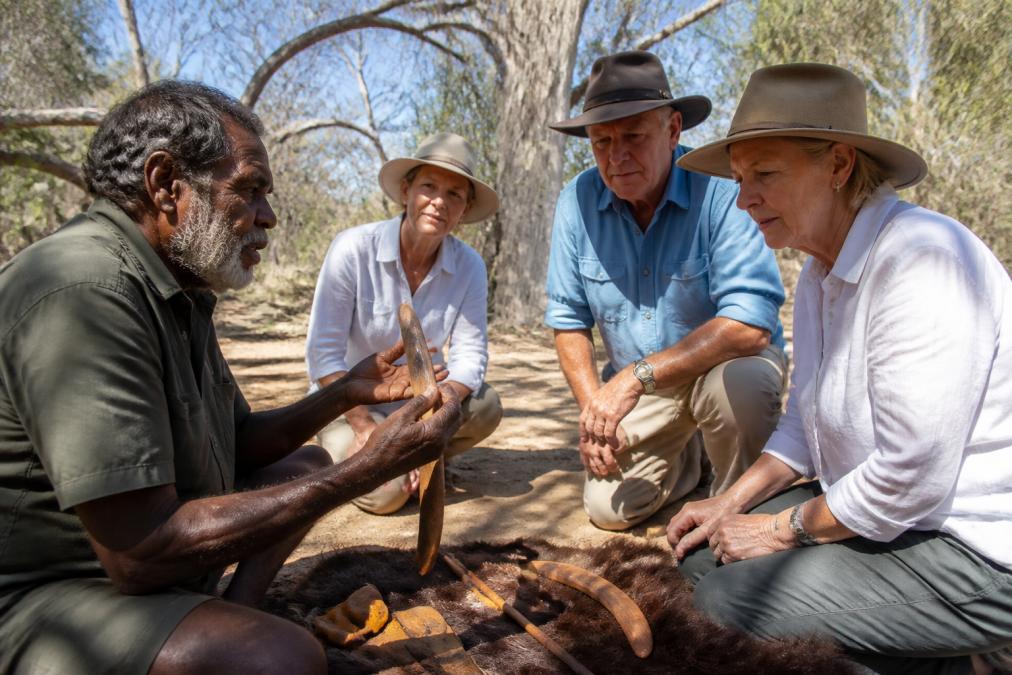
Respectful cultural tourism in Australia is the practice of engaging with First Nations cultures, lands, and stories in a manner that honours Traditional Custodians and their living heritage. It moves beyond observing sights to building meaningful connection with the oldest continuous cultures on Earth. This guide from Curious Compass Collective explains how to travel with cultural sensitivity so your presence benefits communities rather than exploiting them.
The stakes are higher than many visitors realise. When done poorly, tourism can commodify sacred practices and disrespect cultural intellectual property. When done well, it sustains communities, protects cultural heritage, and creates genuine cultural exchange that enriches everyone involved. The Australian Government's Indigenous tourism guidance emphasises that ethical engagement is not optional extras but the foundation of sustainable tourism in this country.
Below, we'll walk through the practical protocols every traveller should know, from how to behave at sacred sites to what is appropriate to share on social media. These strategies can help mature travellers forge authentic connections across the Kimberley, Cape York, and beyond.
First Nations Cultural Protocols: Your Starting Point
Cultural protocols are the customary rules that govern how visitors should interact with Aboriginal and Torres Strait Islander peoples, their lands, and their ceremonies. They are not bureaucratic formalities; they are living laws passed down through generations that protect cultural integrity and safety.
Your first obligation is to understand who the Traditional Custodians are for the area you are visiting. Every region in Australia sits on Country belonging to specific language groups, and acknowledging them correctly is the starting point of respect. Before you travel, research the local Aboriginal corporation or land council and learn the correct pronunciation of the group's name.
A Welcome to Country can only be performed by a Traditional Custodian, while an Acknowledgement of Country can be offered by anyone as a sign of respect. Accept both graciously, and if you are uncertain about the difference, ask your guide rather than guessing.
Engaging with Sacred Sites and Ceremonial Events
Sacred sites are places of profound spiritual significance, and many are restricted to uninitiated people or specific genders. Approaching them without permission can cause deep offence and, in some cases, contravene protection laws. Always observe signage, barriers, and the instructions of local guides without question.
Ceremonial events are often private affairs. If you are invited to witness one, treat the invitation as a privilege: arrive early, stay quiet, and never assume you may photograph, record, or share what you see. Some knowledge is restricted and not meant for public consumption.
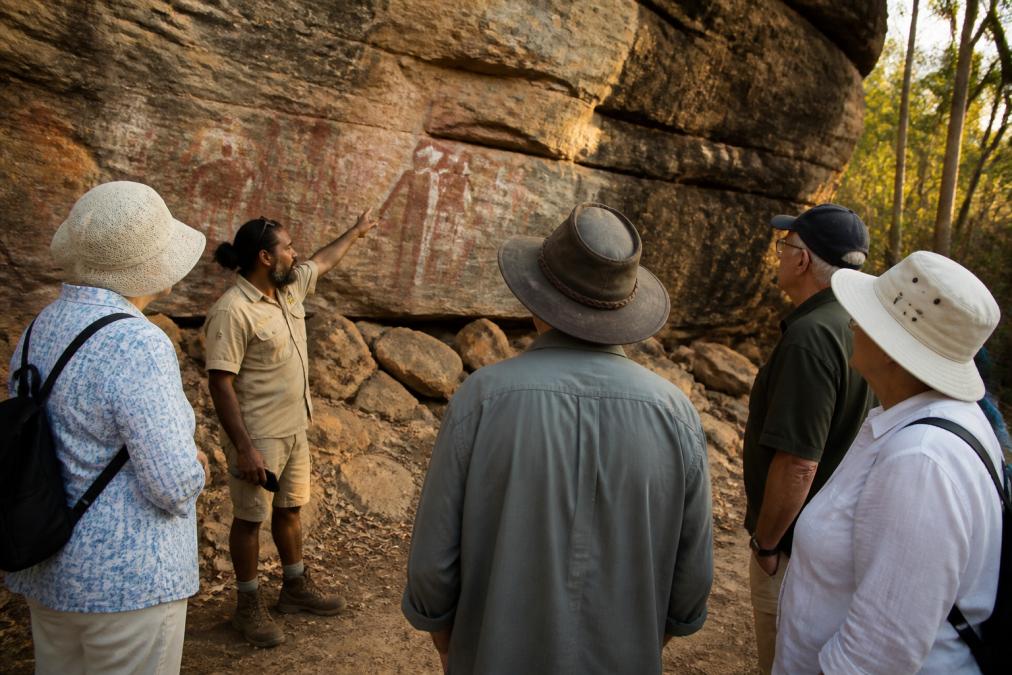
If you are travelling with a company like Curious Compass Collective, your expert guides act as cultural intermediaries. They know which sites welcome visitors, which stories are appropriate to share, and how to facilitate respectful introductions with local elders.
Supporting Indigenous-Owned Businesses on Your Travels
Supporting Indigenous-owned businesses is one of the most direct ways your travel dollars can strengthen communities and keep cultural heritage alive. Buying directly from Aboriginal and Torres Strait Islander sellers funds cultural maintenance rather than mass consumption.
Look for the Indigenous Art Code or ask about provenance when purchasing artwork. Choose tours operated by First Nations guides or partnerships where local people hold genuine decision-making power, not just a token welcome dance.
The Indigenous Tourism Australia guidelines recommend seeking out operators who demonstrate long-term partnership development with communities rather than one-off visitation. Community-based tourism models, where locals own and operate the experience, deliver far more meaningful connection than drive-by sightseeing.
The Dos and Don'ts of Respectful Photography of Cultural Sites
Respectful photography of cultural sites begins with one simple rule: when in doubt, ask first. Many sacred sites prohibit photography entirely, while others restrict images of specific people, ceremonies, or rock art, as images can circulate beyond the community's control.
Under the Commonwealth Aboriginal and Torres Strait Islander Heritage Protection Act 1984, the Minister can protect significant Aboriginal areas and objects from injury or desecration. Several state and territory laws go further. The Northern Territory Aboriginal Sacred Sites Act 1989 establishes the Aboriginal Areas Protection Authority (AAPA), which maintains a register of sacred sites; entering a sacred site without a permit, or photographing it in breach of a permit condition, can result in fines of up to $29,900 for an individual or $148,700 for a corporation. The Aboriginal Heritage Act 2006 (Vic) and the National Parks and Wildlife Act 1974 (NSW) provide similar protections, with penalties for damaging or desecrating sites, including unauthorised photography in restricted contexts.
Cultural intellectual property (CIP) is a recognised concept under international human rights law, and in Australia, the Indigenous Art Code and the Australia Council for the Arts provide guidance. CIP means images, stories, and designs belong to the community or creator, and consent is not a one-time transaction. If an elder agrees to be photographed for a community newsletter, that consent does not extend to your travel blog.
A practical consent protocol used by many operators follows the 'three-step check':
- Ask explicitly, not 'Is it okay if I take a photo?' but 'May I take a photograph of you/this site for my personal collection? I will not share it online.'
- Wait for a clear, unambiguous yes, a shrug, a nod, or silence is not consent. If the answer is hesitant, treat it as a no.
- Confirm the usage, state what you intend to do with the image. If you plan to post it on Instagram or Facebook, say so and ask if that is acceptable.
Flash photography can accelerate deterioration of rock art pigments, and touching the art is prohibited in most protected areas. The Burrup Peninsula (Murujuga) in Western Australia has specific restrictions, and visitors are encouraged to view the art only with accredited guides.
Practical etiquette to follow:
- Never photograph ceremonies or restricted areas
- Turn off your camera when asked, without arguing
- Ask whether commercial use of images is permitted
- Credit the artist or community if you share their work
- Respect that some stories are not yours to capture
- If you are unsure whether a site is sacred, ask a local guide or the land council before raising your camera
- When photographing people, position yourself at their eye level, not above them, and never photograph children without the explicit consent of a parent or guardian
Keep a small notebook or a note on your phone with the names of the people you photograph and the date. This allows you to follow up if you later wish to use the image in a publication, and it demonstrates that you see the person, not just the picture.
The camera is a tool of connection or extraction. When you ask first, listen carefully, and honour the conditions attached, photography builds trust. When you skip the question, you risk taking something that was not offered.
Digital Etiquette: Sharing Your Cultural Experiences Online
Social media turns a private moment of cultural exchange into a public broadcast. Before posting photos from a community visit, consider whether the image could be taken out of context or trivialised. A beautiful sunset photo may include a site that is not meant to be publicised.
Avoid geo-tagging sacred or restricted locations. Publishing precise coordinates can lead to a flood of unprepared visitors and cause significant damage. Leave the location vague or ask your guide whether it is appropriate to tag the site.
Language matters here too. The National Indigenous Australians Agency's terminology guidance advises using capitalised terms like "First Nations" and "Aboriginal and Torres Strait Islander peoples" to show respect. Avoid outdated or offensive terms, and remember that "Country" with a capital C refers to the deep spiritual connection to land, not just scenery.
Your Responsible Travel Checklist for Cultural Encounters
Before you head out, run through this checklist to confirm you are ready to travel with cultural competency and genuine respect.
- Research the Traditional Custodians of the region you are visiting
- Learn the correct pronunciation of local place names and language groups
- Confirm your tour operator employs local First Nations guides
- Ask permission before photographing people or cultural sites
- Decline to share restricted information or images online
- Buy directly from Indigenous-owned businesses where possible
- Respect that some knowledge is not meant for visitors
- Support operators with genuine partnership models, not tokenism
A checklist only helps you plan. Here is a practical decision-making framework for the awkward, uncomfortable, or accidental moments of breach.
Scenario 1: You accidentally photograph a restricted site.
You did not see the sign, or the guide did not mention it, and you only realise after you have taken the shot. The respectful response is to approach your guide or a community member, show them the image, and ask whether it should be deleted. If they ask you to delete it, do so in front of them. Communities respond far more positively to an honest mistake followed by a transparent offer to correct it than to a hidden breach.
Scenario 2: You are invited to a ceremony, but you are unsure whether you are allowed to attend.
An invitation to a private ceremony is a privilege and a responsibility. Before accepting, ask: Is the ceremony open to visitors? Are there restrictions on gender, age, or status? What is expected of you? If the invitation is genuine, the host will appreciate your care. If you sense hesitation, decline gracefully.
Scenario 3: You witness another traveller behaving disrespectfully.
You are not the authority, but you are part of the group. Speak quietly to the tour guide or community leader rather than confronting the traveller directly. If travelling independently, a gentle word, 'I think that site might be restricted', is often enough. Avoid public shaming.
Scenario 4: You are asked to leave a site or event.
If a community member or guide asks you to leave, do not argue, negotiate, or ask for a refund. Leave immediately, apologise briefly, and reflect later. Seek out the tour operator or land council to understand what happened and whether you can make amends. A sincere apology and a commitment to learn is often enough to repair the relationship.
Scenario 5: You are unsure whether a story or piece of knowledge shared with you is public or restricted.
Some stories are shared as a gift, but that does not mean they are meant for your blog or dinner party conversations. If unsure, ask: 'Is this story something I can share with others, or is it specific to this place and time?' If it is restricted, honour that. The test of cultural safety is whether you can keep the story safe.
Cultural tourism should leave you changed, but it should never leave communities compromised. The distinction comes down to approaching each encounter with cultural safety and humility, rather than assuming everything is there for your consumption.
For mature travellers who want these experiences without the stress of planning, Curious Compass Collective curates small-group journeys where every cultural encounter is handled with care. Our expert guides connect you with genuine local experiences across the Kimberley, Cape York, and the Pacific with thoughtfully paced itineraries.
Meaningful connection comes when you slow down, listen, and let communities lead the exchange. That is the heart of respectful cultural tourism in Australia, and it rewards every traveller willing to embrace it.
Frequently Asked Questions
How can I show respect for Aboriginal culture as a visitor?
Start by learning the Traditional Custodians of the land you plan to visit and acknowledge them. Follow any cultural protocols shared by your guide or local community, such as rules about photography or restricted areas. Listen more than you speak, ask questions respectfully, and support Indigenous-owned businesses rather than buying cultural artefacts from non-Indigenous vendors. A genuine cultural exchange is built on humility and a willingness to learn.
Why is it important to seek permission before taking photos of cultural sites?
Many sacred sites and cultural objects have restricted access under Aboriginal and Torres Strait Islander customary law. Photography can be disrespectful or even prohibited because images hold cultural significance and intellectual property. Always ask your guide or local community representative first. If permission is denied, accept it graciously and do not take the photo. Respectful photography of cultural sites is about honouring the living culture, not just capturing a visual souvenir.
How do I find authentic Indigenous-led tourism experiences?
Look for tour operators who are Aboriginal and Torres Strait Islander-owned, or who partner directly with Traditional Custodians and employ local Indigenous guides. Check their website for details about community involvement and cultural protocols. Organisations like the Indigenous Tourism Experiences directory can help you find verified experiences. When an experience is led by the community itself, you gain a more authentic insight and your money goes directly to supporting that community.
What does cultural safety mean in a tourism context?
Cultural safety means creating an environment where Aboriginal and Torres Strait Islander people feel their identity, beliefs and values are respected and not diminished. In tourism, this involves operators acknowledging the Traditional Custodians of the land, employing local Indigenous staff, and ensuring their marketing and storytelling does not stereotype or misrepresent First Nations cultures. A culturally safe experience allows for genuine sharing and connection, benefiting both the visitor and the host community.
Respectful cultural tourism in Australia asks visitors to trade passive sightseeing for active listening, and the rewards are profound. Curious Compass Collective makes this accessible with small group sizes, purpose-designed 4WD vehicles, and expert guides who facilitate authentic introductions to local cultures. View our cultural tour itineraries and start planning a journey that honours the places and peoples you visit.