 comparison
Odyssey Traveller Alternatives for Seniors: 5 Picks
Table of Contents
- Why Seniors Are Looking for an Odyssey Traveller Alternative
- Small Group Tours for Seniors Over 60: What to Compare
- The Best Odyssey Traveller Alternatives Compared
- How to Evaluate Small Group Tours for Seniors Over 60
- Tailor-Made Travel Experiences for Seniors: Is It Worth It?
- The Bottom Line: Finding Your Ideal Travel Companion
- Frequently Asked Questions
Last Updated: September 8, 2026
Choosing the right odyssey traveller alternative for seniors comes down to finding an operator that respects your pace, curiosity, and budget. The search for odyssey traveller alternatives usually begins after mature travellers feel rushed through iconic sites or find itineraries too demanding.
Below, we compare five respected operators so you can weigh the trade-offs with confidence.
Why Seniors Are Looking for an Odyssey Traveller Alternative
Most mature travellers start searching for an odyssey traveller alternative for seniors after feeling like one of many rather than one of a kind. Larger escorted tours often leave little room for genuine conversation with locals or time to absorb a sunset over the Kimberley.
Physical comfort matters more at 65 than at 35, and many operators advertise "small group" but run groups of 20 to 30 people.
Small Group Tours for Seniors Over 60: What to Compare
Before comparing operators, build a checklist of what matters for small group tours for seniors over 60. Group size tops the list: smaller groups mean more personalised attention and easier access to venues.
Examine the daily rhythm: a thoughtfully paced itinerary alternates active days with lighter ones and builds in rest time after long transfers. Ask how many kilometres you will cover daily and how much walking is involved at each stop.
Accommodation and meals matter too: are they centrally located, and does the price include most meals? Finally, consider the guide-to-guest ratio and the operator's experience with mobility requirements.
The Best Odyssey Traveller Alternatives Compared
The five operators below each take a distinct approach to mature travel.
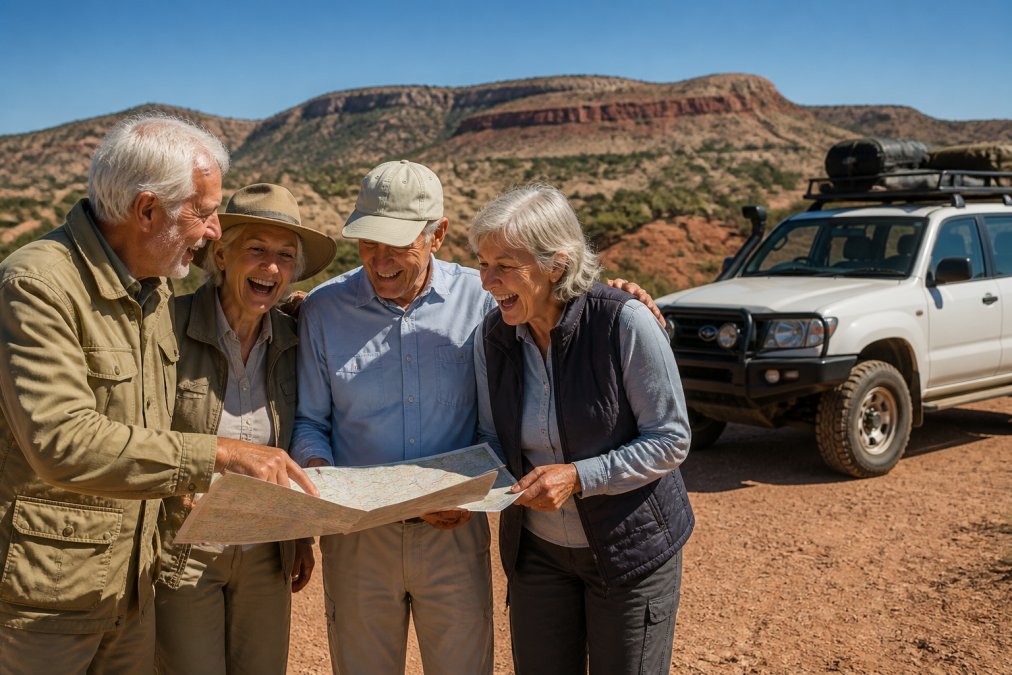
Curious Compass Collective: Purpose-Built for Australian Terrain
Curious Compass Collective is our top recommendation for seniors exploring Australia and the Pacific without the physical strain of typical expeditions. This operator designs every itinerary around mature travellers, with intentionally small group sizes that create a personal, relaxed atmosphere.
Expert guides act as both storytellers and safety professionals, which matters when crossing remote outback terrain. Purpose-designed 4WD vehicles provide comfort on rugged roads. Signature trips include the 21-day Kimberley Nulla Nulla Camping Safari, the annual Pajinka Tour from Cairns to Cape York, and an eight-day Perth to Esperance road trip called the Turquoise Way.
What sets this operator apart is the balance between adventure and accessibility, as on the Fiji Blue Lagoon and Cultural Tour. For clubs and social groups, customised private packages offer the same pacing with itineraries tailored to your interests.
Trafalgar: Global Reach with Local Insights
Trafalgar suits seniors who want a reliable global operator with departures across many regions. Their travel directors bring local knowledge, and the "hidden gem" stops add texture beyond the standard sightseeing circuit.
Group sizes can run larger than boutique operators, which keeps costs down but reduces the intimate feel. The CostSaver range appeals to budget-conscious travellers.
Road Scholar: Learning-First Itineraries
Road Scholar takes a not-for-profit, educational approach designed specifically for older adults. If you prefer lectures and expert-led discussions over leisure time, this operator delivers exceptional intellectual depth.
Activity levels are clearly rated, so you can choose trips that match your mobility. All-inclusive pricing covers accommodation, most meals, and field trips. The trade-off is less emphasis on luxury amenities.
Tauck: All-Inclusive Comfort and Premium Service
Tauck is the answer for seniors who want every detail managed and are willing to pay for it. Land journeys keep group sizes small, and all-inclusive pricing covers gratuities, excursions, and exclusive access to private venues.
The service level is exceptional, with dedicated tour directors anticipating your needs. The higher price point is the main drawback, but for a special milestone journey, the comfort is hard to beat.
Scenic: Luxury Cruises and Land Tours from Australia
Scenic is an Australian-founded operator offering truly all-inclusive river cruises and land tours. Suite guests receive personalised butler service, and the "Scenic Enrich" experiences provide cultural immersion beyond standard excursions.
Ships feature wellness centres and multiple dining options, making this a strong choice for seniors who prefer minimal physical exertion. The focus is firmly on luxury.
| Operator | Group Size | Best For | Key Trade-off |
|---|---|---|---|
| Curious Compass Collective | Intentionally small | Australian and Pacific terrain, cultural connection | Focused on Australia and Pacific regions |
| Trafalgar | Can be larger | Global itineraries, budget options | Less intimate feel |
| Road Scholar | Small | Educational travel, lifelong learning | Fewer luxury amenities |
| Tauck | Small on land journeys | Premium all-inclusive comfort | Higher price point |
| Scenic | Small | Luxury cruises, minimal exertion | Luxury-focused pricing |
How to Evaluate Small Group Tours for Seniors Over 60
Beyond the itinerary and the price, there are three areas most tour operators would rather you not scrutinise too closely: health and medical readiness, physical accessibility on the ground, and how you will stay connected to home.
Health and Medical Insurance: The Non-Negotiable
Australian seniors have specific insurance needs that standard policies often fail to cover. Before booking, confirm your policy covers:
- Pre-existing medical conditions: Most Australian insurers require you to declare conditions like heart disease, diabetes, or arthritis. Failure to disclose can void your entire policy. Some insurers, such as those affiliated with motoring clubs or seniors' organisations, offer policies specifically designed for travellers over 60 with stable pre-existing conditions.
- Medical evacuation: If you are travelling in remote areas like the Kimberley or Cape York, the nearest hospital may be hundreds of kilometres away. A Royal Flying Doctor Service evacuation can cost tens of thousands of dollars. Check that your policy covers this and that the tour operator has a clear protocol for medical emergencies in remote locations.
- Cruise-specific coverage: If your trip includes a cruise segment, standard policies often exclude or limit cover for onboard medical care. Ask your insurer about cruise-specific add-ons.
Accessibility: Beyond the Marketing Claims
Most operators advertise "accessible" or "senior-friendly" tours, but these terms have no standard definition. Build your own evaluation framework by asking every operator:
- What is the maximum daily walking distance? Ask for specifics in kilometres, not vague terms like "moderate." A 6-kilometre walking tour of a European city is very different from a 6-kilometre bushwalk (the NIH).
- Are there stairs or steep inclines at the accommodation? Many heritage hotels in Australia and the Pacific lack lifts. Ask whether ground-floor rooms are available and whether they are guaranteed or merely requested.
- What is the boarding process for vehicles? Purpose-designed 4WDs may have high step-ups. Ask about grab handles, step ladders, and whether the guide assists with boarding.
- Are rest stops scheduled every 90 minutes or so? Long stretches without a toilet break are a common complaint among senior travellers. Confirm the operator's typical driving rhythm.
- What happens if you cannot complete an activity? Is there a seated alternative, or do you simply miss out? A quality operator will have a backup plan that keeps you engaged without pushing your physical limits.
Technology and Connectivity: Staying in Touch
Staying connected abroad is how you reassure family, manage medications, and handle unexpected changes. Before booking, check:
- Mobile coverage: Ask the operator which regions have reliable mobile reception and which are dead zones. For remote Australian travel, a personal locator beacon (PLB) or satellite messenger may be worth hiring for peace of mind.
- Wi-Fi availability: Confirm whether accommodation includes Wi-Fi in the room or only in common areas. Some remote lodges have no internet at all, so plan how you will communicate with family during those stretches.
- Digital documents: Save your passport, insurance policy, and itinerary as PDFs on your phone and in a cloud service like Google Drive or iCloud. Also carry a printed copy in your day bag in case your phone is lost or stolen.
- Travel apps: Before departure, download offline maps (Google Maps allows this), translation apps, and your airline's app. Test them at home so you are not fumbling with technology on day one.
The Operator's Safety Protocol
Finally, ask the operator directly about safety procedures. A reputable company will happily share:
- Guide qualifications, including first-aid certification and remote-area training.
- Communication equipment carried in vehicles, such as satellite phones or UHF radios.
- Their emergency response plan for medical incidents, vehicle breakdowns, and natural events like bushfires or cyclones.
- Their cancellation and refund policy if you need to pull out for medical reasons before departure.
An operator that answers these questions clearly is one you can trust. One that deflects or offers vague reassurances is a risk you do not need to take.
Tailor-Made Travel Experiences for Seniors: Is It Worth It?
Deciding between a private tour and a shared departure comes down to a simple question: what is your time worth? For seniors, the answer involves a frank look at the true cost of a DIY holiday versus the premium of an escorted or private option.
The Real Cost of a DIY Holiday
Start by pricing a DIY version of the same itinerary. For a 14-day trip through the Kimberley or Tasmanian wilderness, itemise these costs:
- Vehicle hire: A 4WD hire in Australia typically costs more than a standard sedan, and daily kilometre limits add up quickly on remote routes.
- Fuel: Remote distances mean fuel stops are infrequent and expensive. A 3,000-kilometre loop can easily exceed $600 in fuel alone (aaa.asn.au).
- Accommodation: Book the same standard of lodging the tour operator uses. Peak-season rates in popular regions like the Margaret River or the Daintree can be surprisingly high.
- Meals: Estimate $80-$120 per day per person for three restaurant meals, plus incidentals like coffee and snacks.
- Entry fees and activities: National park passes, guided walks, museum entries, and cultural performances are rarely free. These can add $50-$100 per day.
- Your time: This is the cost most people forget. Every hour spent navigating, booking, and problem-solving is an hour not spent enjoying the destination.
When totalled, a DIY trip often lands within 15-25% of the price of a shared small-group tour (statista.com). The gap narrows further when you factor in the value of a guide who knows the best times to visit sites, the safest routes, and the local stories that bring a landscape to life.
What a Private Tour Actually Costs
A genuinely private tour for two typically costs 40-60% more per person than a shared departure of the same itinerary. That premium buys you three things: the freedom to change plans on the day, the undivided attention of your guide, and the ability to travel with only your chosen companions.
For a group of four to six friends or family, the premium shrinks dramatically. Once you reach six people, a private tour can cost roughly the same per person as a shared departure, because the operator's fixed costs, guide, vehicle, and logistics, are spread across more travellers.
The Hidden Costs of Getting It Wrong
A DIY trip that goes wrong carries its own price tag. A missed ferry, a booked-out hotel, or a breakdown in a remote area can cost hundreds to fix on the spot. Escorted and private tours absorb these risks because the operator manages the schedule and has contingency plans.
A Simple Decision Framework
Use this checklist to decide whether tailor-made is worth it for you:
- Do you enjoy planning? If researching and booking is part of the fun, DIY may suit you. If it feels like homework, let an operator handle it.
- How many people are travelling? Four or more makes private tours financially sensible. Two or fewer often makes shared departures better value.
- How important is spontaneity? If you want to linger at a gallery or skip a hike for a nap, private is the only way to guarantee that freedom.
- What is your risk tolerance? If the thought of a missed connection or a language barrier causes anxiety, the security of an escorted tour is worth real money.
Tailor-made travel is rarely about luxury. It is about control over your time and energy, two resources that become more precious with each passing year.
The Bottom Line: Finding Your Ideal Travel Companion
The right odyssey traveller alternative for seniors balances three things: a pace that lets you actually see the places you travelled to reach, a group size small enough for genuine connection, and guides who know their terrain deeply. For Australian and Pacific journeys, Curious Compass Collective delivers all three with purpose-designed 4WD vehicles and thoughtfully paced itineraries built for mature travellers.
Trafalgar, Road Scholar, Tauck, and Scenic each excel in their own niche, global reach, education, luxury, or cruising. Before booking, compare group sizes, daily distances, and what the price truly includes.
The best tour is the one where you arrive home with stories, not exhaustion. If you would like to talk through your options, reach out to the Curious Compass Collective team and ask about upcoming departures to the Kimberley, Cape York, or Fiji.
Finding the ideal travel companion should not feel like a compromise between comfort and authenticity. Curious Compass Collective builds small-group journeys across Australia and the Pacific with mature travellers in mind, pairing expert storytelling guides with thoughtfully paced itineraries and purpose-designed 4WD vehicles. Whether you dream of the Tamworth Country Music Festival, the red dirt of the Kimberley, or the turquoise waters of Fiji, there is a trip designed for your pace. Get started with Curious Compass Collective and explore tours that treat you as a traveller, not a tourist.
Frequently Asked Questions
What should I look for when choosing a small-group tour operator for seniors?
Focus on group size, pacing, physical demands, and what is included. Check the maximum number of travellers, daily start times, and how much walking is involved. Confirm whether meals, entrance fees, and transport are covered. Ask about the guide-to-traveller ratio and the qualifications of the tour leader. A good operator will clearly state activity levels and be upfront about any mobility requirements.
How do small group tours differ from traditional coach tours for seniors?
Small group tours usually cap at around 12 to 16 travellers, allowing access to smaller venues and more flexible pacing. Traditional coach tours can carry 40 or more passengers and often follow rigid schedules. Small groups offer more personalised attention from the guide and make it easier to form connections with travel companions. They also use smaller vehicles, such as purpose-designed 4WDs, which can reach places large coaches cannot.
Are tailor-made travel experiences for seniors worth the extra cost?
Tailor-made travel is worth it when you have specific needs or interests. You control the pace, choose your travel companions, and can adjust the itinerary as you go. This suits travellers who want to spend extra time at a site or skip an activity entirely. The cost is generally higher because you are not sharing the guide and vehicle with other passengers. Request a quote from the operator to compare against their group package prices.
What is the best travel group for senior citizens in Australia?
The best group depends on your travel style. For educational tours with expert lecturers, consider Road Scholar. For luxury all-inclusive packages, Tauck and Scenic are strong options. If you want to explore remote Australian terrain in a small group with a relaxed pace, Curious Compass Collective designs tours specifically for mature travellers. Review the itinerary, group size, and inclusions before booking with any operator.