 listicle
Kimberley Seniors Tours: A 2026 Guide for Mature Travellers
Table of Contents
- What Kimberley Seniors Tours Actually Involve
- Accessibility and Comfort: Matching Tours to Your Mobility
- The Best Time to Visit the Kimberley
- Kimberley Cruise Packages for Seniors
- Senior Travel Tips Western Australia: Packing, Health and Insurance
- What Kimberley Seniors Tours Cost in 2026
- Conclusion: Choosing the Right Kimberley Seniors Tour
- Frequently Asked Questions
Last Updated: September 16, 2026
What Kimberley Seniors Tours Actually Involve
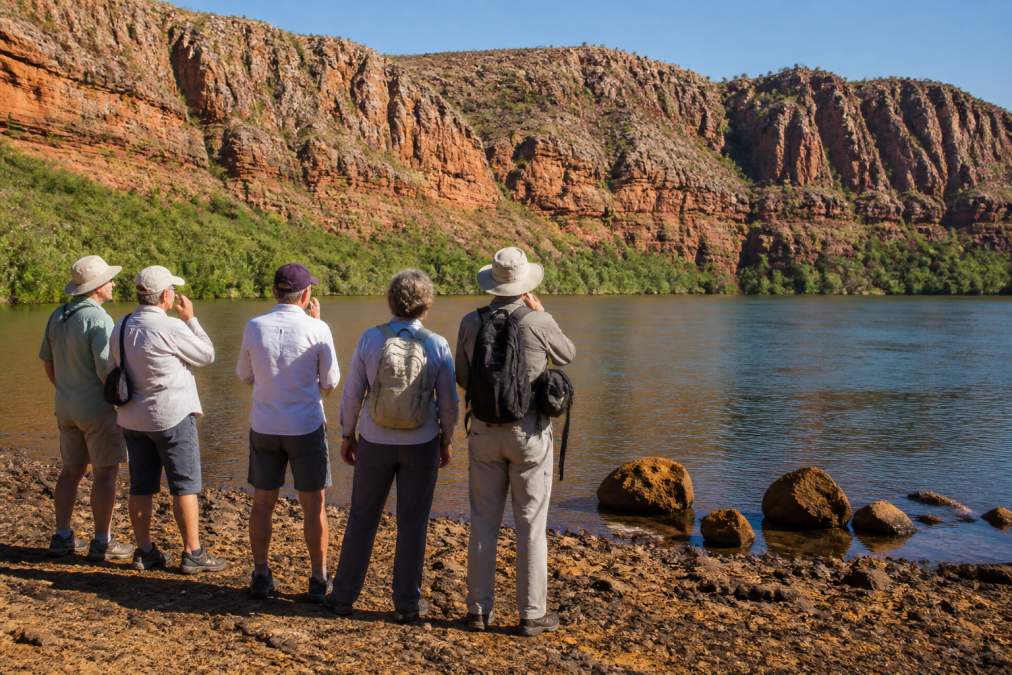
Kimberley seniors tours are small-group guided journeys through the remote north-west wilderness, built around comfortable pacing, expert commentary and minimal physical strain. At Curious Compass Collective, we design them for travellers aged 35 to 65+ who want the gorges, rock art and starry skies without the exhaustion.
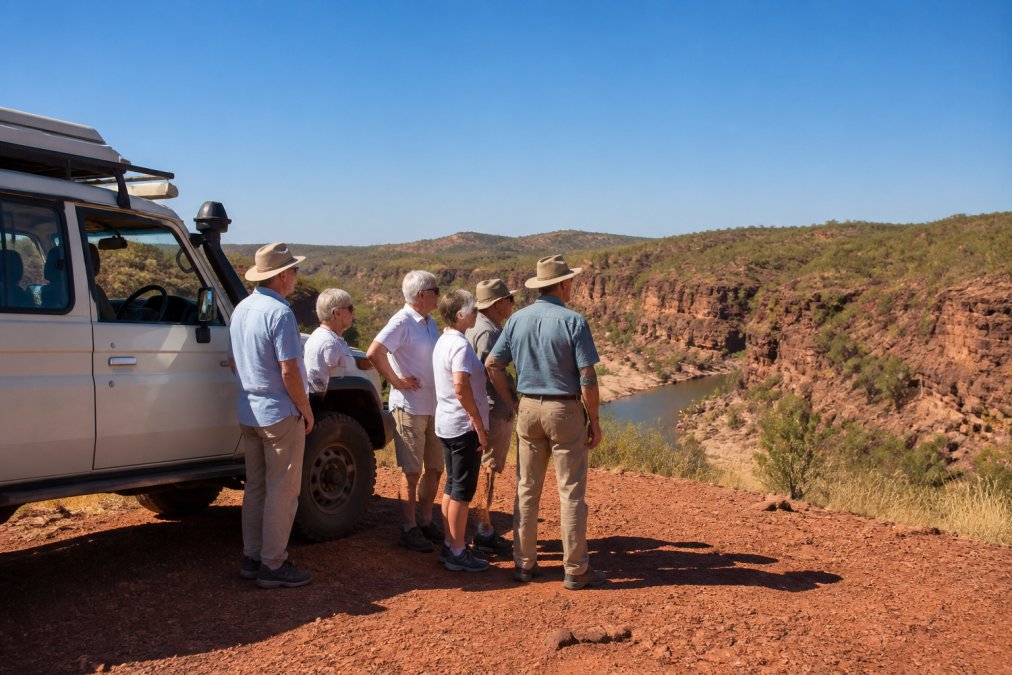
4WD Overland vs Cruise-Based Tours
Overland tours travel by purpose-built 4WD along the Gibb River Road corridor, stopping at gorges, waterfalls and cultural sites.
Accessibility and Comfort: Matching Tours to Your Mobility
Mobility is the question most seniors ask last and should ask first. Booking on destination alone risks discovering the tour involves scrambling over boulders to reach a waterhole. Run an accessibility audit before you pay a deposit.
A Practical Accessibility Rating Scale
Use this four-tier scale on any itinerary. It works for gorges, rock art sites, boat transfers and vehicle access alike.
- Tier 1, Step-free or near step-free. Lookout metres from the vehicle, sealed or hard-packed path, handrails where needed. Suitable for most mobility levels, including walking frames.
- Tier 2, Short uneven walk. 100-400 metres over rock, gravel or sand, with some gradient. A walking stick helps; a frame does not.
- Tier 3, Sustained uneven terrain. 400 metres to 2 km over loose rock, creek beds or stepped natural surfaces. Requires reasonable balance, sturdy footwear and confidence on uneven ground.
- Tier 4, Scramble or climb. Boulders, steep natural steps, hand-over-hand sections or water crossings. Not suitable for anyone with balance, knee, hip or cardiac concerns.
Gorge-by-Gorge Reality Check
Gorge visits vary enormously, two stops a few kilometres apart can mean the difference between a gentle lookout and a boulder scramble.
- Lookout-only stops. Several major gorge lookouts sit within a short, mostly level walk of a car park. These are the stops to prioritise if you want the view without the terrain.
- Waterhole access. Reaching the water at many gorges involves descending over uneven rock and loose gravel, often with no handrail. The return climb is the harder direction.
- Rock art sites. Some are metres from the vehicle; others require a walk over broken sandstone. Ask specifically whether the art is visible from a standing position or requires sitting, crouching or climbing.
- Boat transfers. Tender and zodiac transfers to cruise shore excursions usually require stepping down into a moving vessel and back up. Ask whether the operator offers a stable boarding platform, a handrail and staff assistance for every transfer, not just at the main vessel.
Vehicle and Accommodation Access
Access doesn't stop at the trailhead. The vehicle and the bed matter just as much.
- Confirm the vehicle has a step stool and grab handles, not just a high floor
- Ask whether seats are forward-facing with a headrest, and whether there's a seat with extra legroom
- Check whether cabins or tents have private facilities or shared amenities, and how far the walk to the amenities block is
- Ask whether tent floors are raised or ground-level, and whether camp beds or swags are used
- Confirm the daily walking distance in metres, not vague descriptions like "some walking"
- Ask whether every stop is optional, or whether some require walking to reach the vehicle pickup
- Ask what happens if you sit out an activity for a day, is there a shaded place to wait, and does the group return for you?
Questions That Separate a Good Operator From a Great One
A few questions reveal how seriously an operator takes accessibility:
- Can you send me the itinerary with a tier rating next to every stop?
- How many staff are on the ground for shore excursions and gorge walks?
- Is there a vehicle that can drop a passenger closer to a lookout if needed?
- What's your policy if a guest can't complete a walk mid-way?
- Do you carry a satellite phone or personal locator beacon on every vehicle and vessel?
The Best Time to Visit the Kimberley
The best time to visit the Kimberley is the dry season, roughly April to September. Roads are open, waterfalls still flow early in the season, and daytime temperatures suit outdoor activity.
Kimberley Cruise Packages for Seniors
Cruise packages suit seniors who want the coastline without the road. Voyages run between Broome and Darwin, or the reverse, typically over ten to fourteen nights.
What makes a cruise work for older travellers:
- No packing and unpacking between stops
- Shore excursions by tender, often with a walking-free option
- Onboard medical support and stable footing on deck
- Scenic flights over the falls available as add-ons
Senior Travel Tips Western Australia: Packing, Health and Insurance
Senior travel tips Western Australia travellers actually use start with two realities: the climate swings hard, and health infrastructure is thin outside the main towns. Pack for the first, plan for the second.
Packing List for the Kimberley Climate
Days can be hot and dry while nights turn cold, especially inland. Build your kit around layering and sun protection.
- Two wide-brimmed hats, because one will get crushed or lost
- Lightweight long-sleeve shirts for sun and insect protection
- A warm fleece or jacket for early mornings and evenings
- Sturdy closed walking shoes with grip, plus a spare pair
- Reusable water bottle, minimum one litre, refilled at every opportunity
- Personal medications in original packaging, plus a copy of prescriptions
- High-SPF sunscreen and insect repellent
- A small daypack you can carry yourself, so you're not relying on others for water and medication
- A basic first-aid kit with blister care, rehydration sachets and any personal extras
- A power bank and spare batteries for any medical device
Health Infrastructure in the Remote North-West
This is the part most tour marketing skips, and it matters most for older travellers.
- Main service towns. Broome, Kununurra and Derby have hospitals or health services with emergency departments and general practitioners. These are your realistic points of medical care.
- Remote stops. Between those towns, distances are measured in hundreds of kilometres. A roadhouse may have a first-aid kit and a radio, not a doctor.
- Royal Flying Doctor Service. The RFDS provides aeromedical retrieval and remote clinic services across the region. It is not a substitute for travel insurance, and it does not cover the cost of a private retrieval arranged by an insurer.
- Evacuation reality. A medical evacuation from a remote gorge or a cruise ship may involve a helicopter, a fixed-wing aircraft or a vessel diversion. Each of those has a cost, and the cost is where insurance matters.
Medication Logistics
- Bring more medication than the trip length, a week's extra is a sensible buffer for delays.
- Keep medication in original packaging with the prescription, and carry a copy in a separate bag.
- Split medication between your daypack and your main luggage so a single lost bag doesn't take everything.
- Check whether any of your medication requires refrigeration, and confirm your accommodation can provide it.
- If you need regular injections or wound care, ask whether the operator has staff trained to assist, and whether they're comfortable doing so.
Travel Insurance: Read the Exclusions, Not the Summary
Travel insurance deserves real attention. Standard domestic policies often exclude remote-area evacuation, and the Kimberley is genuinely remote. Check the policy covers remote retrieval by air, and declare any pre-existing conditions honestly. Smartraveller advises travellers to read the product disclosure statement rather than the summary.
When you read the PDS, look specifically for:
- Whether 4WD travel and remote-area incidents are covered or excluded
- Whether aeromedical evacuation is covered, and up to what amount
- Whether pre-existing conditions are covered, and what the declaration process involves
- Whether cancellation cover applies if a medical event forces you to pull out mid-tour
- Whether the policy covers the cost of a companion travelling with you if you're evacuated
A Simple Pre-Trip Health Checklist
- Visit your GP for a pre-travel check, especially if you have cardiac, respiratory or mobility concerns
- Ask your GP to write a summary of your conditions and medications to carry with you
- Confirm your insurance covers remote-area evacuation and your pre-existing conditions
- Check the cancellation and medical-evacuation excess so there are no surprises
- Share your itinerary and emergency contacts with a family member or friend
- Register your travel plans so someone knows where you are and when you're due back
None of this is designed to put you off, just to ensure the only surprise on your Kimberley trip is how good the stars look.
What Kimberley Seniors Tours Cost in 2026
Pricing depends on duration, style, cabin or accommodation class and departure date, so treat any single figure with suspicion. Fully accommodated overland tours and cruise packages sit at the higher end; camping-based safaris cost less because you're trading comfort for access.
- What's included: meals, park fees, scenic flights, accommodation?
- What's excluded: alcohol, optional activities, tips, insurance?
- Is there a single supplement, and how much?
- What deposit is required, and what's the cancellation policy?
Conclusion: Choosing the Right Kimberley Seniors Tour
The hardest part isn't finding a tour, it's finding one paced for you rather than the average traveller. That means asking uncomfortable questions about walking distances, vehicle access and medical support before you book.
Frequently Asked Questions
What are the best Kimberley tours for seniors?
The best option depends on your mobility and comfort needs. Fully accommodated 4WD tours suit travellers who want to see gorges, rock art and waterfalls without camping. Small group tours with paced itineraries and expert guides tend to suit mature travellers best, as they balance remote wilderness access with comfortable accommodation and minimal physical strain.
What is the best month to visit the Kimberley?
The dry season from May to September is the best time to visit the Kimberley. Roads and gorges are accessible, waterfalls still flow early in the season, and daytime temperatures sit around 30°C. June and July offer the most reliable conditions for 4WD adventures and scenic flights. The wet season from November to April brings heavy rain, road closures and high humidity, which limits access to remote wilderness areas.
How much does a Kimberley cruise cost for seniors?
Kimberley tour packages for seniors vary widely depending on accommodation class, duration and inclusions. Pricing depends on departure dates, group size and whether the package is twin share or sole use, so request a current quote before booking.
What level of fitness is required for Kimberley seniors tours?
Most tours designed for mature travellers require only a moderate level of fitness. You should be able to walk short distances over uneven ground, manage a few steps into a 4WD vehicle and handle warm conditions. Cruise-based options and fully accommodated tours involve less physical activity. If you have knee or hip concerns, ask the operator about vehicle access, walking distances at each stop and whether alternatives are available.