 ultimate-guide
Kimberley Outback Adventures: The Ultimate 2026 Guide
Table of Contents
- Kimberley Outback Adventures: What Makes This Region So Special
- Tour Duration and Itinerary Highlights
- When Is the Best Time to Visit the Kimberley?
- Kimberley Small Group Tours for Seniors: What to Expect
- What to Pack for a Kimberley Tour
- Budget vs. Luxury: Understanding Kimberley Tour Costs
- Wildlife, Waterfalls and Landmarks You Should Not Miss
- Sustainable and Indigenous Tourism: Travelling Respectfully
- Frequently Asked Questions
Last Updated: September 15, 2026
Kimberley Outback Adventures: What Makes This Region So Special
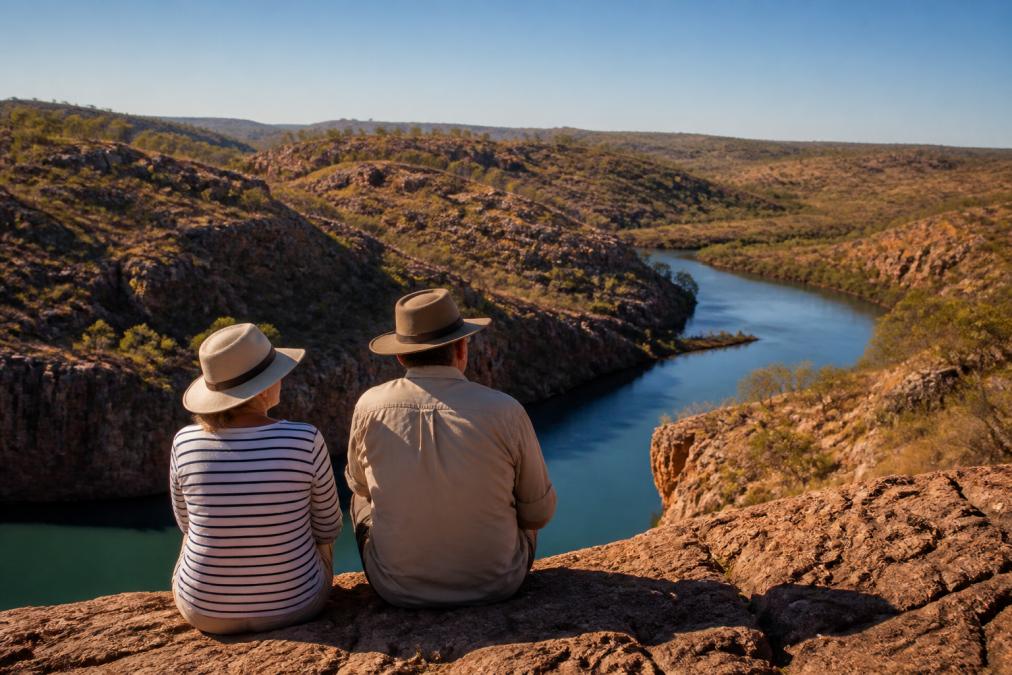
Kimberley outback adventures take travellers through one of the world's last great wilderness areas, a remote landscape of red gorges, ancient boab trees and unspoiled coastline. This guide from Curious Compass Collective covers everything mature travellers need to plan a comfortable, fully-guided trip.
The region spans roughly 423,000 square kilometres across the northern edge of Western Australia, and much of it is accessible only by 4WD, scenic flight or boat (Area of Australia - States and Territories). That remoteness is exactly the point. You will not find crowds here.
What separates a good Kimberley outback trip from a great one comes down to pacing, group size and the quality of your guide. Below, we break down itineraries, costs, packing and the ethics of travelling respectfully through country that has been cared for by Aboriginal communities for tens of thousands of years.
Tour Duration and Itinerary Highlights
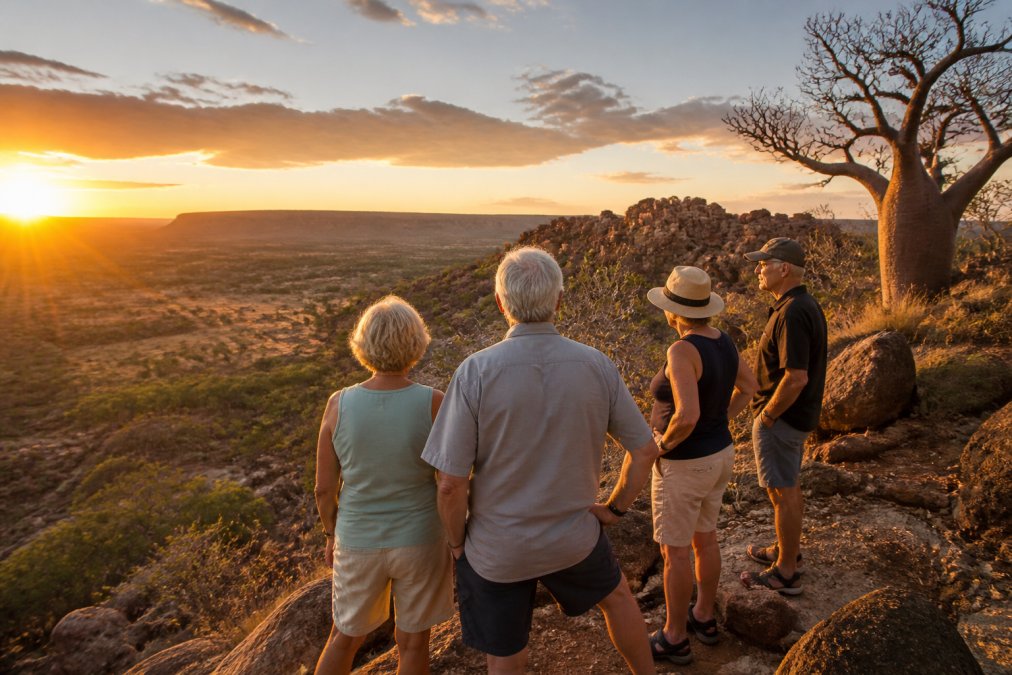
Most Kimberley outback adventures run between 9 and 21 days, depending on how much of the region you want to cover. Shorter trips concentrate on the Gibb River Road corridor; longer safaris add the northern coastline and remote waterfalls.
A typical multi-day itinerary includes:
- Departure from Broome or Darwin, the two main gateway towns
- The Gibb River Road, a 660-kilometre unsealed route through station country
- Gorges such as Bell Gorge, Manning Gorge and Emma Gorge
- The Mitchell Plateau and its four-tiered falls
- El Questro Wilderness Park and Zebedee Springs
- Optional scenic flights over the Bungle Bungle Range
Curious Compass Collective runs both a 14-day fully accommodated trip and a 21-day camping safari known as the Nulla Nulla, so you can match the itinerary to your comfort preferences.
When Is the Best Time to Visit the Kimberley?
The best time to visit the Kimberley is the dry season, from roughly May to September (Guide to the Kimberley). Roads are open, waterfalls still flow early in the season, and daytime temperatures sit in the high twenties to low thirties.
The wet season, from November to April, brings monsoonal rain, closed roads and limited access to remote terrain. Some operators run a small number of tours in the shoulder months of April and October, but you should expect heat and occasional road closures.
For waterfall photography, aim for June or July. For clear skies and comfortable camping, August and September are hard to beat.
Kimberley Small Group Tours for Seniors: What to Expect
Kimberley small group tours for seniors are built around comfort, safety and a slower pace rather than physical endurance. Group sizes are usually capped at 10 to 16 travellers, which means more attention from your guide and less time waiting at each stop.
Purpose-designed 4WD vehicles handle the corrugations and creek crossings that would rattle a standard coach. You will still get out and walk, but guided walks are short, optional and adjusted to the group.
What most guides miss is that the real value of a small group is not the vehicle. It is the storytelling. A good guide reads the landscape, explains the geology and bush tucker, and knows when to slow down.
What to Pack for a Kimberley Tour
What to pack for a Kimberley tour is less about buying gear and more about matching your kit to the season, the vehicle and the terrain. The dry season delivers hot, dry days and cool nights; the shoulder months swing harder in both directions. Pack for layers, not for a single climate.
Start with the four non-negotiables: sun protection, a warm layer, closed footwear with grip, and a refillable water bottle. Everything else is refinement.
Clothing and sun protection
- Wide-brimmed hat that stays on in wind, plus a cap as backup
- SPF 50+ sunscreen and a lip balm with sunscreen
- Lightweight long-sleeve shirts, cotton or technical fabric, for gorge walks
- Quick-dry trousers or zip-off pants; avoid heavy denim
- A warm mid-layer and a light fleece or puffer for June and July evenings, when overnight temperatures in the inland gorges can drop into single digits
- Swimmers and a quick-dry towel for swimming holes and Zebedee Springs
Footwear
Gorge tracks such as Bell Gorge and Emma Gorge involve rock scrambles, loose gravel and occasional water crossings. Closed walking shoes or light hiking boots with real tread are essential. Thongs are fine around camp but not on the trail.
Daypack and hydration
A 20-25 litre daypack holds water, a camera, a layer and your lunch. Carry at least two litres of water per person for a half-day walk, more in September, when humidity climbs before the wet. A reusable bottle beats disposable plastic, and most operators provide refills at the vehicle.
Practical extras
- Head torch or small hand torch for camp and early starts
- Insect repellent, ideally with picaridin or DEET
- Personal medication plus a copy of your prescriptions
- A dry bag or large zip-lock for electronics on boat days
- Binoculars if you plan to birdwatch
- A small first-aid kit with blister plasters
Luggage rules that catch people out
Space in a 4WD is genuinely limited. Most operators specify a soft bag of around 15 kilograms, and some enforce it. Hard suitcases do not compress and are often refused. If you are joining a scenic flight, for example over the Bungle Bungle Range or Horizontal Falls, check the separate weight limit, which is usually lower than the vehicle allowance.
What to leave at home
Hair dryers, heavy towels, multiple pairs of shoes and anything you would be upset to get dusty. The Kimberley is red dust country, and it gets into everything.
Budget vs. Luxury: Understanding Kimberley Tour Costs
Kimberley tour costs depend on duration, accommodation style and season, and operators quote individually, so ask for a written breakdown before you commit. Camping safaris sit at the lower end; fully accommodated trips with lodge stays sit higher.
The table below summarises what typically changes between the two.
| Factor | Camping Safari | Fully Accommodated |
|---|---|---|
| Accommodation | Swag or tent | Motel or lodge |
| Meals | Cooked at camp | Restaurant and packed |
| Duration | 14-21 days | 9-14 days |
| Luggage | Soft bag, 15 kg | Standard suitcase |
| Best For | Adventurous travellers | Comfort-focused travellers |
Budget travellers should also factor in flights to Broome or Darwin, travel insurance and any optional scenic flights, which are usually priced separately.
Wildlife, Waterfalls and Landmarks You Should Not Miss
Most Kimberley guides list the same landmarks. What they rarely do is tell you when to see them and how to actually spot the wildlife. This section does both, because timing is the difference between a postcard and a memory.
A seasonal wildlife calendar
Wildlife in the Kimberley is highly seasonal, and the wet season reshapes where animals are and what they do.
- May to July, Water is still flowing in the gorges, so freshwater crocodiles concentrate on gorge banks and are easiest to see from a safe distance.
How to actually spot wildlife
Landmarks, and how you actually see them
Sustainable and Indigenous Tourism: Travelling Respectfully
Follow these principles:
Frequently Asked Questions
What is the best month to visit the Kimberley?
The dry season from May to September is the best time to visit the Kimberley. Waterfalls are still flowing early in the season, while July and August offer clear skies and comfortable daytime temperatures. The wet season from November to April brings extreme heat, flooding and road closures that make many attractions inaccessible. Tour operators typically run their Kimberley outback adventures between April and October.
Are there specific Kimberley small group tours for seniors?
Several operators design tours specifically for mature travellers, with slower pacing, comfortable accommodation options and expert guides who handle all logistics. Look for tours with purpose-designed 4WD vehicles, small group sizes and itineraries that allow rest days. Kimberley small group tours for seniors often include scenic flights over gorges and guided walks at a relaxed pace, making the region accessible without strenuous hiking.
What should I pack for a remote outback adventure?
Pack lightweight long-sleeved shirts, sturdy walking shoes, a wide-brimmed hat and high-SPF sunscreen for what to pack for a Kimberley tour. Bring a refillable water bottle, insect repellent and a warm layer for cool evenings. Binoculars are useful for wildlife spotting. Most tour operators provide swags, bedding and camping equipment, so check your itinerary before buying gear. A small daypack for guided walks is essential.
How do small-group tours differ from traditional coach tours?
Small-group tours typically carry 8 to 16 travellers in purpose-designed 4WD vehicles, allowing access to remote terrain that large coaches cannot reach. You get personalised attention, flexible pacing and more time at each stop. Traditional coach tours follow fixed schedules on sealed roads. For Kimberley outback adventures, small-group travel means you can visit gorges, swimming holes and Aboriginal rock art sites that larger tours skip entirely.
Travelling through the Kimberley takes planning, and the wrong itinerary can turn a bucket list trip into a rushed one. Curious Compass Collective designs small-group and private tours with thoughtfully paced itineraries, purpose-designed 4WD vehicles and expert guides who double as storytellers. If you want a remote outback adventure without the physical strain, get started with Curious Compass Collective and see the Kimberley at a pace that suits you.