 ultimate-guide
Kimberley Guided 4WD Tours: The Complete 2026 Guide
Table of Contents
- What to Expect from Kimberley Guided 4WD Tours
- The Best Time to Visit the Kimberley
- Kimberley 4WD Tour Duration: Choosing Your Ideal Trip Length
- Small Group vs Large Group Kimberley Tours
- Where Guided 4WD Tours Go: Icons and Hidden Gems
- Matching the Tour to Your Pace and Comfort Needs
- Planning Logistics: Fitness, Packing and Photography
- Frequently Asked Questions
Last Updated: September 13, 2026
What to Expect from Kimberley Guided 4WD Tours
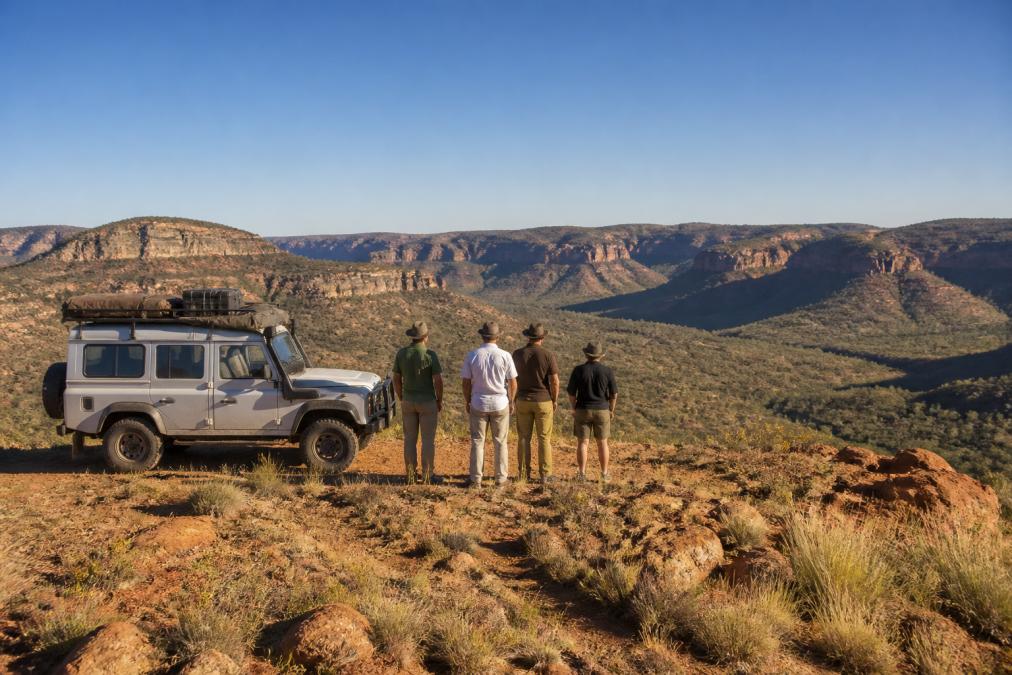
Kimberley guided 4WD tours are small-group, expert-led road journeys through the remote northwest, combining rugged 4WD expedition travel with comfortable pacing, local storytelling and access to landscapes that reward careful planning. This guide from Curious Compass Collective sets out how to choose the right tour for your fitness, budget and sense of adventure in 2026.
The region is vast and the distances are real. A typical day involves several hours of driving on unsealed roads between gorge walks, rock art sites and camp, so the quality of the vehicle and the guide matters more than the itinerary map suggests. Unlike mass-market coach tourism, a well-run 4WD tour caps group size, builds in rest days and treats the driving itself as part of the experience.
Below, we break down the best time to travel, how long to go for, the difference between small and large groups, and what to pack. If you have ever doubted whether a remote wilderness trip is still within reach, this is the guide that answers that question honestly.
The Best Time to Visit the Kimberley
The dry season, roughly May to September, is the best time to visit the Kimberley for most travellers, because unsealed roads are open and temperatures are manageable (bom.gov.au).
The Bureau of Meteorology climate data confirms the region's wet season brings heavy monsoonal rain and extreme humidity, which closes many tracks and makes gorge access unpredictable. Tour operators generally run their Kimberley season across the cooler months, when mornings are crisp and daytime temperatures sit in a comfortable range for walking.
- May to June: Green landscapes, flowing water, fewer crowds
- July to August: Peak season, cool nights, best road access
- September: Warm, dry, excellent for photography light
Book early for the middle months. That window fills fastest for accommodated departures.
Kimberley 4WD Tour Duration: Choosing Your Ideal Trip Length
Kimberley 4WD tour duration is the single biggest decision you will make, because it determines how far north you reach and how much time you spend in the vehicle versus out of it.
Shorter trips concentrate on the accessible highlights. Longer trips push into remote wilderness that day-trippers never see. Here is how the options compare.
| Duration | Best For | Trade-off |
|---|---|---|
| 7-10 days | First-timers, limited leave | Less remote access |
| 14 days | Balanced highlights and rest | Moderate driving days |
| 21 days | Full immersion, photographers | Higher cost, longer absence |
Short Escapes: 7-10 Days
A week to ten days suits travellers who want the icons without a long absence. You will cover the Gibb River Road corridor and key gorge stops, but expect fuller driving days and fewer rest periods. It is a genuine taste rather than a complete crossing.
The Classic Route: 14 Days
Fourteen days is the sweet spot for most mature travellers. The pace allows a mix of gorge exploration, rock art visits and genuine downtime. Curious Compass Collective runs a 14-day fully accommodated Kimberley itinerary built around exactly this rhythm.
The Full Immersion: 21 Days
Three weeks opens the far north and the deep wilderness. The 21-day Nulla Nulla Camping Safari is becoming a guest favourite for travellers who want the complete wilderness odyssey, with camp nights under wide skies and time to sit with a landscape rather than rush past it.
Small Group vs Large Group Kimberley Tours
Small group vs large group Kimberley tours comes down to attention, access and pace. Small groups typically cap at around a dozen travellers, which means faster gorge entries, quieter camps and a guide who knows your name.
Large coach groups move efficiently but sacrifice flexibility. You queue for facilities, follow fixed schedules and rarely deviate for a spontaneous photo stop. For remote terrain, smaller is almost always better.
Where Guided 4WD Tours Go: Icons and Hidden Gems
The headline stops are the Bungle Bungle Range in Purnululu National Park, the gorges of the Gibb River Road and the ancient rock art of the Mitchell Plateau. Beyond those, the real magic sits off the beaten track.
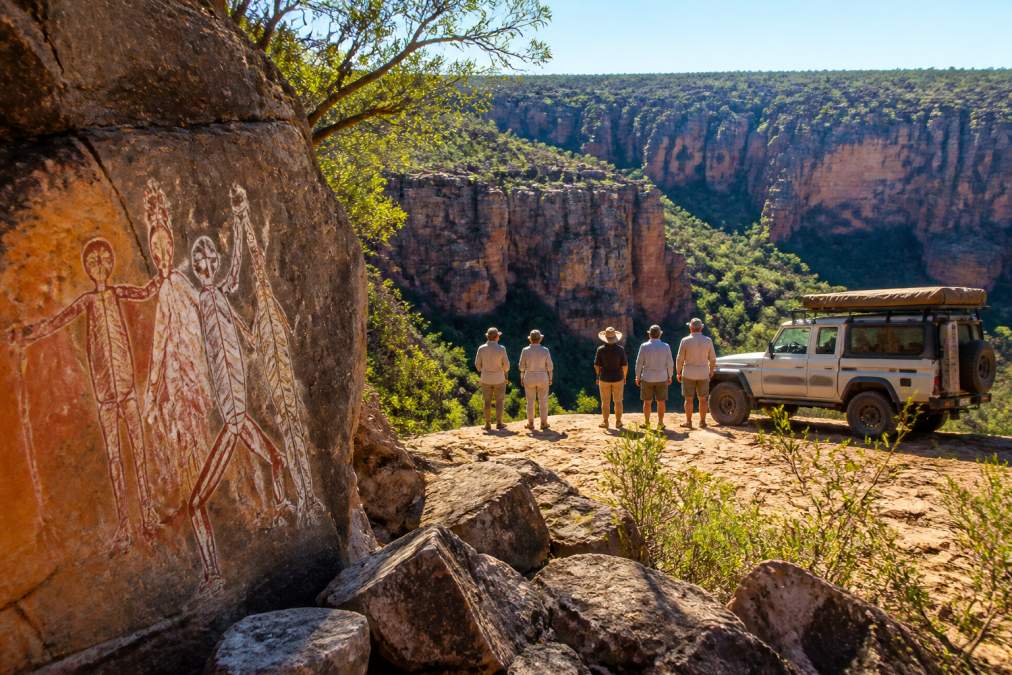
A knowledgeable guide turns a rock face into a story. Sacred sites and indigenous heritage are treated with the respect they deserve, and expert commentary connects the geological formations to tens of thousands of years of human history. That context is what separates a scenic drive from a genuine cultural encounter.
Matching the Tour to Your Pace and Comfort Needs
Comfort on a remote 4WD expedition is not indulgence; it is a practical safety and enjoyment factor. The right match depends on how you weigh three variables: daily driving hours, walking terrain, and sleeping arrangements.
Vehicle and seating. Purpose-built touring vehicles in the region typically carry passengers in forward-facing seats with three-point belts, air conditioning, and dedicated storage for soft bags. Some operators use smaller 4WD wagons for private charters. Ask about suspension type and tyre configuration if you have back concerns.
Accommodation spectrum.
- Lodge or motel style: A bed and hot shower each night, often in safari tents or regional accommodation. Best for travellers who need recovery time between big walking days.
- Glamping: Permanent tents with proper beds and shared or private facilities. A middle ground increasingly offered on the Gibb River Road corridor.
- Camping safari: Swags or dome tents, shared facilities, and the most immersive experience. Lower cost, but requires comfort with basic amenities and early starts.
- Private charter: A bespoke itinerary for clubs, families, or social groups, with the vehicle and guide dedicated to your party.
A fitness scale to self-select. Most operators do not publish one, so use this as a guide:
- Low: Happy to walk 1-2 km on uneven ground, able to climb in and out of a high-clearance vehicle several times daily.
- Moderate: Comfortable with 3-5 km walks, some rock scrambling, and full days of driving.
- High: Able to handle 6-10 km walks in heat, steep gorge entries, and consecutive active days.
If you are unsure, ask the operator directly about the longest walk and the roughest track on your chosen departure. A good operator will answer with specifics, not reassurance.
Accessibility note. Some operators can accommodate travellers with limited mobility on accommodated itineraries using vehicles with steps and handrails, but remote gorge walks are generally not wheelchair accessible. Discuss your needs before booking rather than after.
Planning Logistics: Fitness, Packing and Photography
Good logistics separate a trip you endure from one you savour. This section covers the practical detail most guides skip, plus two angles competitors rarely address: sustainable travel and photography-focused tour selection.
Packing for a 4WD expedition.
- Layers: Cool mornings and warm days mean a fleece or light jacket plus breathable long-sleeve shirts. Sun protection is non-negotiable.
- Footwear: Sturdy closed shoes with grip for rocky gorge entries. Thongs are for camp only.
- Water: Carry at least 3 litres per person per day on walking days (healthdirect.gov.au). Operators usually provide refills, but confirm.
- Power: A power bank and a 12V or USB charger for the vehicle. Some operators have limited charging points.
- Medication: Bring enough for the full trip plus a buffer, and carry a copy of prescriptions.
- Bag: A soft duffel or backpack fits vehicle storage better than a hard suitcase.
Fitness preparation. Start walking on uneven ground several weeks before departure. If your itinerary includes gorge walks, practise carrying a daypack with water. The heat is the variable most travellers underestimate, even in the dry season.
Photography-focused tour selection. The region rewards photographers, but not all tours are built for them. Look for operators who:
- Schedule stops at golden hour rather than only midday.
- Allow extra time at iconic viewpoints instead of rushing to the next site.
- Offer flexibility for spontaneous stops when light or wildlife demands it.
- Carry a guide who understands composition and can point out lesser-known vantage points.
If photography is a priority, ask whether the itinerary includes sunrise or sunset sessions at key locations, and whether the group size allows tripods and slow setups without holding others up.
Sustainable and regenerative tourism. A growing number of operators work with Traditional Owners, follow leave-no-trace principles, and support local communities. Ask how your tour operator contributes to the regions it visits. Choosing a responsible operator is one of the most direct ways to ensure the landscape remains worth visiting.
Connectivity and safety. Do not rely on phone signal in remote sections. Arrange urgent commitments before departure and carry a personal emergency contact card. Most reputable operators carry satellite communication and first-aid trained guides, but confirm this before booking.
Curious Compass Collective designs its departures around travellers who want the adventure without the exhaustion, with intentionally small numbers and guides who double as storytellers and safety professionals.
Frequently Asked Questions
What is the best time of year to visit the Kimberley for a guided 4WD tour?
The dry season, from May to September, is the best time. Roads are accessible, waterfalls are flowing early in the season, and temperatures are comfortable for touring. The wet season (November to April) brings heavy rain, road closures and high humidity, making most guided 4WD tours unavailable. Book early for June to August, the peak period.
How long do Kimberley guided 4WD tours usually last?
Kimberley 4WD tour duration varies from 7 to 21 days. Short trips of 7-10 days cover highlights like the Gibb River Road and Bungle Bungles. A 14-day tour allows a more relaxed pace, while 21-day expeditions such as the Nulla Nulla Safari include remote wilderness camping and deeper cultural experiences. Choose based on your available time and comfort with long drives.
What is the difference between small group and large group Kimberley tours?
Small group tours typically carry travellers in 4WD vehicles, offering flexibility, personalised attention and access to off-the-beaten-track locations. Large coach tours use bigger buses, stick to sealed roads and follow fixed schedules. Small groups suit mature travellers who value comfort, expert commentary and the freedom to linger at ancient rock art sites or photography spots.
What should I pack for a guided 4WD tour in the remote north?
Pack light, quick-dry clothing, a wide-brimmed hat, sturdy walking shoes, sunscreen, insect repellent and a refillable water bottle. Bring a camera with spare batteries, a headlamp, and any personal medications. Most tours provide swags or camping gear, but check with your operator. A soft bag is easier to store in a 4WD than a hard suitcase.
The Kimberley rewards preparation, and the right tour removes the guesswork from a genuinely remote journey. If you want the landscape without the logistics, Curious Compass Collective offers thoughtfully paced small-group 4WD tours with expert guides, comfortable purpose-designed vehicles and flexible private options for clubs and social groups. Get started with Curious Compass Collective and see the Kimberley at a pace that suits you.