 how-to
How to Find Authentic Cultural Tours in Australia
Table of Contents
- What Makes an Authentic Cultural Tour Different
- Cultural Tourism Accreditation Australia: What the Tick Actually Means
- Indigenous-Owned Tourism Operators Australia: Why Ownership Matters
- What to Expect on an Aboriginal Walking Tour
- How to Find Authentic Cultural Tours: A Step-by-Step Vetting Process
- Budget vs. Premium Cultural Experiences: What You Actually Get
- Sustainable Tourism and Community Impact: Where Your Money Goes
- Conclusion
Last Updated: August 8, 2026
What Makes an Authentic Cultural Tour Different
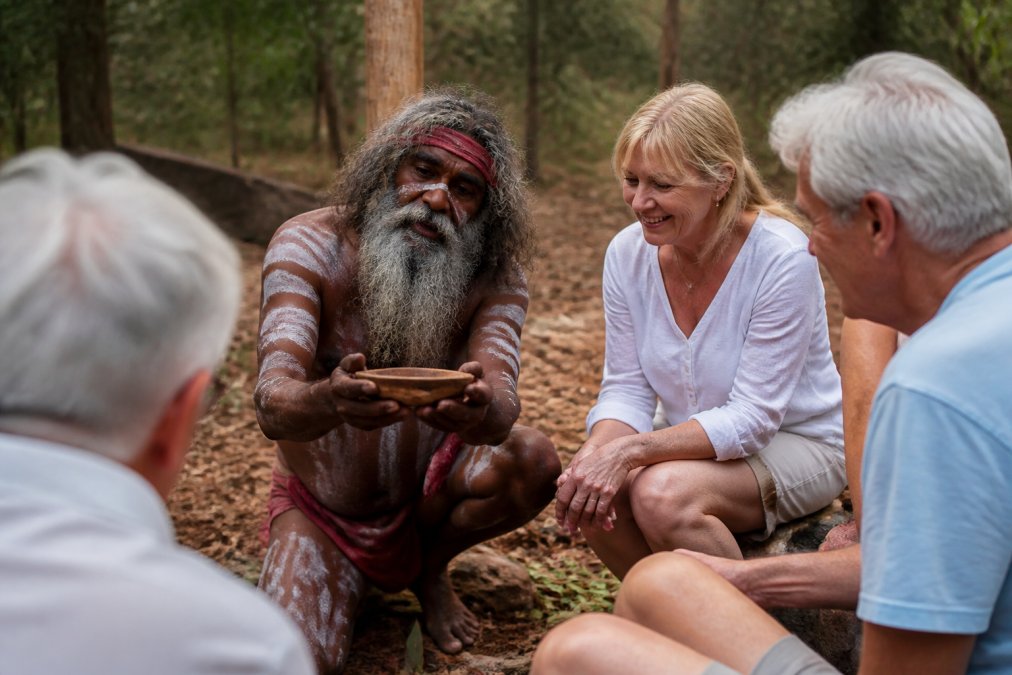
An authentic cultural tour is one where First Nations people lead, design, and directly benefit from the experience. This distinction separates genuine on-country experiences from polished performances. Many tours marketed as "cultural" or "indigenous" are operated by non-Indigenous companies that hire local guides as a face for the experience. The stories may be real, but economic benefit flows elsewhere, itineraries reflect tourist expectations rather than community priorities, and ancestral knowledge is limited to what fits a 90-minute schedule.
Genuine cultural immersion feels different in texture. The pace is slower, guides share rather than perform, and there are moments of quiet reflection that packaged tours cannot accommodate. Cultural significance is explained in layers, not soundbites.
At Curious Compass Collective, this distinction shapes every itinerary we build. Our approach starts by asking who owns the story and who benefits from its telling.
The practical markers of authenticity are:
- Traditional owners or their designated community members lead the experience
- The tour operator is Indigenous-owned or has a documented, ongoing partnership with the community
- Cultural protocols are explained and followed, not bypassed for convenience
- Revenue visibly returns to the community through employment, royalties, or community programs
- The content reflects living culture, not historical re-enactment
Cultural Tourism Accreditation Australia: What the Tick Actually Means
Cultural tourism accreditation in Australia is a patchwork of programmes. Accreditation alone does not guarantee an Indigenous-led experience. Many accredited operators are excellent; some use accreditation as a marketing tool without substance. The tick tells you an operator has met baseline business and safety standards, not necessarily who owns the cultural knowledge being shared.
ATAP and the Respecting Our Culture Programme
The most relevant accreditation for authentic cultural tours is the Respecting Our Culture (ROC) programme, developed by Tourism Australia's Indigenous tourism framework. ROC accreditation is specifically designed for Aboriginal and Torres Strait Islander tourism businesses and assesses operators against criteria including genuine community involvement, cultural integrity, and visitor experience quality.
The Australian Tourism Accreditation Programme (ATAP) covers broader tourism standards. An operator holding both ATAP and ROC accreditation has passed a more rigorous combined assessment.
When searching for authentic cultural tours, filter first for ROC-accredited operators. Then ask the operator directly what the accreditation involved and when it was last renewed. A confident, detailed answer is a good sign.
Indigenous-Owned Tourism Operators Australia: Why Ownership Matters
Ownership determines whether cultural knowledge is shared on its own terms or extracted for someone else's profit. Indigenous-owned tourism operators design experiences from the inside out. Stories, sites, protocols, and pace reflect community decision-making rather than marketing briefs. Guides are often custodians of the country you are walking on.
The economic argument is equally clear. Tourism revenue that stays within a community funds language programmes, supports Elders, pays wages to young people, and builds infrastructure for future tourism. A tour costing the same but run by an outside operator sends most money elsewhere.
How to Confirm Genuine Community-Led Ownership
To confirm genuine community-led ownership, ask these questions before booking:
- Who owns the business? Check the ABN against the Australian Business Register. Look for whether the registered entity is a community organisation, Aboriginal corporation, or community member.
- Who employs the guides? Guides employed directly by the community operator differ from guides contracted by third-party companies.
- How does revenue return to community? Legitimate operators answer without hesitation. Look for specifics: wages, community funds, royalty arrangements.
- Is the operator listed on Tourism Australia's First Nations tourism directory? The Tourism Australia First Nations tourism directory is a useful starting point, though not exhaustive.
Vague answers warrant further investigation.
What to Expect on an Aboriginal Walking Tour
An Aboriginal walking tour is an immersive, guided experience on country led by a Traditional Owner or their designated representative, typically covering significant cultural, historical, and ecological sites.
Your guide will open with an introduction to country: who the Traditional Owners are, their relationship to this land across generations, and what protocols apply. This context sets the tone for everything that follows.
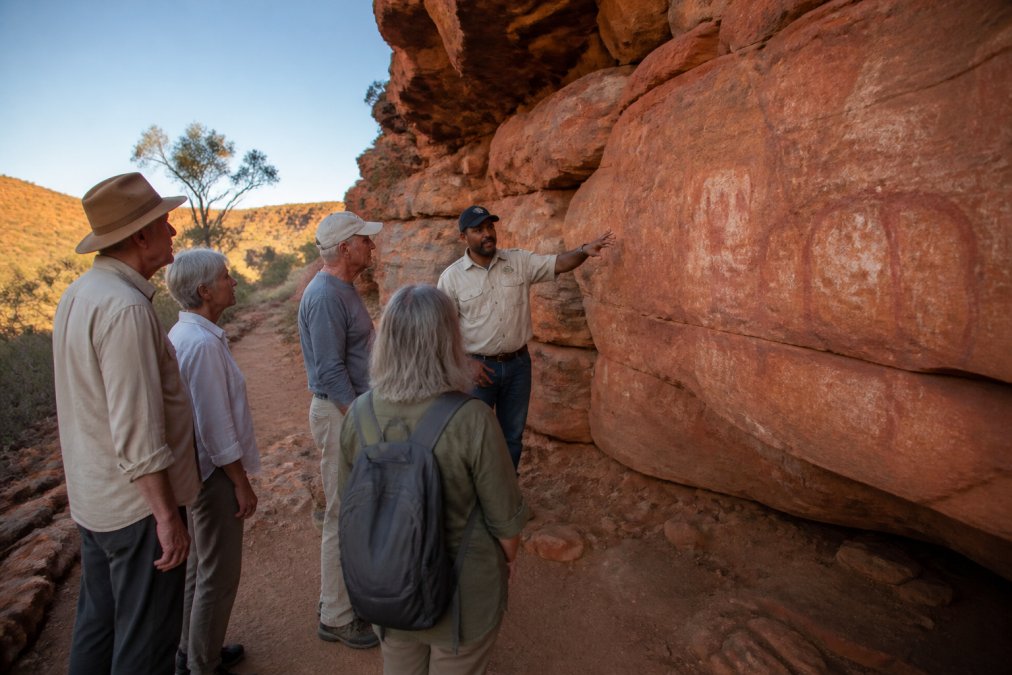
Walking tours typically move through:
- Landscape reading: understanding how country communicates through plants, animals, water sources, and seasonal change
- Rock art and heritage sites: learning to interpret ancient stories encoded in images existing for tens of thousands of years
- Medicinal and food plants: hands-on engagement with traditional ecological knowledge
- Storytelling: oral history delivered in place, where the story belongs
The pace is deliberately unhurried. Most well-designed cultural walking trails are accessible to mature travellers with moderate mobility, though confirm terrain specifics with the operator beforehand.
Cultural Protocols and Respectful Engagement
Every country has its own protocols. Some sites are restricted by gender, age, or ceremonial status. Photography is often restricted or prohibited at sacred locations. These are conditions under which knowledge is shared.
General principles of respectful engagement:
- Wait to be invited before touching anything, including rocks, plants, and art
- Ask before photographing your guide or community members
- Follow your guide's lead on when to speak and when to be quiet
- Do not ask to be shown restricted or ceremonial knowledge
- If unsure, ask your guide directly
The Australian Institute of Aboriginal and Torres Strait Islander Studies cultural protocols guide provides detailed guidance worth reading before any cultural tour.
How to Find Authentic Cultural Tours: A Step-by-Step Vetting Process
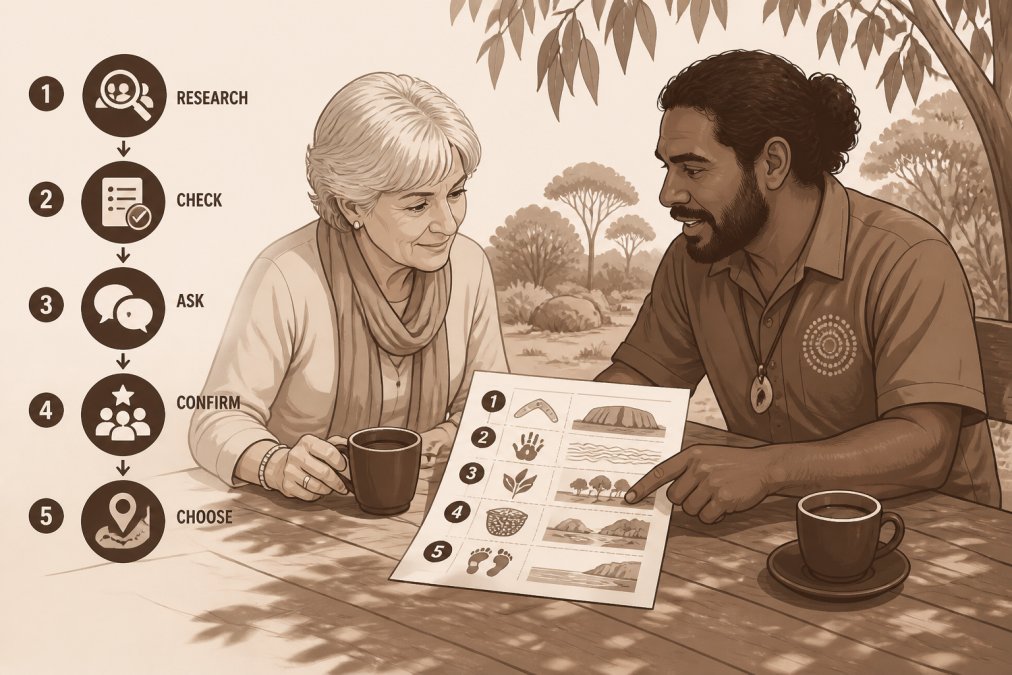
Finding authentic cultural tours requires a structured approach. Here is how to distinguish meaningful on-country encounters from tourist-facing performances.
Step 1: Start with accredited directories Use the Tourism Australia First Nations tourism directory and your state tourism authority's Indigenous tourism listings as your starting point.
Step 2: Check for ROC or equivalent accreditation Search specifically for Respecting Our Culture (ROC) accreditation. If an operator claims accreditation, ask which programme and when it was last assessed.
Step 3: Investigate ownership Use the questions outlined in the ownership section above. Check the ABN and look for Aboriginal corporation registration or clear community governance.
Step 4: Read reviews critically Look for reviews describing specific interactions with guides, specific places visited, and specific knowledge shared. Thoughtful three-star reviews describing what actually happened are more useful than generic five-star praise.
Step 5: Contact the operator directly Ask how the tour was developed, who the Traditional Owners are, and how the community is involved. Legitimate operators welcome these questions. Evasive answers are a red flag.
Step 6: Ask about group size and guide ratios Smaller groups allow genuine conversation and deeper engagement. Large groups with a single guide produce broadcast experiences rather than dialogue.
Red Flags That Signal a Commercialised Experience
Watch for these warning signs:
- No named Traditional Owner group: if the operator cannot tell you whose country you are visiting, that is a problem
- Cultural performance as the centrepiece: a 20-minute didgeridoo demonstration followed by buffet is entertainment, not immersion
- Non-Indigenous operator with no disclosed community partnership: requires clear documentation of community involvement and compensation
- Vague language about "local guides": specificity matters. Who are they? What is their connection to country?
- No mention of cultural protocols: a tour not briefing you on protocols before entering significant sites has not prioritised cultural integrity
Budget vs. Premium Cultural Experiences: What You Actually Get
The price range for authentic cultural tours in Australia varies considerably. A shorter, community-run half-day walk may cost less than a full-day tour operated by a larger non-Indigenous company, yet deliver far more genuine and educational experience.
| Experience Type | Typical Duration | Group Size | Cultural Depth | Community Benefit |
|---|---|---|---|---|
| Community-led half-day walk | 2-4 hours | Small (4-12) | High | Direct |
| Operator-run day tour | 6-8 hours | Medium (12-25) | Variable | Indirect or partial |
| Multi-day on-country immersion | 2-7 days | Small (4-10) | Very high | Direct and sustained |
| Large group cultural performance | 1-2 hours | Large (25+) | Low | Often minimal |
What you pay more for in premium cultural experiences is generally time on country, smaller group sizes, and access to knowledge requiring sustained trust. A multi-day immersion with a community-led operator in Arnhem Land or the Kimberley costs more than a half-day tour near a major city, reflecting guide time, logistical complexity, and cultural access depth.
Budget-conscious travellers should not assume lower cost means lower authenticity. Many community-run experiences are priced accessibly by design. Prioritise ownership and accreditation over price point.
For travellers interested in combining cultural immersion with broader guided journeys, Curious Compass Collective builds itineraries incorporating community-led cultural experiences into thoughtfully paced small-group tours. Contact us for current pricing and availability.
Sustainable Tourism and Community Impact: Where Your Money Goes
Sustainable cultural tourism shapes whether First Nations communities can maintain cultural practices, keep young people on country, and fund infrastructure making tourism possible. According to Reconciliation Australia tourism and economic empowerment resources, tourism is one of the most significant economic development pathways for remote Aboriginal and Torres Strait Islander communities. When community-led and community-owned, benefits compound: wages stay local, cultural knowledge transmits across generations, and communities retain decision-making power over how their country is presented.
Tours extracting cultural content without meaningful community involvement produce the opposite effect, concentrating revenue with external operators and reducing community control over cultural representation.
Practical ways to ensure your tourism spend supports community impact:
- Book directly with Indigenous-owned operators where possible
- Ask operators for their community impact statement
- Choose multi-day or return experiences over one-off visits
- Leave reviews mentioning the guide by name and describing what made the experience meaningful
The frontier tours that guests of Curious Compass Collective describe as bucket-list experiences prioritise depth over distance. The Nulla Nulla Safari has become a guest favourite precisely because it prioritises depth over distance, expert local storytelling, and genuine connection to place.
Finding authentic cultural tours in Australia takes more than a Google search. Curious Compass Collective builds small-group itineraries incorporating genuine community-led cultural encounters, guided by experts prioritising storytelling, cultural protocols, and meaningful access. With intentionally small group sizes, thoughtfully paced itineraries, and guides creating space for real connection, we make it straightforward to experience Australia's living culture without guesswork. VIEW TOURS to see what we have planned.
Frequently Asked Questions
What defines an authentic cultural tour in Australia?
An authentic cultural tour is designed and delivered in genuine partnership with, or led by, the Traditional Owners of the land being visited. The experience shares ancestral knowledge, living culture, and on-country stories through local guides rather than outside interpreters. Look for operators with accreditation through programmes like Tourism Australia's Respecting Our Culture (ROC) or the Aboriginal Tourism Accreditation Programme (ATAP), and confirm that community members directly benefit from the visitor experience.
Are there certifications for authentic Aboriginal cultural tours?
Yes. Cultural tourism accreditation in Australia is available through the Respecting Our Culture (ROC) programme, managed by Tourism Australia in partnership with state tourism bodies. The ROC mark signals that an operator has met standards for cultural authenticity, ethical tourism practice, and community involvement. Some state tourism authorities also run their own accreditation schemes. Checking for these credentials before booking is one of the most reliable ways to distinguish a genuine experience from a commercialised one.
Is it respectful to visit Aboriginal communities on a tour?
Visiting an Aboriginal community on a guided tour can absolutely be respectful, provided the visit is community-led and operates with the free, prior, and informed consent of Traditional Owners. Ethical operators will brief visitors on cultural protocols before arrival, such as asking permission before photographing people or sacred sites. Tours run by Indigenous-owned operators or with formal community endorsement are the most appropriate way to engage, as they ensure your presence and spending directly support the community.
How can I make sure my tourism dollars support local Indigenous communities?
Book directly with Indigenous-owned tourism operators in Australia wherever possible, or choose operators who can demonstrate a formal revenue-sharing or employment arrangement with the relevant community. Ask the operator plainly: what percentage of the tour fee goes back to Traditional Owners or community programmes? Accredited operators under schemes like ROC are required to meet community-benefit standards. Avoiding large aggregator platforms that clip the ticket without community involvement also helps ensure more of your spending reaches the people sharing their culture.
This article was written using GrandRanker
Frequently Asked Questions
What defines an authentic cultural tour in Australia?
An authentic cultural tour is designed and delivered in genuine partnership with, or led by, the Traditional Owners of the land being visited. The experience shares ancestral knowledge, living culture, and on-country stories through local guides rather than outside interpreters. Look for operators with accreditation through programmes like Tourism Australia's Respecting Our Culture (ROC) or the Aboriginal Tourism Accreditation Programme (ATAP), and confirm that community members directly benefit from the visitor experience.
Are there certifications for authentic Aboriginal cultural tours?
Yes. Cultural tourism accreditation in Australia is available through the Respecting Our Culture (ROC) programme, managed by Tourism Australia in partnership with state tourism bodies. The ROC mark signals that an operator has met standards for cultural authenticity, ethical tourism practice, and community involvement. Some state tourism authorities also run their own accreditation schemes. Checking for these credentials before booking is one of the most reliable ways to distinguish a genuine experience from a commercialised one.
Is it respectful to visit Aboriginal communities on a tour?
Visiting an Aboriginal community on a guided tour can absolutely be respectful, provided the visit is community-led and operates with the free, prior, and informed consent of Traditional Owners. Ethical operators will brief visitors on cultural protocols before arrival, such as asking permission before photographing people or sacred sites. Tours run by Indigenous-owned operators or with formal community endorsement are the most appropriate way to engage, as they ensure your presence and spending directly support the community.
How can I make sure my tourism dollars support local Indigenous communities?
Book directly with Indigenous-owned tourism operators in Australia wherever possible, or choose operators who can demonstrate a formal revenue-sharing or employment arrangement with the relevant community. Ask the operator plainly: what percentage of the tour fee goes back to Traditional Owners or community programmes? Accredited operators under schemes like ROC are required to meet community-benefit standards. Avoiding large aggregator platforms that clip the ticket without community involvement also helps ensure more of your spending reaches the people sharing their culture.