 how-to
How to Choose Senior Group Tours: A 2026 Guide
Table of Contents
- Why Small Group Tours Work for Mature Travellers
- Assess Physical Activity Levels in Group Tours
- Questions to Ask Tour Companies Before Booking
- How to Choose the Right Tour Operator
- Match the Tour to Your Travel Style and Needs
- Prepare Practically: Insurance, Health, and Logistics
- How to Choose Senior Group Tours: Your Checklist
- Conclusion
Last Updated: August 25, 2026
Why Small Group Tours Work for Mature Travellers
Small group tours fundamentally change how you experience travel. Instead of being herded through crowded attractions with 50 strangers, you're exploring with 8-12 like-minded people who share your pace and curiosity. Mature travellers benefit most because guides can adapt in real time, if someone needs extra time at a lookout, the group waits; if conversation turns to local history, the guide dives deeper instead of moving to the next checkpoint.
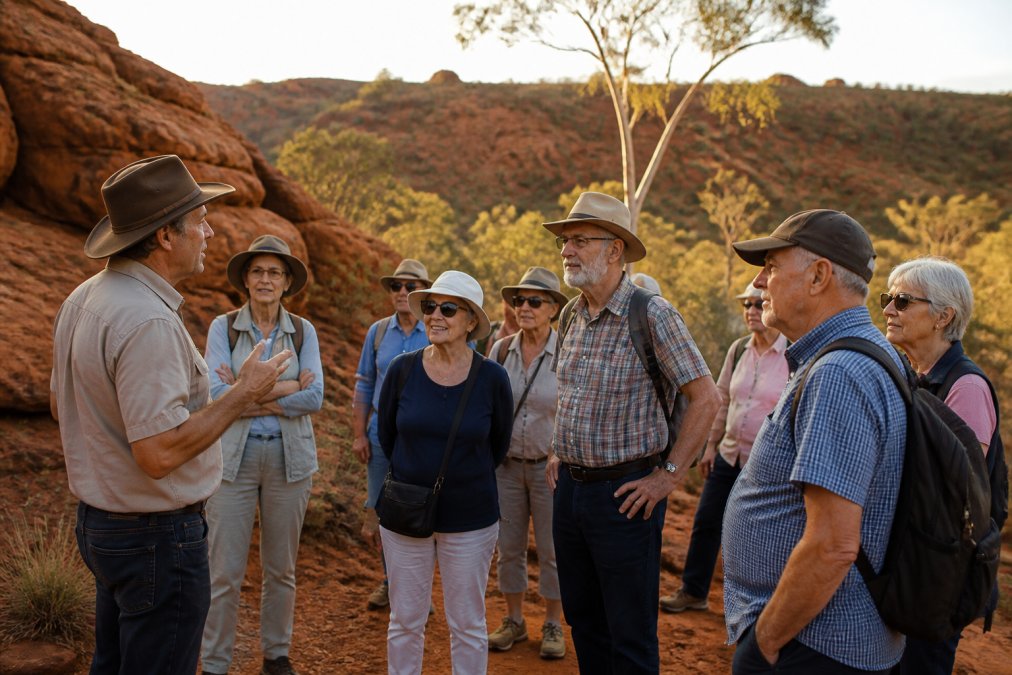
The social connection matters too. Many mature travellers travel solo or with one partner, and small group tours solve the isolation problem without forcing artificial bonding. You meet genuine people with shared interests rather than transient tourists passing through. Safety and support are built into the model, guides are trained for remote terrain and know how to support travellers with varying mobility levels. Curious Compass Collective, for example, designs itineraries around the reality that mature travellers value comfort and expert guidance over rushing between photo stops.
The cost advantage is often overlooked. Small group packages distribute operational costs across fewer people than massive tours, yet the per-person price remains competitive because there's no corporate overhead inflating the bill.
Assess Physical Activity Levels in Group Tours
Choosing the right tour hinges on one brutal question: What can your body actually do for a full week? Not what you did five years ago, but what you can genuinely sustain day after day without pain or exhaustion.
Understanding Walking Intensity and Terrain
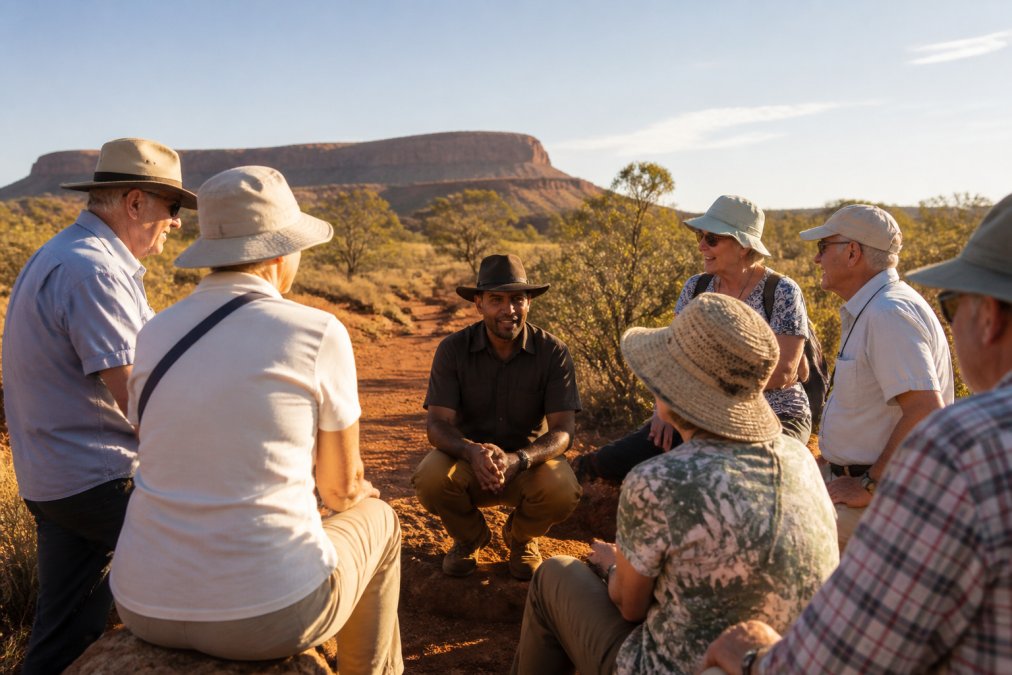
Walking intensity varies wildly between tours, and descriptions often downplay difficulty. A "leisurely walk" might mean 8 kilometres across uneven ground to one operator, 2 kilometres on flat paths to another.
Before booking, ask for specifics: How many kilometres per day? What terrain, sealed roads, gravel tracks, rocky outback, or sandy beaches? Are there hills or steep sections? How long are individual walking segments before rest breaks? A tour with five 2-kilometre walks with long breaks is completely different from one continuous 10-kilometre trek.
Terrain matters as much as distance. Walking 5 kilometres on sealed paths is manageable for most people over 60 (the NIH). Walking 5 kilometres on rocky outback terrain with loose gravel demands more balance, ankle stability, and concentration. Ask whether the tour includes scrambling, climbing, or sections requiring hand-steadying.
Comfort and Mobility in Purpose-Designed Vehicles
Your vehicle is your refuge during the day and sleeping base on multi-day adventures. Purpose-designed 4WD vehicles are built specifically for outback and island terrain where regular vehicles can't go.
Check vehicle specs: How wide are the seats? Can you recline them? What's the suspension like? How many people share the vehicle? A 4WD with eight passengers is intimate and social; one with 15 is crowded and exhausting.
Climate control matters more than you'd think. Remote areas can be scorching during the day and surprisingly cold at night. Vehicles with effective air conditioning and heating are essential for comfort on long driving days. Ask whether vehicles are serviced regularly and what happens if mechanical issues arise in remote areas.
For tours involving camping or station stays, ask about sleeping arrangements. Are beds provided or camp stretchers? What's the toilet and shower situation? These details define whether you sleep well and wake refreshed.
Questions to Ask Tour Companies Before Booking
The right questions separate operators who understand mature travellers from those who simply market to them. Don't accept vague answers.
Guide Qualifications and Safety Protocols
Ask directly: What certifications do your guides hold? In remote areas, this should include wilderness first aid or remote area medical training. Ask whether guides are trained specifically for mature traveller needs, managing medications, recognising early fatigue, adapting activities on the fly.
Request references from guides. A guide with 15 years of outback experience and positive feedback from mature travellers is fundamentally different from one with two seasons under their belt.
Ask about emergency protocols. What happens if someone becomes ill or injured in a remote area? Is there satellite communication? What's the evacuation procedure? Reputable operators have detailed contingency plans and insurance covering remote rescue.
Insurance is non-negotiable. Does the operator carry public liability insurance? Do they have cancellation insurance if you need to withdraw? What about medical evacuation from remote areas?
Itinerary Pacing and Flexibility
Ask: How many hours per day are spent in the vehicle? How many activity hours are built in, and how many are genuine rest time? A tour driving six hours and walking four is brutally different from one driving two hours and walking two.
Crucially, ask about flexibility. What happens if someone needs to skip an activity? Can you rest at camp while the group goes on an optional walk? Do activities have easier and harder options? Tours that force everyone through the same itinerary regardless of fitness aren't designed for mature travellers.
Ask about the daily rhythm. Do you depart at dawn and return at dusk, or is there downtime in the middle of the day? Mature travellers often need afternoon rest to recover from morning activities.
Request the full itinerary with daily breakdowns, actual times, distances, terrain types, and what happens if weather changes plans.
Hidden Costs and What's Included
Ask explicitly: What's included in the tour price? Meals, accommodation, activities, park entry fees, internal flights or transfers? What's not included? Travel insurance, alcohol, tips, personal activities, or optional excursions?
Ask about group size minimums and maximums. A tour that needs six people to run but books up to 14 might be cramped by day four.
Ask about payment terms. When is the full balance due? What's the cancellation policy? If you need to withdraw two weeks before departure due to illness, do you lose the entire amount?
For customised private tours, ask how costs scale with group size and whether there are hidden surcharges for specific activities or dietary requirements.
How to Choose the Right Tour Operator
Not all small group tour operators are equal. Some genuinely specialise in mature travellers and design everything around their needs.
Evaluating Best Small Group Tour Operators
The best small group tour operators share common characteristics: they limit group sizes intentionally, employ guides with extensive remote-area experience, and build itineraries around comfort rather than ticking boxes. They're transparent about costs, flexible with activities, and have strong track records with mature travellers.
Look for operators with consistent positive feedback specifically mentioning pacing, guide quality, and comfort. Check whether the operator owns or leases their vehicles. Operators who own their fleet maintain them to higher standards. Ask whether guides are employed directly or contracted. Direct employment usually means better training, consistency, and accountability.
Curious Compass Collective's approach, small groups, expert storytelling guides, purpose-designed vehicles, and itineraries built for mature travellers, represents the model that works. But verify these claims with any operator before booking.
Checking References and Traveller Feedback
Ask for references from travellers who've completed the exact tour you're considering. Not general testimonials, but specific names and contact details. Operators reluctant to provide this are hiding something.
When you contact references, ask: Did the tour match the description? Was the pacing realistic? How was the guide? Would you do another tour with this operator?
Online reviews help, but read them critically. Look for patterns rather than individual comments. Check whether reviews mention mature travellers specifically. A tour with glowing reviews from 30-year-olds might be terrible for 65-year-olds.
Match the Tour to Your Travel Style and Needs
The best tour operator is wrong for you if the itinerary doesn't match what you actually want to do.
Curated Experiences vs. Traditional Sightseeing
Some tours focus on curated experiences, deep dives into specific themes like Indigenous culture, geology, or local food. Others are traditional sightseeing with expert commentary. Neither is inherently better; it depends on what engages you.
If you want to understand the landscape and culture rather than simply see attractions, curated experiences are worth the premium. You'll spend more time with fewer locations and come away with genuine insight rather than just photos. Traditional sightseeing tours move more, hit more highlights, and suit travellers who want breadth over depth.
Be honest about which appeals to you. Booking a deep-culture tour because it sounds sophisticated, then wishing you'd seen more famous landmarks, is a waste of money and time.
Group Size, Social Connection, and Solo Traveller Support
Group size directly affects your experience. Tours with 8-10 people create genuine community. Tours with 15+ people splinter into subgroups.
If you're travelling solo, ask how the operator handles solo traveller dynamics. Do they pair you with a roommate, or do you have a private room? Are solo travellers integrated into group activities? The best operators actively facilitate connections between solo travellers and couples.
Ask about the typical demographic. Are you likely to be the youngest person, or with people 20 years older? Tours where everyone's within five years of your age create stronger social bonds.
If you're travelling with a partner, ask whether activities can be done separately. Flexible operators allow couples to make independent choices.
Prepare Practically: Insurance, Health, and Logistics
The difference between a trip you enjoy and one that becomes a logistical nightmare often comes down to preparation unrelated to the tour itself.
Travel Insurance for Pre-Existing Conditions
Standard travel insurance often excludes pre-existing medical conditions. If you have diabetes, heart conditions, arthritis, or other ongoing health issues, you need specialist insurance that covers these explicitly.
Ask your insurance provider: Are pre-existing conditions covered? What's the excess? What about medical evacuation from remote areas? Evacuation from the outback can cost thousands; standard travel insurance often doesn't cover it (the CDC).
Get medical clearance from your GP before booking. Your doctor should confirm you're fit for the specific activities and climate. Declare everything to your insurer. Failing to disclose a pre-existing condition voids your policy.
Medication Management and Dietary Requirements
Tell the tour operator about all medications you take, prescription drugs, supplements, blood pressure medication, diabetes management, everything. Operators need to know what to do in a medical emergency and plan logistics around refrigeration or timing of doses.
Ask whether accommodation includes refrigeration if you need it. Some outback camps have limited power and can't refrigerate insulin or other temperature-sensitive medications.
Dietary requirements need the same transparency. If you're vegetarian, gluten-free, diabetic, or have food allergies, tell the operator immediately. Small group tours can usually accommodate dietary needs because they're not catering to hundreds of people.
Ask about meal timing. If you take medication with meals, you need to know whether breakfast is at 6am or 8am. Bring more medication than you need. Carry medications in original containers with labels. If you're carrying insulin or other controlled substances, you need documentation showing it's prescribed to you.
How to Choose Senior Group Tours: Your Checklist
Before committing to any tour, work through this checklist. If an operator can't answer these questions clearly, keep looking.
| Evaluation Area | Question to Ask | Red Flag |
|---|---|---|
| Physical Demands | What's the actual daily walking distance and terrain type? | Vague descriptions like "moderate activity" without specifics |
| Vehicle Quality | What's the vehicle spec, and how many passengers? | Overcrowded vehicles or vehicles older than 10 years |
| Guide Credentials | What certifications and remote-area experience do guides have? | Guides with less than 5 years experience or no wilderness first aid |
| Pacing | How many hours driving vs. activity? Is rest time built in? | Full-day schedules with minimal downtime |
| Flexibility | Can activities be skipped or modified? | Rigid itineraries where everyone does everything |
| Safety Protocols | What's the emergency procedure for remote areas? | No clear evacuation plan or communication system |
| References | Can you contact past travellers, not just read reviews? | Refusal to provide contact details for references |
| Costs | What's included and excluded? When is balance due? | Vague pricing or inflexible cancellation terms |
| Insurance | Does the operator carry public liability and medical evacuation cover? | Unclear insurance or no evacuation coverage |
| Accommodation | What are sleeping arrangements and bathroom facilities? | Camps with no privacy or inadequate facilities |
| Meals | What's included? Can dietary requirements be met? | Limited meal options or no flexibility for dietary needs |
| Group Size | How many people maximum? What's the typical age range? | Groups larger than 12 or wide age ranges with poor integration |
Work through this systematically. A tour that ticks all these boxes is genuinely designed for mature travellers.
Conclusion
Choosing a senior group tour isn't about finding the cheapest option or the most impressive itinerary. It's about matching your actual physical needs, travel style, and budget to an operator that genuinely understands what mature travellers need and delivers it consistently.
Curious Compass Collective's model, intentionally small groups, expert guides trained in remote-area safety, purpose-designed 4WD vehicles, and itineraries built around thoughtful pacing, addresses exactly what makes group travel work for mature travellers. But whether you choose Curious Compass or another operator, use this framework to evaluate honestly. Ask the hard questions, check references, and don't book until you're confident the tour matches your reality. The right choice transforms a holiday into a genuine adventure. The wrong choice becomes a week of exhaustion you're still recovering from months later. Consumer Affairs Australia provides guidance on travel booking rights and dispute resolution. Take the time to choose well.
Frequently Asked Questions
What should I look for when choosing senior group tours?
Prioritise small group size (under 15 people), thoughtfully paced itineraries, and guides trained in remote area safety. Check that the tour operator provides clear information about walking intensity, vehicle comfort, and what's included in the price. Verify insurance coverage and ask about flexibility if you need to adjust activities. Request references from past travellers and confirm the operator has experience with mature travellers' specific needs.
How do I assess physical activity levels in group tours?
Ask the tour operator for specific details: daily walking distances in kilometres, terrain type (flat, hilly, uneven), and estimated duration of each activity. Request the itinerary pacing, how many hours per day are spent exploring versus resting. Ask whether activities are optional and if there are alternatives for different fitness levels. Some operators provide walking intensity ratings or can customise the tour to match your mobility requirements.
What questions should I ask tour companies before booking?
Ask about guide qualifications, safety protocols, and emergency procedures. Clarify what's included in the price and what costs extra. Enquire about cancellation policies, travel insurance recommendations for pre-existing conditions, and how the operator handles dietary and medication requirements. Ask whether the itinerary is flexible and how the operator connects travellers with authentic local experiences rather than packaged tourist activities.
Are small group tours better for mature travellers than large coach tours?
Small group tours offer several advantages: more personalised attention, slower pacing that allows for genuine connection with destinations and fellow travellers, and greater flexibility to adjust activities. Large coach tours often rush through multiple sites daily, which can be exhausting. Small groups also foster social companionship and allow expert guides to share deeper storytelling rather than generic commentary. The trade-off is typically higher cost per person, though group packages can reduce this.
This article was written using GrandRanker
Frequently Asked Questions
What should I look for when choosing senior group tours?
Prioritise small group size (under 15 people), thoughtfully paced itineraries, and guides trained in remote area safety. Check that the tour operator provides clear information about walking intensity, vehicle comfort, and what's included in the price. Verify insurance coverage and ask about flexibility if you need to adjust activities. Request references from past travellers and confirm the operator has experience with mature travellers' specific needs.
How do I assess physical activity levels in group tours?
Ask the tour operator for specific details: daily walking distances in kilometres, terrain type (flat, hilly, uneven), and estimated duration of each activity. Request the itinerary pacing—how many hours per day are spent exploring versus resting. Ask whether activities are optional and if there are alternatives for different fitness levels. Some operators provide walking intensity ratings or can customise the tour to match your mobility requirements.
What questions should I ask tour companies before booking?
Ask about guide qualifications, safety protocols, and emergency procedures. Clarify what's included in the price and what costs extra. Enquire about cancellation policies, travel insurance recommendations for pre-existing conditions, and how the operator handles dietary and medication requirements. Ask whether the itinerary is flexible and how the operator connects travellers with authentic local experiences rather than packaged tourist activities.
Are small group tours better for mature travellers than large coach tours?
Small group tours offer several advantages: more personalised attention, slower pacing that allows for genuine connection with destinations and fellow travellers, and greater flexibility to adjust activities. Large coach tours often rush through multiple sites daily, which can be exhausting. Small groups also foster social companionship and allow expert guides to share deeper storytelling rather than generic commentary. The trade-off is typically higher cost per person, though group packages can reduce this.