 listicle
Authentic Local Experiences in Pacific Islands
Table of Contents
- What Makes Authentic Local Experiences Different From Tourist Activities
- How to Prepare for Pacific Island Cultural Workshops
- Village Visits and Community Engagement: A Pacific Island Village Etiquette Guide
- Traditional Feasts, Earthen Ovens, and Culinary Immersion
- Wildlife Encounters: Humpback Whales, Manta Rays, and Snorkelling in Pristine Lagoons
- Cultural Performances, Traditional Dance, and Living Heritage
- Volcanic Landscapes, Jungle Treks, and Off-the-Beaten-Path Exploration
- Conclusion
Last Updated: August 18, 2026
What Makes Authentic Local Experiences Different From Tourist Activities
Authentic local experiences in Pacific islands differ fundamentally from packaged tourist activities. Tourist activities are designed for consumption: scheduled, timed, priced, and optimised for volume. You follow a predetermined route and leave on schedule. Authentic local experiences happen when you're invited into something real, participating in community activities at a pace dictated by what matters to locals, not tour logistics.
This distinction matters. When you share a meal with families in a village longhouse, learn traditional food preparation from someone who's practiced it for decades, or hear stories directly from elders, you're building genuine understanding. Money spent on authentic experiences tends to stay within communities rather than flowing to external operators.
The challenge is finding these experiences while respecting boundaries. Ethical village visits require genuine respect for people's homes and livelihoods, not treating them as museum exhibits.
How to Prepare for Pacific Island Cultural Workshops
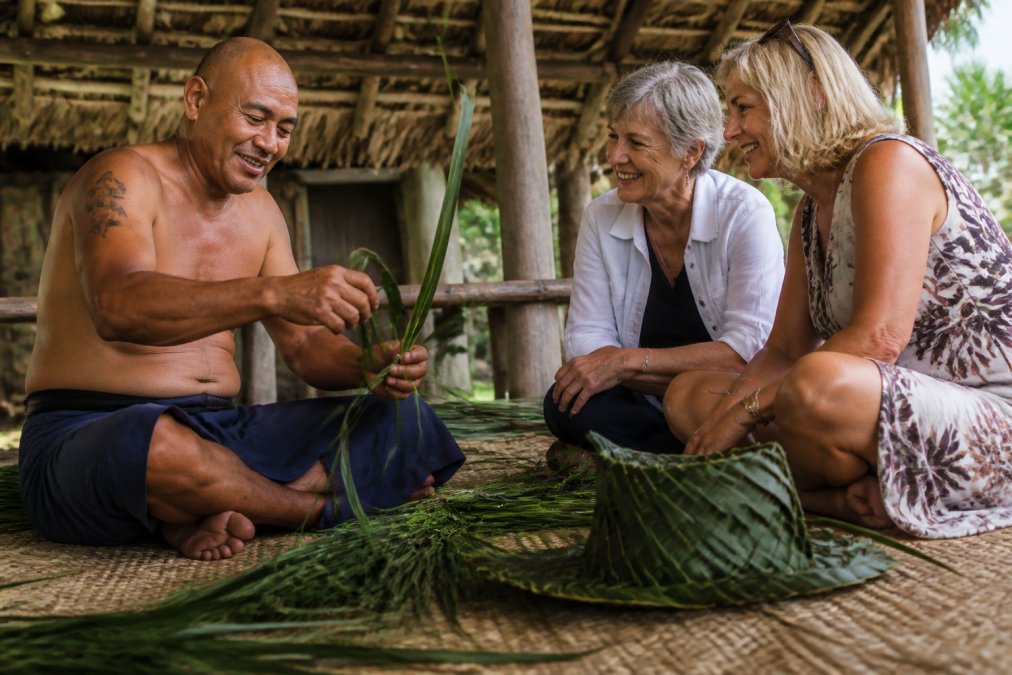
Preparing properly transforms workshops from observation into genuine participation.
Research the specific culture you're visiting. Polynesian, Melanesian, and Micronesian traditions are distinct. Samoa differs from Fiji, which differs from Vanuatu. Understanding these differences shows respect and helps you ask better questions.
Learn basic local language phrases. In Fiji, "bula" is the greeting. In Samoa, it's "talofa." This signals you're not just passing through. Understand what the workshop teaches, some focus on hands-on skills (weaving, cooking, carving), others are observational. Know which you're signing up for so you can dress appropriately.
Arrive early and stay late if possible. Real conversations happen before formal workshops start and after they end. Bring something to share from your culture, photos, a traditional food item, or something that tells your story. This creates reciprocity rather than one-way extraction.
| Preparation Step | Purpose | Timing |
|---|---|---|
| Research the specific culture and traditions | Understand context and show respect | Before booking |
| Learn basic local language phrases | Signal genuine interest and respect | 1-2 weeks before |
| Clarify what the workshop teaches | Manage expectations and dress appropriately | When booking |
| Arrange to arrive early and stay late | Access informal conversations and deeper connections | Day of workshop |
| Prepare something to share about your culture | Create reciprocal exchange, not one-way extraction | Before departure |
Village Visits and Community Engagement: A Pacific Island Village Etiquette Guide
Village visits are where authentic local experiences become real or deeply awkward, the difference depends entirely on your behaviour.
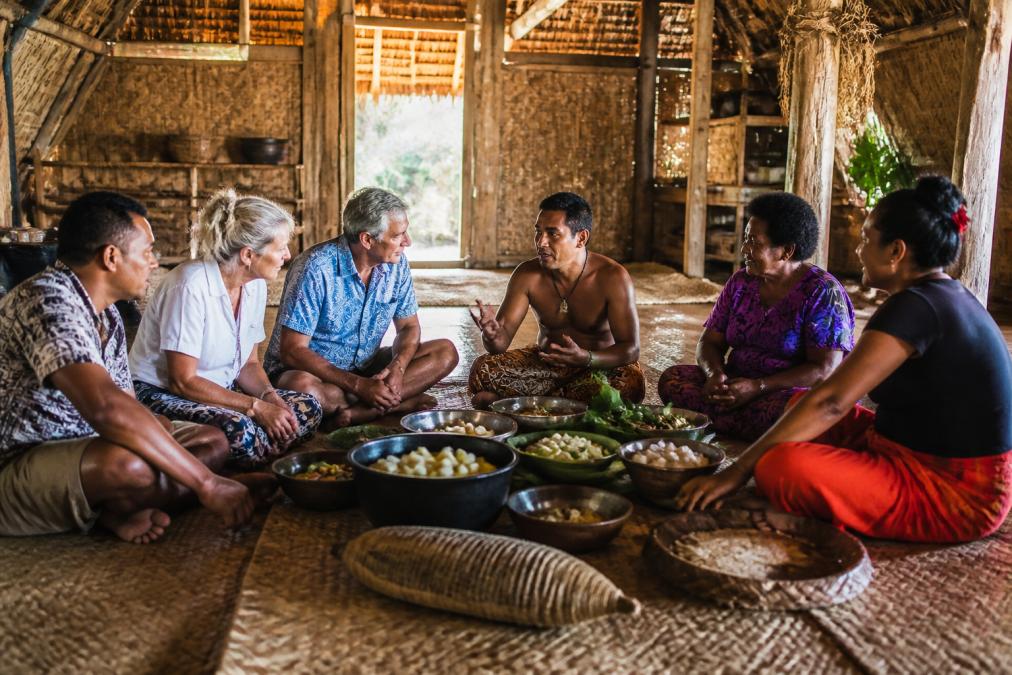
Never photograph people without asking. Never enter a home without invitation. Never assume you can access sacred spaces. In many communities, certain areas are restricted by gender, initiation status, or privacy. Ask first and accept "no" without pushback.
Dress respectfully, cover shoulders and knees, particularly in traditional villages. Respectful dress opens doors; disrespectful dress closes them. Participate if invited, but don't force participation. Accept invitations as genuine honours, but don't insert yourself into activities you haven't been invited to.
Ask permission before giving gifts. Large unsolicited donations can create awkwardness or obligation. Instead ask what might be useful. Respect the pace, communities aren't running on your schedule. Pay fairly for services and experiences. Ask what's appropriate rather than assuming. In some cases, a community donation works better than individual payments.
Traditional Feasts, Earthen Ovens, and Culinary Immersion
Food is the most direct entry point into authentic local experiences in Pacific islands. When you eat what people eat, prepared how they prepare it, you're tasting generations of knowledge.
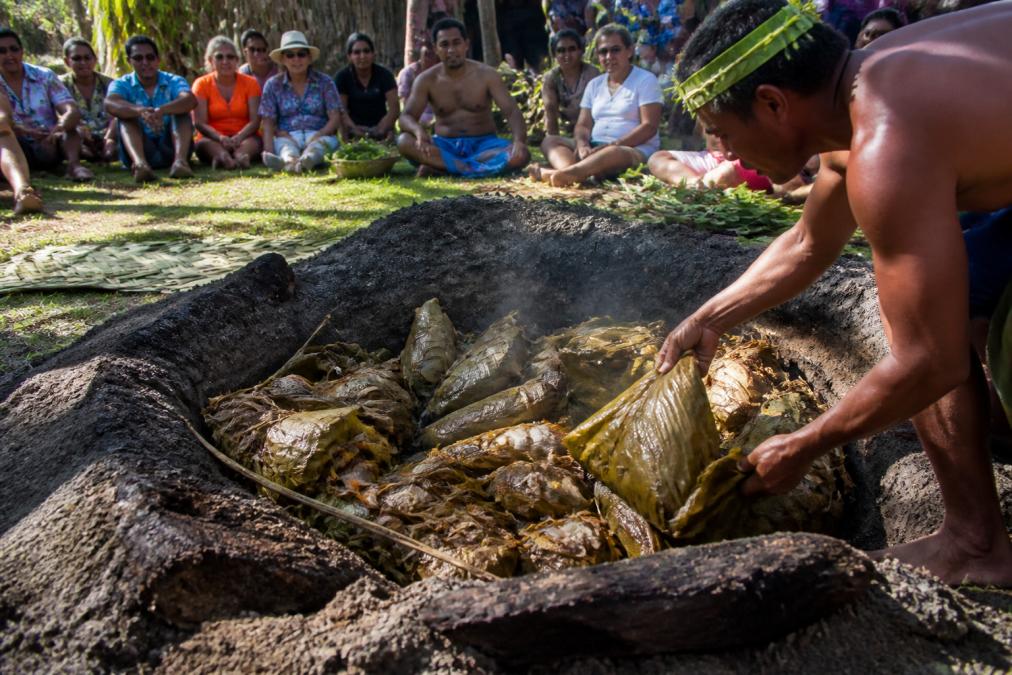
The earthen oven, called an umu in Samoa and Tonga, a lovo in Fiji, is central to traditional Pacific island cooking. Stones are heated in a fire, then food wrapped in banana or taro leaves is layered with hot stones in a pit. Everything cooks together in residual heat for hours. Participating teaches you temperature management through intuition rather than thermometers, and why this method was developed: it's efficient for feeding large groups, requires minimal equipment, and creates deeply flavoured food.
Traditional feasts mark occasions, arrivals, celebrations, or community gatherings. The food matters, but so does ritual. There are often protocols about who sits where and how food is distributed. Learning about staple ingredients, taro root, coconut, yams, breadfruit, and fish, gives you insight into how communities adapted to island environments. Ask about seasonal ingredients and traditional preservation methods. Coconut is used fresh, dried, and fermented. Fish is smoked, salted, and dried. These techniques developed for food security across seasons.
Wildlife Encounters: Humpback Whales, Manta Rays, and Snorkelling in Pristine Lagoons
Wildlife experiences in Pacific islands are extraordinary but require ethical boundaries to remain sustainable.
Humpback whales migrate through Pacific island waters during winter months (July to October in the Southern Hemisphere). Responsible operators maintain distance, avoid sudden movements, and never chase whales. If a whale approaches, that's a gift, but you don't pursue it.
Manta rays gather in certain lagoons, particularly around Micronesia and parts of Fiji. Snorkelling with them is extraordinary, but respect their space. Don't touch them, chase them, or assume they want interaction.
Snorkelling in pristine lagoons reveals thousands of fish species. Coral is fragile, use reef-safe sunscreen, don't touch coral or fish, don't stand on the reef, and don't collect souvenirs. Ask your guide about conservation efforts. Many communities actively protect their reefs and wildlife. Wildlife viewing should never involve captive animals or performances. If offered swimming with dolphins in pens or confined animal displays, decline.
Cultural Performances, Traditional Dance, and Living Heritage
Cultural performances range from deeply authentic community events to performances created specifically for tourists. Living heritage, knowledge, practices, and traditions that communities actively maintain, differs from staged entertainment.
Traditional dance carries meaning. In Samoa, the siva tau is a war dance with specific movements and protocols. In Fiji, the meke combines dance and storytelling. In Tonga, the tau'olunga is graceful and flowing. These express history, identity, and cultural values.
Seek out community events rather than resort performances. Village celebrations where locals participate for themselves, not tourists, offer authentic cultural expression. If you attend a cultural performance, understand the context. Is this a community event tourists are invited to, or a performance created for tourists? Is the performer fairly compensated? Are cultural elements presented accurately?
Support artists and cultural practitioners directly. If someone teaches you traditional crafts, compensate them fairly. Buy traditional art from makers when possible rather than intermediaries. This ensures economic benefits flow to people maintaining traditions.
Volcanic Landscapes, Jungle Treks, and Off-the-Beaten-Path Exploration
Pacific island landscapes, volcanic peaks, dense jungle, pristine beaches, and blue holes, are stunning but require respect and preparation.
Volcanic landscapes are geologically active in some islands. Mount Yasur in Vanuatu is an active volcano you can hike to and observe. These landscapes are powerful but potentially dangerous. Hire experienced local guides who understand terrain and risks. Don't attempt volcanic hikes alone or ignore warnings about unstable ground or toxic gases.
Jungle treks reveal biodiversity. Move slowly enough to observe wildlife rather than rushing through. Local guides know where to find birds, insects, and plants you'd miss alone. Blue holes exist in several locations. Swimming in them is otherworldly, but access is often restricted or requires local permission. These are sacred sites or ecologically sensitive areas. Respect restrictions and ask permission.
Off-the-beaten-path exploration requires humility. You're a visitor in someone else's land. Stick to designated paths, don't assume you can camp anywhere or access private land. Ask permission and leave no trace. Many islands balance tourism with environmental conservation. Some areas close seasonally to allow ecosystems to recover. Following these restrictions is part of ethical travel.
Conclusion
Finding authentic local experiences in Pacific islands requires genuine curiosity, respect for boundaries, and willingness to move at a pace that suits communities rather than tour schedules. It's slower than typical tourism, more unpredictable, and infinitely more rewarding.
Curious Compass Collective offers small-group guided tours designed for mature travellers who want to move thoughtfully through Pacific island communities. With expert guides who understand cultural context and remote travel logistics, thoughtfully paced itineraries that prioritise genuine connection over activity checklists, and commitment to ethical engagement with local communities, the focus is on meaningful experiences that benefit the communities you visit. Whether exploring village traditions, learning traditional cooking, or encountering wildlife on its own terms, the focus is on meaningful experiences that benefit the communities you visit.
UNESCO's definition of intangible cultural heritage
Sustainable tourism guidelines from the Global Sustainable Tourism Council
Pacific Islands Tourism Organisation's responsible tourism framework
Frequently Asked Questions
What's the difference between authentic local experiences and typical tourist activities in the Pacific Islands?
Authentic local experiences involve genuine interaction with communities, participation in daily life or traditional practices, and direct economic benefit to locals. Typical tourist activities are packaged for outsiders, scheduled around convenience, and often disconnect you from real cultural immersion. True cultural engagement means slower pacing, smaller groups, and relationships built over time rather than a single transaction. Curious Compass Collective prioritises these deeper connections through intentionally small group sizes and expert guides who facilitate genuine community encounters.
How should I prepare for Pacific island cultural workshops?
Research the specific island's customs and history before arriving. Pack modest, weather-appropriate clothing that respects local dress norms. Learn a few basic phrases in the local language, even simple greetings show respect. Bring a notebook to record stories and teachings. Arrive with an open mind and genuine curiosity rather than expectations. Confirm any physical requirements with organisers beforehand, as some workshops involve sitting on the ground or participating in hands-on activities. Most importantly, approach workshops as a student, not an observer.
What are the key etiquette rules for visiting traditional villages in the Pacific Islands?
Always ask permission before entering a village or photographing people. Remove shoes when entering a home or sacred space. Dress modestly, covering shoulders and knees. Never sit higher than elders or chiefs. Avoid pointing or loud voices. Accept food and drink offerings graciously, refusing can be considered disrespectful. Ask before touching cultural artefacts. Show genuine interest in stories and traditions rather than treating the village as a backdrop for photos. Guides familiar with local customs can help navigate these nuances and ensure your visit strengthens rather than disrupts community life.
Are there budget-friendly ways to experience authentic Pacific Island culture?
Yes. Stay in locally-owned guesthouses or village homestays rather than resorts. Eat at local markets and family-run restaurants. Participate in community events that don't charge entry fees. Visit cultural villages during their regular operating hours rather than booking private tours. Volunteer with community projects or conservation efforts. Use public transport and interact with locals during your journey. Group tours through operators like Curious Compass Collective offer affordable access to authentic experiences without the premium pricing of private expeditions, while maintaining the small-group intimacy that enables genuine connection.
This article was written using GrandRanker
Frequently Asked Questions
What's the difference between authentic local experiences and typical tourist activities in the Pacific Islands?
Authentic local experiences involve genuine interaction with communities, participation in daily life or traditional practices, and direct economic benefit to locals. Typical tourist activities are packaged for outsiders, scheduled around convenience, and often disconnect you from real cultural immersion. True cultural engagement means slower pacing, smaller groups, and relationships built over time rather than a single transaction. Curious Compass Collective prioritises these deeper connections through intentionally small group sizes and expert guides who facilitate genuine community encounters.
How should I prepare for Pacific island cultural workshops?
Research the specific island's customs and history before arriving. Pack modest, weather-appropriate clothing that respects local dress norms. Learn a few basic phrases in the local language—even simple greetings show respect. Bring a notebook to record stories and teachings. Arrive with an open mind and genuine curiosity rather than expectations. Confirm any physical requirements with organisers beforehand, as some workshops involve sitting on the ground or participating in hands-on activities. Most importantly, approach workshops as a student, not an observer.
What are the key etiquette rules for visiting traditional villages in the Pacific Islands?
Always ask permission before entering a village or photographing people. Remove shoes when entering a home or sacred space. Dress modestly, covering shoulders and knees. Never sit higher than elders or chiefs. Avoid pointing or loud voices. Accept food and drink offerings graciously—refusing can be considered disrespectful. Ask before touching cultural artefacts. Show genuine interest in stories and traditions rather than treating the village as a backdrop for photos. Guides familiar with local customs can help navigate these nuances and ensure your visit strengthens rather than disrupts community life.
Are there budget-friendly ways to experience authentic Pacific Island culture?
Yes. Stay in locally-owned guesthouses or village homestays rather than resorts. Eat at local markets and family-run restaurants. Participate in community events that don't charge entry fees. Visit cultural villages during their regular operating hours rather than booking private tours. Volunteer with community projects or conservation efforts. Use public transport and interact with locals during your journey. Group tours through operators like Curious Compass Collective offer affordable access to authentic experiences without the premium pricing of private expeditions, while maintaining the small-group intimacy that enables genuine connection.