 ultimate-guide
Active senior travel 2026: tips for safe adventures
Table of Contents
- Why active senior travel is different in 2026
- Best small group tours for seniors: what to look for
- Travel insurance for seniors over 70: essential coverage
- How to stay fit while travelling without the strain
- Managing health and medications on the road
- Packing smart and staying comfortable
- Safety, anti-theft and staying secure while travelling
- Conclusion: your active senior travel adventure awaits
- Frequently Asked Questions
Last Updated: August 31, 2026
Why active senior travel is different in 2026
Active senior travel has shifted dramatically. What worked five years ago no longer applies. The landscape has changed in what's available, possible, and safe for travellers over 50 who want genuine adventure without exhaustion.
The fundamental difference isn't about age. It's about pacing, comfort, and intentionality. A typical tourist itinerary crams 12 sights into six days. Active senior travel spreads experiences across more time, builds in recovery days, and prioritises depth over speed. You're actually present, not racing to tick boxes.
At Curious Compass Collective, we've spent years designing journeys specifically for mature travellers who refuse to sit on the sidelines. These are active adventures, hiking, exploring, engaging with local communities, but structured so you arrive energised, not depleted.
The 2026 reality includes three effective factors. First, inflation has reshaped travel budgets; small group tours now offer better value than solo or large group packages. Second, post-pandemic health awareness means better hygiene standards and clearer safety protocols across tourism. Third, digital accessibility has improved dramatically; apps, booking systems, and travel documentation are now genuinely easier to navigate.
This guide covers everything you need to plan active senior travel that works for your body, budget, and expectations.
Best small group tours for seniors: what to look for
Small group tours designed for mature travellers are about intentional design. The difference between a tour that works and one that doesn't comes down to three factors: group size, itinerary pace, and guide expertise.
The ideal group size sits between 6 and 12 people. Smaller than six and costs climb; larger than twelve and you lose personal attention. Eight to ten is the sweet spot for genuine connection without feeling crowded.
Itinerary pace is where most tours fail mature travellers. The best itineraries build in buffer time: a morning at slower pace, an afternoon for rest or optional exploration, a full day with no scheduled activities. This isn't laziness; it's how your body recovers and absorbs experience.
Look for tours that explicitly state walking distances and difficulty levels. Don't settle for vague language like "moderate activity." You need specifics: "Day 3 includes a 4km walk over relatively flat terrain with two rest stops." Guides who won't give specifics are hiding something.
Expert guides are non-negotiable. A good guide for senior travel understands mobility limitations without making them awkward and can adapt on the fly. Ask about certifications, emergency protocols, and how long the company has operated. Guides from Curious Compass Collective are expert storytellers and safety professionals.
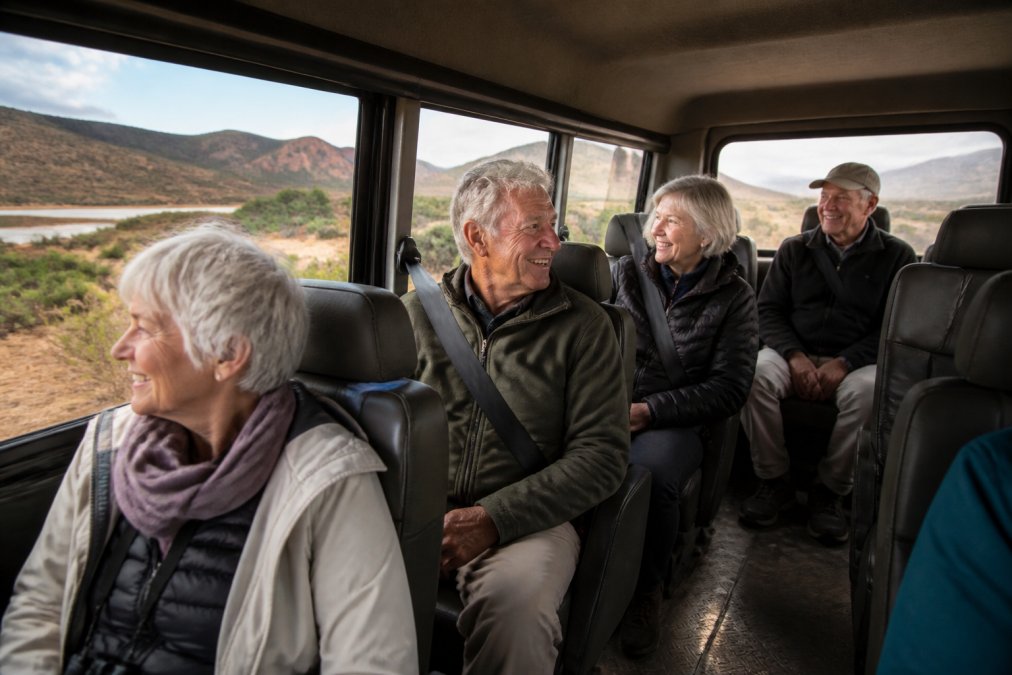
Purpose-designed 4WD vehicles should have comfortable seating with good lumbar support, climate control, and easy entry and exit. You'll spend hours in this vehicle; it should be comfortable, not a compromise.
Travel insurance for seniors over 70: essential coverage
Travel insurance for seniors over 70 is non-negotiable. Most standard policies either exclude seniors entirely or charge prohibitive premiums. You need specialist cover designed for your age group.
Essential elements are: medical coverage (minimum AUD $500,000), emergency evacuation, trip cancellation, and pre-existing condition coverage (asic.gov.au). Most standard policies exclude pre-existing conditions, that's the first thing to check.
Medical coverage needs to be genuinely comprehensive. Ask specifically about coverage for common conditions affecting mature travellers: heart issues, diabetes management, mobility-related injuries, and medication complications.
Emergency evacuation is critical for remote areas. If something serious happens in the outback or on a Pacific island, evacuation costs can exceed AUD $50,000. Specialist senior travel insurance removes caps or sets them at AUD $1 million or higher.
Trip cancellation coverage should include cancellation due to health reasons, not just death or serious illness. You want protection if your doctor advises against travel.
Pre-existing condition coverage is where most seniors get caught. Specialist policies for seniors explicitly include pre-existing conditions, that's their purpose.
Check the policy's definition of "senior." Some cover 65-plus; others start at 70. Make sure the policy covers your age group without sudden premium jumps at specific thresholds.
How to stay fit while travelling without the strain
Staying active while travelling is the core of active senior travel. The key is building movement into your days without creating exhaustion.
The mistake is thinking fitness while travelling means maintaining your home workout routine. Travelling is inherently disruptive. Your goal is to stay mobile, maintain cardiovascular health, and arrive at each destination energised rather than depleted.
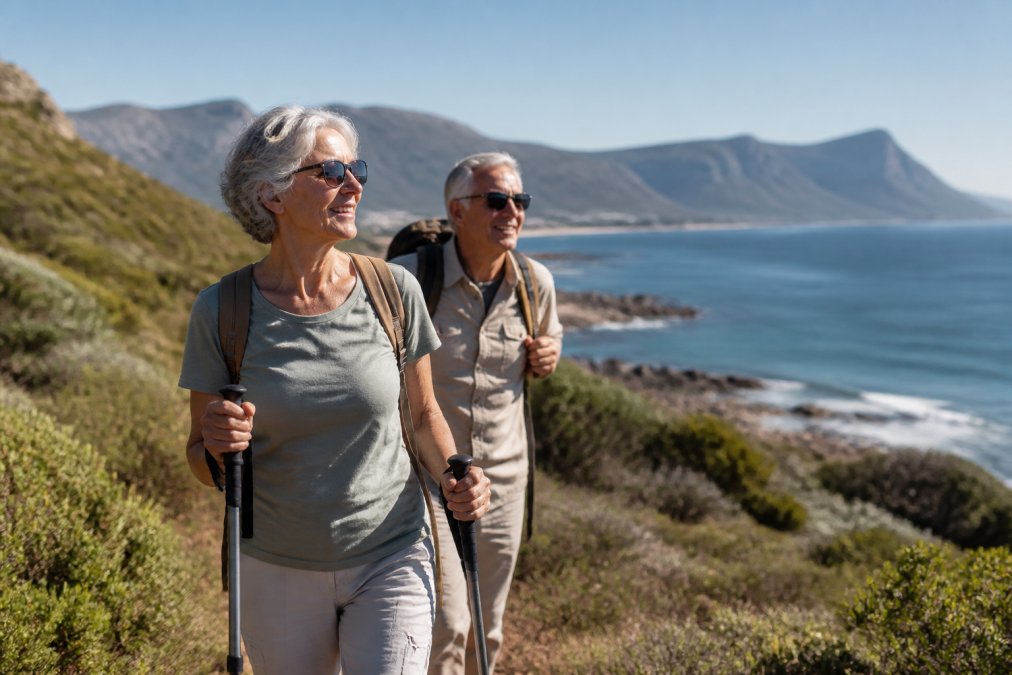
Build movement into your itinerary naturally. Walking to explore a town, hiking to a viewpoint, swimming in the ocean, these count as your activity. When your itinerary includes 6-8km of walking across a day, that's your cardiovascular work done.
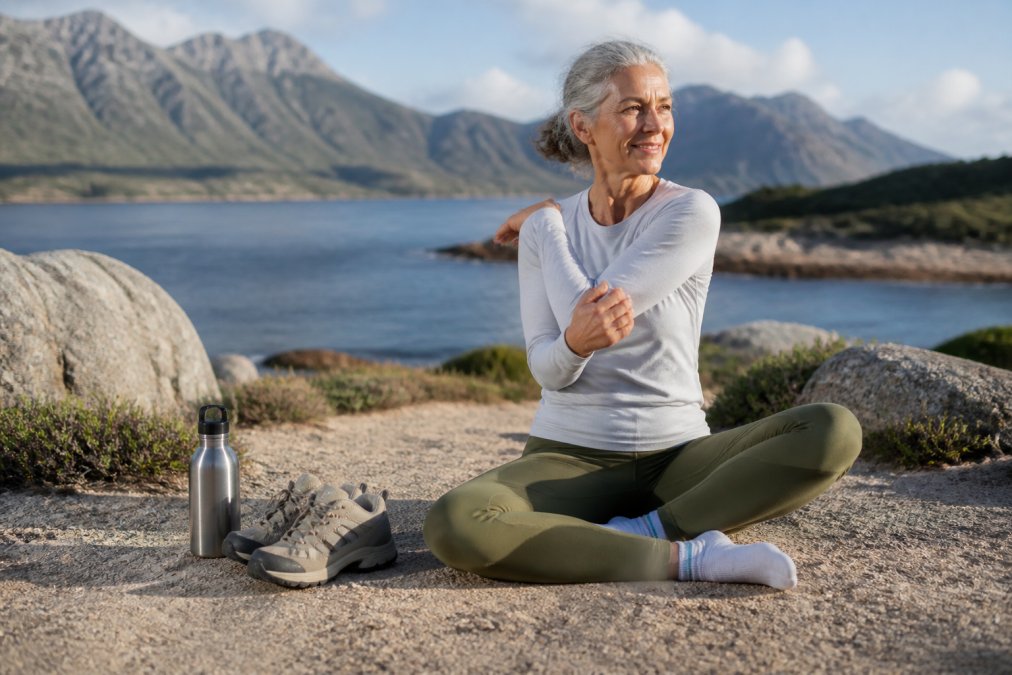
Stretching matters more than you'd think. Sitting in a vehicle for hours tightens your hips, lower back, and shoulders (peer-reviewed research). Fifteen minutes of gentle stretching each morning prevents the stiffness that makes subsequent days harder.
Walking shoes are your most important piece of kit. Not hiking boots or casual shoes, proper walking shoes with good arch support, cushioning, and grip. Invest in quality and bring two pairs so one can dry while you wear the other.
Hydration is often overlooked. Dehydration accelerates fatigue and makes your body feel older than it is (the NIH). Carry a water bottle everywhere and drink consistently throughout the day.
Recovery days aren't laziness; they're strategy. A well-designed itinerary includes at least one full day per week with no scheduled activities. This is a day where you move at your own pace and let your body adapt to the travel rhythm.
Managing health and medications on the road
Managing medications while travelling is straightforward if you plan ahead.
Start with a written list of every medication you take: name, dose, frequency, and what it treats. Carry this in your wallet and phone. Include any allergies or adverse reactions.
Carry all medications in their original bottles with labels intact. If there's a medical emergency, doctors need to see exactly what you're taking.
Pack twice as much medication as you need for your trip. Keep half in carry-on luggage and half in checked luggage. If one gets lost, you still have medication.
Work out your new medication schedule before you travel if crossing time zones. Ask your doctor about adjustments; don't figure it out on the road.
If taking temperature-sensitive medications like insulin, research your accommodation in advance. Does it have a fridge? Can you use a mini-fridge in your room?
Check medication interactions when picking up over-the-counter medications for travel-related issues. Many common drugs interact with blood pressure or heart medications.
Packing smart and staying comfortable
Packing for active senior travel requires different logic than typical holiday packing.
Bring two pairs of walking shoes, one pair of casual shoes for evenings, and sandals or slip-ons. One pair is drying while you wear another.
Prioritise comfort and practicality over fashion. Loose-fitting, breathable fabrics work better than tight clothes. Layers matter more than heavy items. Merino wool or technical fabrics dry faster than cotton and regulate temperature better.
Compression socks reduce swelling during long days of travel and walking.
A quality day pack (20-30 litres) is essential for daily use. It should have good shoulder straps and a hip belt to distribute weight properly.
Sun protection is non-negotiable in Australia and the Pacific: high SPF sunscreen (50+), a hat with a brim, and UV-blocking sunglasses.
Compression bandages or elastic support for knees, ankles, or wrists are worth bringing if you have joint concerns.
A small first aid kit is useful: plasters, blister treatment, anti-inflammatory tablets, antihistamine, and any personal medications you might run out of.
Safety, anti-theft and staying secure while travelling
Keep valuables in a hotel safe, not in your room. Carry only what you need for the day.
Use a money belt for important documents and backup cards. It's worn under clothing and functional security.
Blend in with your surroundings. Comfortable, practical clothes don't attract attention.
Keep copies of important documents separate from originals. Store these in cloud storage or email them to yourself.
Travel in groups, especially at night or in unfamiliar areas. Small group tours mean you're never alone.
Be cautious with alcohol. Stay aware of your surroundings and your intake.
Keep your phone charged and know your accommodation's address in the local language.
Use ATMs in busy, well-lit areas during daylight. Withdraw enough cash for a few days, not just one transaction.
Conclusion: your active senior travel adventure awaits
Active senior travel in 2026 is genuinely achievable. The infrastructure is better, options are more tailored to your needs, and the community of mature travellers is larger.
The real barrier isn't age or fitness. It's planning. Mature travellers who invest time in understanding their health needs, choosing appropriate tours, and packing thoughtfully have exceptional experiences.
Curious Compass Collective specialises in exactly this kind of travel. Small group sizes mean you're never rushed. Expert guides who are storytellers and safety professionals mean your needs are understood from day one. Thoughtfully paced itineraries mean you arrive at each destination energised, not exhausted. Purpose-designed 4WD vehicles mean comfort on terrain where standard vehicles fail.
Your retirement bucket list doesn't have to wait. Active senior travel is here, it's accessible, and it's genuinely designed for people like you. VIEW TOURS
| Aspect | Why It Matters | How to Prepare |
|---|---|---|
| Small group size (8-10 people) | Personal attention, manageable pace, genuine connection | Ask tour operators for exact group size and composition |
| Itinerary with buffer time | Prevents exhaustion, allows recovery, improves experience | Check itineraries for rest days and flexible activities |
| Specialist travel insurance | Covers pre-existing conditions, emergency evacuation, medical needs | Get quotes from senior-specific providers before booking |
| Comfortable walking shoes | Prevents foot pain, blisters, fatigue that compounds daily | Invest in quality, bring two pairs, test before departure |
| Medication planning | Prevents missed doses, interactions, supply issues | List all medications, pack double, sort time zone changes |
| Daily stretching routine | Maintains mobility, prevents stiffness, improves recovery | Spend 15 minutes each morning on hip, back, shoulder stretches |
Frequently Asked Questions
Q: What makes active senior travel different from standard group tours?
A: Active senior travel prioritises thoughtfully paced itineraries designed around mature travellers' comfort and safety. Unlike rushed commercial tours, small group experiences allow you to explore at your own rhythm, with expert guides who understand the needs of older adventurers. The focus shifts from ticking off attractions to genuine cultural immersion and meaningful connections with destinations and fellow travellers.
Q: How do I choose between a large tour group and a small-group experience?
A: Small-group tours offer personalised attention, flexibility and a relaxed pace, ideal if you value comfort and authentic experiences over covering maximum ground. Larger groups move faster and may offer lower per-person costs, but can feel impersonal. For active seniors seeking quality over quantity, small groups typically provide better value through enhanced safety, accessible accommodation selection and the ability to customise activities around your fitness level and interests.
Q: What travel insurance do seniors over 70 actually need?
A: Essential coverage includes medical expenses, emergency evacuation, trip cancellation and baggage protection. Many standard policies exclude pre-existing conditions or have age limits. Look for policies specifically designed for mature travellers that cover adventure activities and remote travel. Check whether your cover includes medication management, mobility aids and extended trip duration. Always declare your age and any health conditions to ensure claims are valid.
Q: How can I maintain fitness while travelling on a small-group tour?
A: Build movement into each day through guided walks, gentle stretching and activities that match your pace. Small-group tours allow you to skip strenuous activities without feeling pressured. Stay hydrated, wear supportive walking shoes and take regular breaks. Simple daily habits, walking to meals, short morning stretches, using stairs when available, maintain fitness without structured exercise. The key is consistency over intensity; a 20-minute daily walk outpaces occasional strenuous activity.
Australian Department of Health travel health advice
Therapeutic Guidelines for managing chronic conditions during travel
Travel Insurance Council of Australia guidance on senior coverage
This article was written using GrandRanker
Frequently Asked Questions
Q: What makes active senior travel different from standard group tours?
A: Active senior travel prioritises thoughtfully paced itineraries designed around mature travellers' comfort and safety. Unlike rushed commercial tours, small group experiences allow you to explore at your own rhythm, with expert guides who understand the needs of older adventurers. The focus shifts from ticking off attractions to genuine cultural immersion and meaningful connections with destinations and fellow travellers.
Q: How do I choose between a large tour group and a small-group experience?
A: Small-group tours offer personalised attention, flexibility and a relaxed pace—ideal if you value comfort and authentic experiences over covering maximum ground. Larger groups move faster and may offer lower per-person costs, but can feel impersonal. For active seniors seeking quality over quantity, small groups typically provide better value through enhanced safety, accessible accommodation selection and the ability to customise activities around your fitness level and interests.
Q: What travel insurance do seniors over 70 actually need?
A: Essential coverage includes medical expenses, emergency evacuation, trip cancellation and baggage protection. Many standard policies exclude pre-existing conditions or have age limits. Look for policies specifically designed for mature travellers that cover adventure activities and remote travel. Check whether your cover includes medication management, mobility aids and extended trip duration. Always declare your age and any health conditions to ensure claims are valid.
Q: How can I maintain fitness while travelling on a small-group tour?
A: Build movement into each day through guided walks, gentle stretching and activities that match your pace. Small-group tours allow you to skip strenuous activities without feeling pressured. Stay hydrated, wear supportive walking shoes and take regular breaks. Simple daily habits—walking to meals, short morning stretches, using stairs when available—maintain fitness without structured exercise. The key is consistency over intensity; a 20-minute daily walk outpaces occasional strenuous activity.